 No Ground
Every 113 days or so, a giant star in another galaxy flares up so violently that, from Earth, it looks like a supernova. A supernova is supposed to be the end of a star. This one simply fades back down, and less than four months later it does it again.
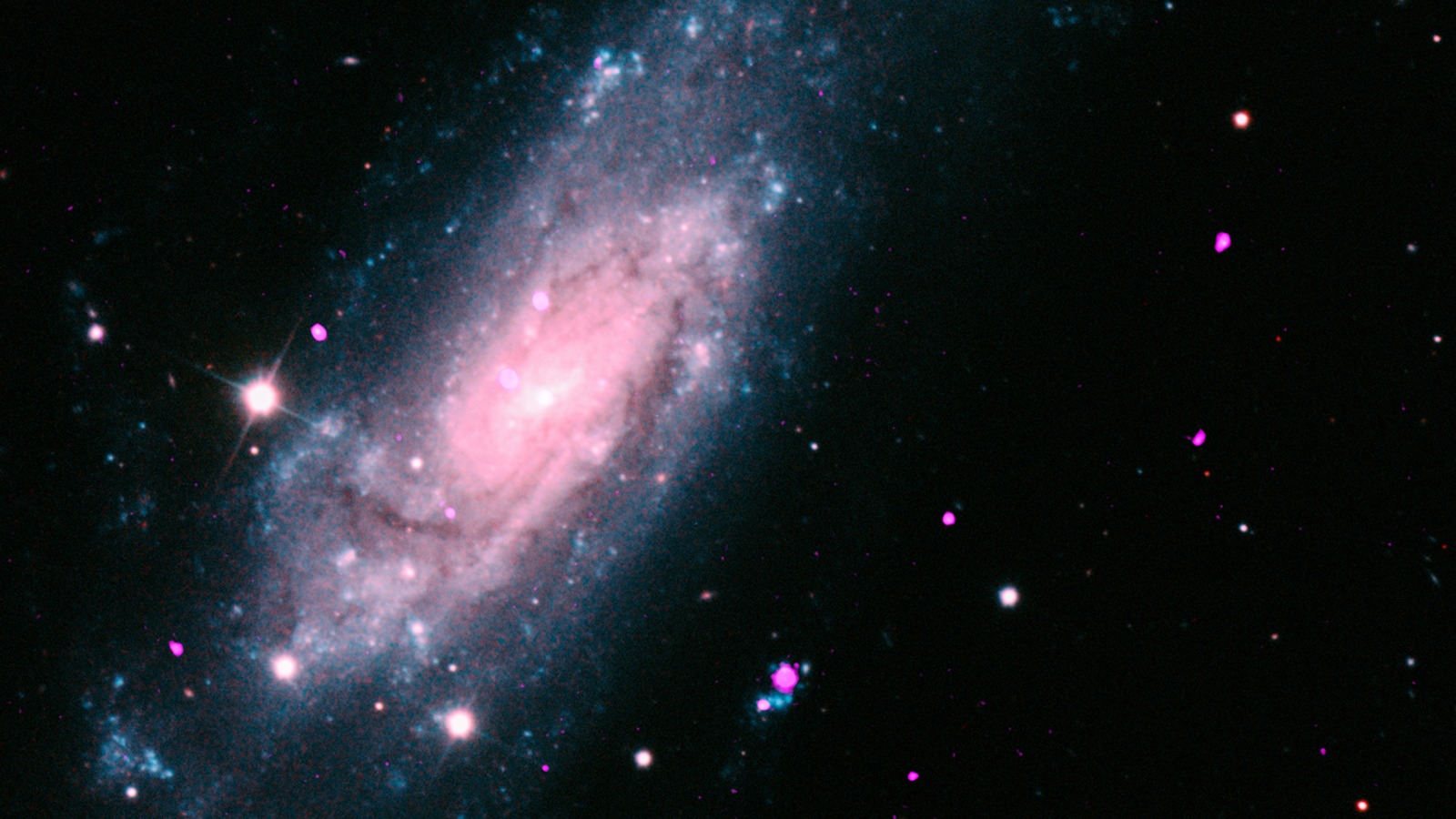
Astronomers have counted at least 27 of these outbursts since 2012. Now NASA’s Chandra X-ray Observatory has caught the star in the middle of one and found what is setting it off: a hidden partner that is either a black hole or a neutron star, the collapsed core a massive star leaves behind when it dies.
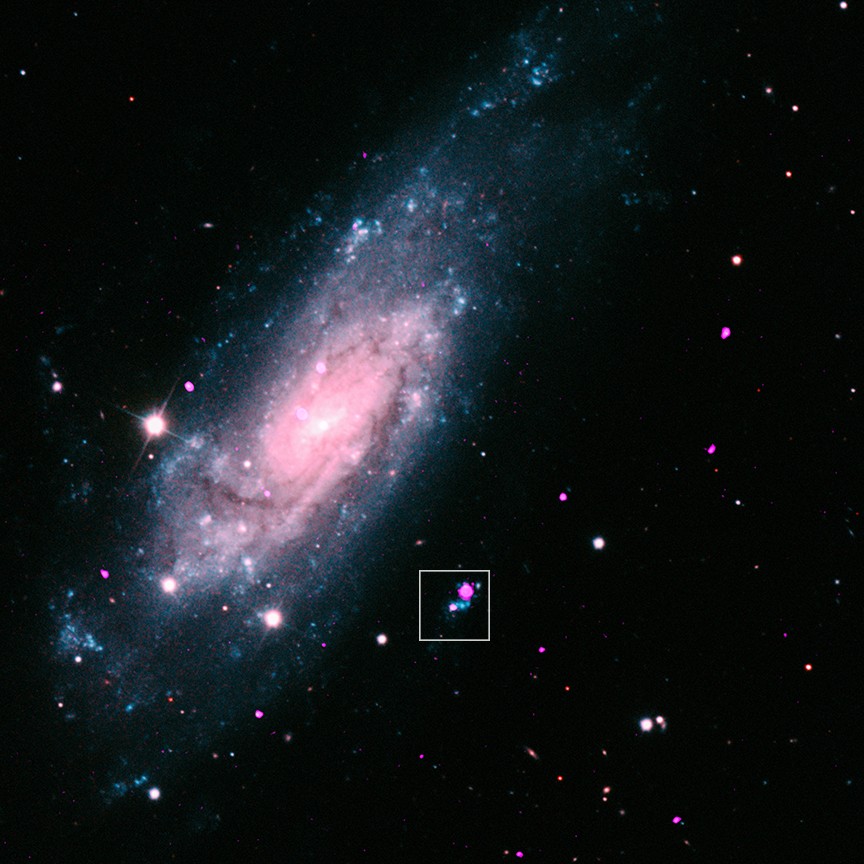
The supernova impostor
The star is called AT 2016blu. It sits in the spiral galaxy NGC 4559, about 30 million light-years away in the constellation Coma Berenices, and astronomers estimate it holds at least 33 times the mass of the Sun.
It belongs to a rare class of stars called luminous blue variables: hot, massive and known for big swings in brightness. AT 2016blu takes that to an extreme. Its spikes are so bright that they resemble supernova explosions, but the star survives every one. So astronomers call it a “supernova impostor.”
“This star’s behavior was confusing at first because it kept acting like a supernova, but clearly it’s not because it keeps surviving these outbursts about three times a year,” said co-author Núria Torres-Albà of the University of Virginia.
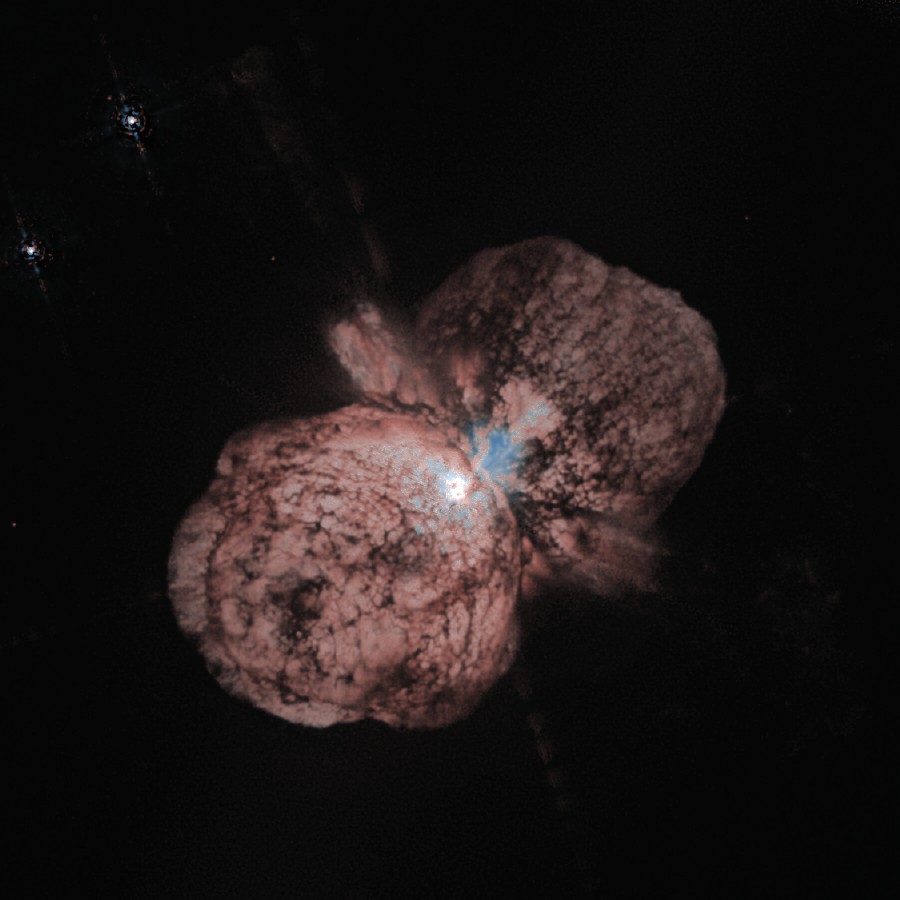
Catching it in the act
Because the team knew roughly when the next outburst was due, they could plan for it. The Katzman Automatic Imaging Telescope, the Las Cumbres Observatory Global Supernova Project and the American Association of Variable Star Observers, including more than 30 amateur astronomers, kept watch on the star’s brightness. When it erupted in early 2026, the team triggered Chandra through its “Target of Opportunity” program, which lets the telescope break from its schedule for events like this.
Chandra looked five times, between March 24 and 27, 2026. It was the only X-ray telescope with vision sharp enough to separate AT 2016blu from another bright X-ray source right next to it.
“We suspected that the bright repeating flashes at optical wavelengths might actually be powered by periodic blasts of high-energy X-rays,” said co-author Nathan Smith of the University of Arizona.
Explore your sky tonightLive sky map for where you are: planets, the ISS and bright stars above your horizon.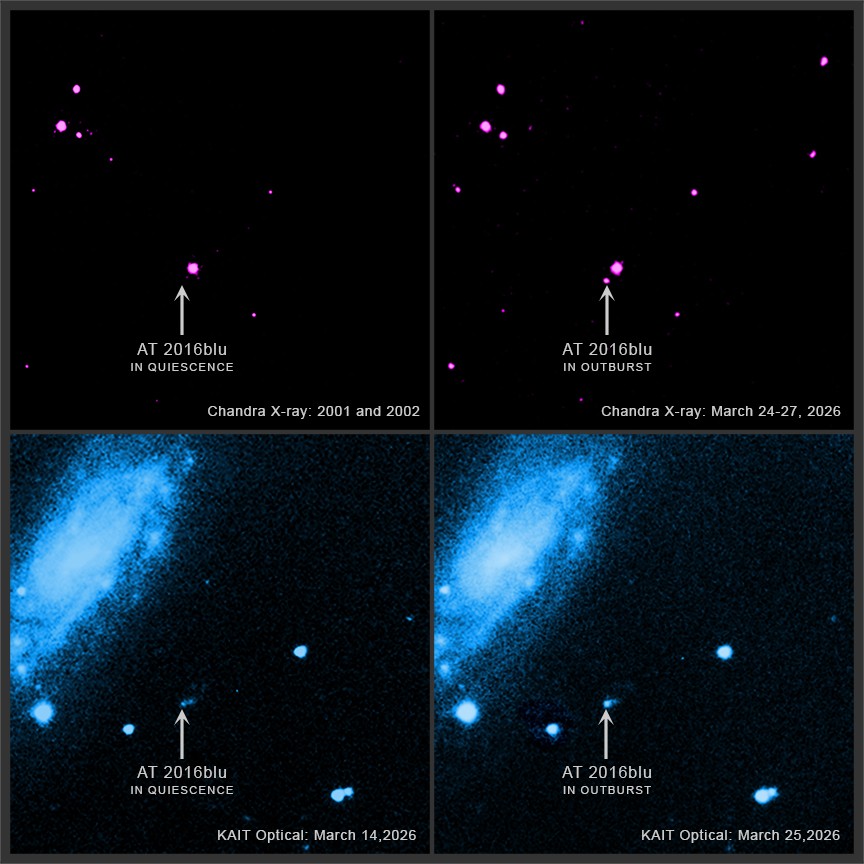
Something dead is feeding
The X-rays were there. In March 2026, AT 2016blu was at least 100 times brighter in X-rays than in Chandra images from 2001 and 2002, about a decade before its first recorded outburst.
NASA says the best explanation is a pair on an oval-shaped orbit. When the giant star and its compact partner swing closest together, material thrown off by the star is captured by the black hole or neutron star. That gas whirls around at very high speeds, close to the speed of light, and gets hot enough to shine in X-rays. Smith says the X-rays then heat the dense gas around the system, which glows in visible light. That glow is the flash seen from Earth.
The University of Virginia, which led the study, puts it bluntly: the star’s violent outbursts come from its interaction with “a companion that has already died.”
It is the first X-ray detection of a star of this kind, and the first one found with a black hole or neutron star partner. “For 15 years, astronomers have been watching this star get really bright and then dim again on a regular basis,” said lead author Mojgan Aghakhanloo of the University of Virginia. “Until we were able to get Chandra data at the right time, we couldn’t figure out what was making this happen.”
Why it matters
AT 2016blu is bright enough in X-rays to count as a candidate ultra-luminous X-ray source, a rare kind of object astronomers still don’t fully understand. NASA says the result hints at a link between those sources and violent stellar eruptions like these. It may also help explain why some massive stars change in brightness before they finally explode for real.
The study appears in the latest issue of The Astrophysical Journal. Aghakhanloo has already secured more Chandra time to watch another supernova impostor, and the University of Virginia says the Vera C. Rubin Observatory’s 10-year survey could turn up many more.
Bottom line: A star 30 million light-years away keeps putting on a supernova-sized show without dying. The reason is a dead star on an oval orbit, pulling material away every time the two pass close.
No Ground. Stay curious.