 No Ground
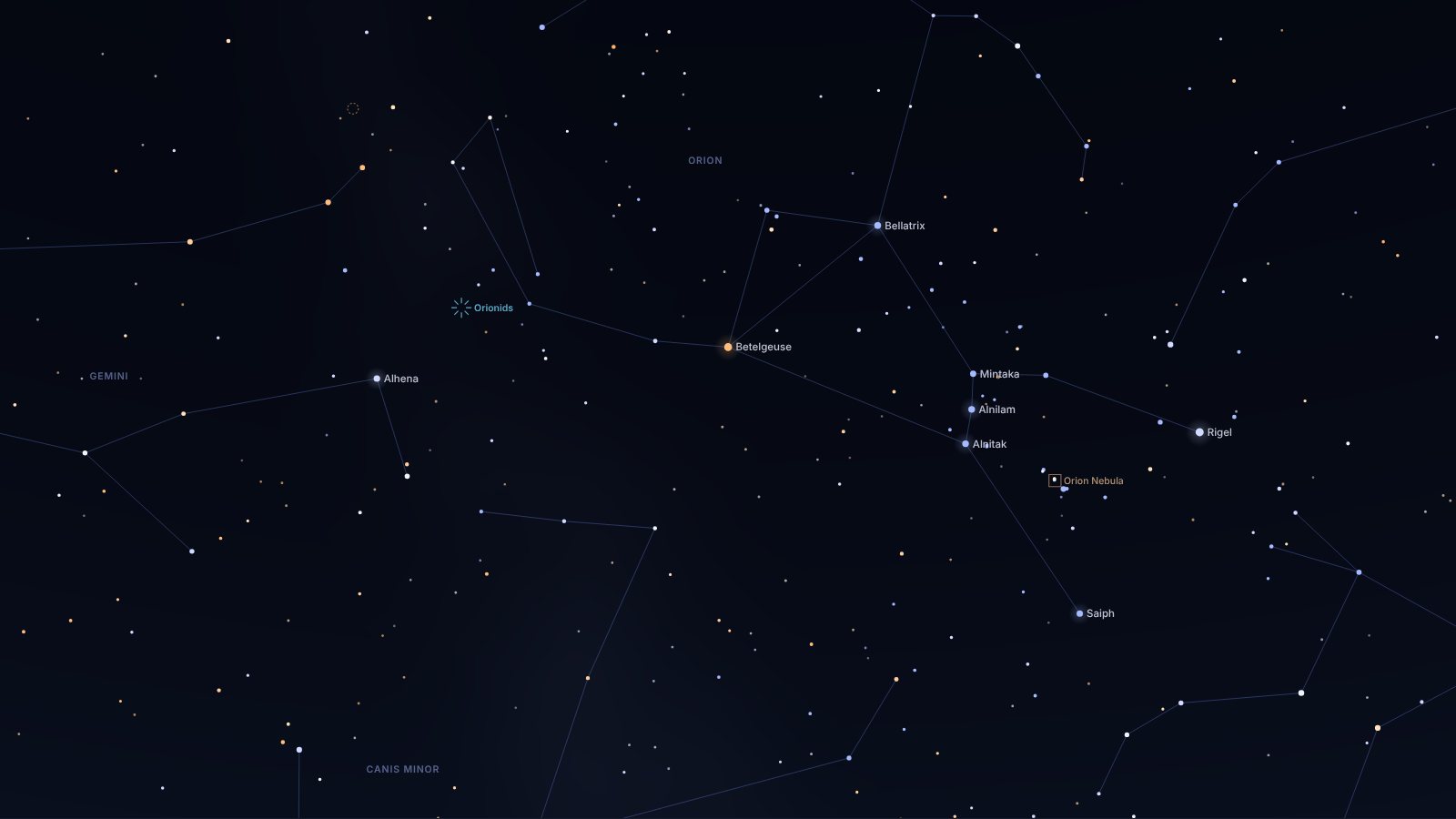
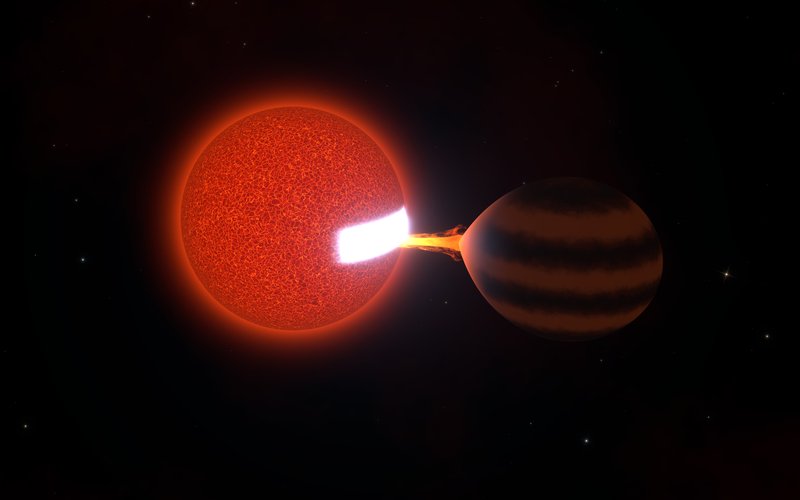
Betelgeuse is the bright orange-red star that marks the shoulder of Orion, and it may not be alone. New radio observations suggest that a small, hidden companion star is passing through its outer atmosphere and stirring it up.
The companion has a name: Siwarha, which means “her bracelet.” It is a nod to the name Betelgeuse itself, which comes from an Arabic phrase meaning “the hand of al-Jawza.” Siwarha is far too faint to see directly in these observations. It is estimated to be tens to hundreds of times too dim for the radio telescopes to detect on its own, so astronomers look for what it does to Betelgeuse instead.
What the telescopes saw
A team led by L. D. Matthews of MIT Haystack Observatory used the Very Large Array in New Mexico and the ALMA telescope in Chile. They collected data between 2021 and 2026 at seven radio frequencies. Their results were published in The Astronomical Journal.
They looked at the shape of Betelgeuse’s atmosphere, the thin outer layers around the star. It does not stay round. It looks more stretched when Siwarha is at its greatest apparent separation from the star, and rounder when the companion is predicted to pass in front of or behind it. That pattern is the main evidence that something is circling inside the atmosphere.
Find Betelgeuse in your sky tonightFree sky map for where you are: when it rises and which way to face.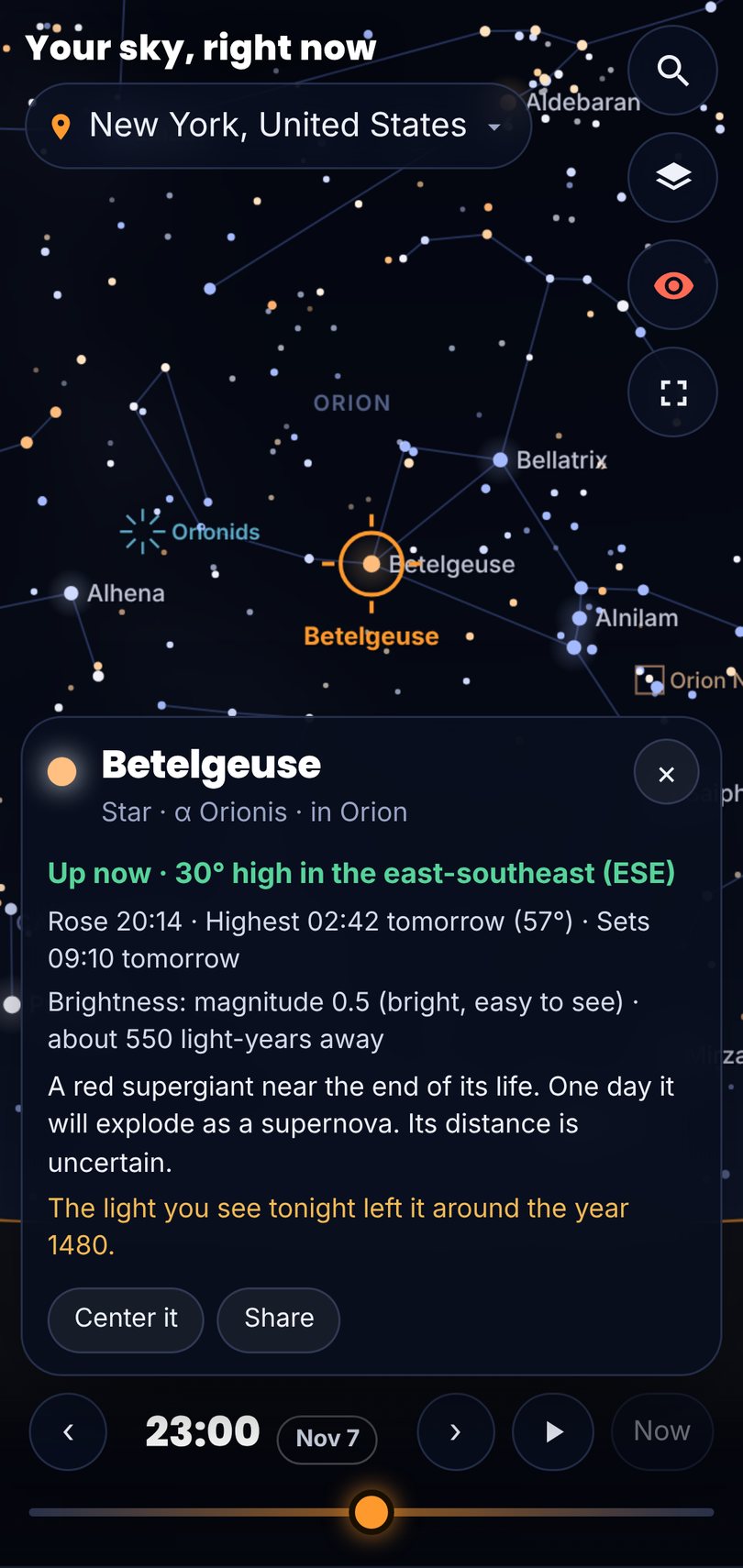

The puzzle it may solve
Betelgeuse has a brightness cycle of about 2,100 days, around 5.8 years. In 2024 astronomers proposed that a companion star could explain it. This new work adds support. It also found that the atmosphere has returned to normal temperatures after the star’s Great Dimming a few years ago. At about 2.7 times the star’s radius, it measures roughly 3,500 kelvins, and a cooler layer reaches about 2,200 kelvins.
What is still unknown
The team says more observations are needed to confirm the link between Siwarha’s orbit and the changes in the atmosphere, and it is still unclear how strongly the companion affects Betelgeuse. So this is strong evidence, not a final answer.
How to see Betelgeuse
Orion climbs into the evening sky in the east at this time of year. In New York, Betelgeuse rises at about 8:14 p.m. and is around 30 degrees up by 11 p.m., and the later you look, the higher it gets. Find the three stars of Orion’s belt in a row. Betelgeuse is the bright orange-red star above and to the left of the belt, as seen from the Northern Hemisphere. Your town will see different times.
It is a red supergiant, so large that it would swallow the orbits of Mercury, Venus, Earth and Mars if it took the Sun’s place. You do not need a telescope or binoculars. The Moon is new on Nov. 9, so the sky is dark this week.
Bottom line: New radio observations point to a hidden companion, Siwarha, stirring Betelgeuse’s atmosphere. More data is needed to confirm it.
No Ground. Stay curious.