 No Ground
The short answer: stars twinkle because of our air, not because of anything the stars are doing. Starlight crosses the universe in a perfectly straight, steady line, then, in the last few miles of its trip, it runs into Earth’s restless atmosphere. Pockets of warm and cool air bend the light this way and that, several times a second, and your eye sees the star flicker.
That explains the twinkle. It also explains a neat trick: the bright “stars” that shine steadily are often planets. Here is how it all works, and how astronomers have learned to switch the twinkle off.
The twinkle happens in the last few miles
Think about the trip a beam of starlight takes. It may have been traveling for years, or for thousands of years, through almost perfectly empty space. Nothing out there makes it flicker. NASA puts it simply: most stars are shining with a steady light.
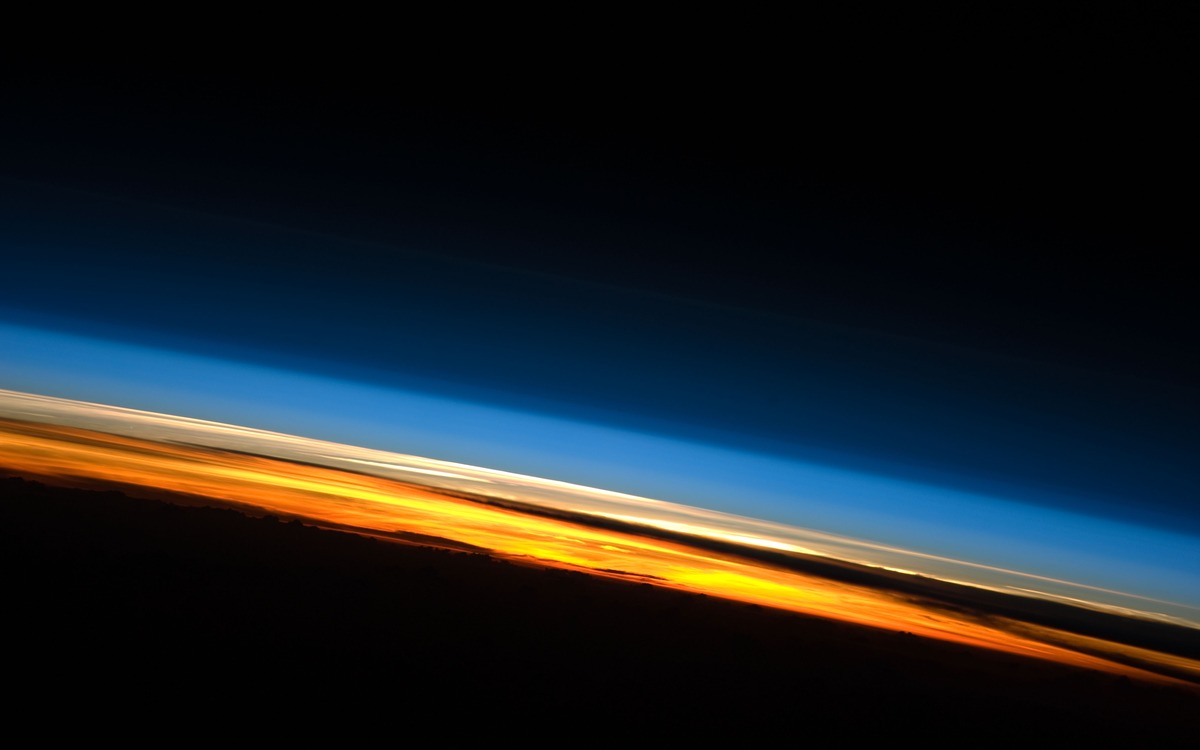
Then the light reaches Earth and has to pass through miles of air before it hits your eye. That air is never still. Sunlight warms the ground during the day, the ground warms the air above it, and winds stir everything together. The result is a churning mix of air pockets, each a little warmer or cooler, and a little thinner or denser, than its neighbors.
Astronomers have a technical name for twinkling: scintillation. It is a local weather effect, added to the light at the very end of a very long journey.
Air bends light like a wobbly lens
Light changes direction slightly when it passes from one kind of air into another, the same way a straw looks bent in a glass of water. Scientific American compares it to looking at a coin at the bottom of a swimming pool: as the water ripples, the coin seems to wobble from side to side. When we look at stars, we are at the bottom of an ocean of air.
As astronomer James Lattis of the University of Wisconsin–Madison describes it, each pocket of air is like a bubble of warmer or cooler air, rising and falling, so the path of the starlight keeps shifting at random. Sometimes a little more of the light is steered toward your eye, sometimes a little less. Sometimes it is nudged a hair to one side. You see that as a star that brightens, dims and dances.
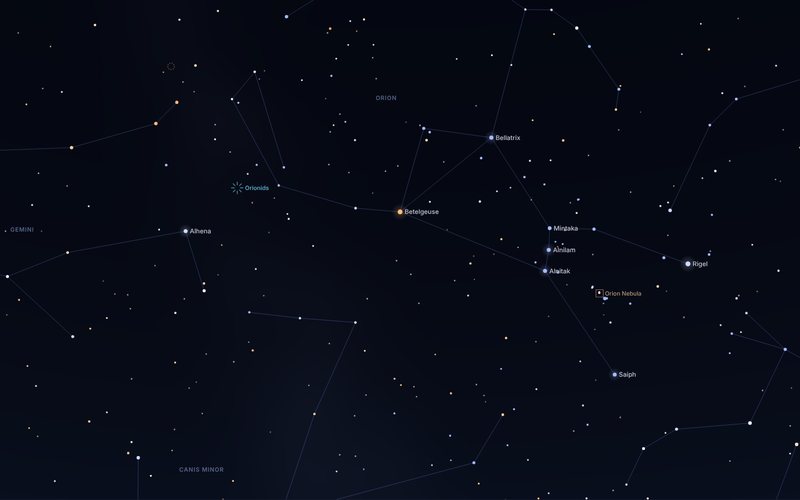
A NASA time-lapse of the star Betelgeuse through a telescope shows what is really going on: the clumpy air breaks the single point of light into many small, shifting images that change from moment to moment. To your eye, all that churning adds up to a twinkle. (Betelgeuse itself is quite a star, by the way: it may even have a hidden companion.)
This bending is different from what makes the daytime sky blue. Blue sky is about air molecules scattering sunlight in every direction. Twinkling is about whole pockets of air acting like weak, constantly changing lenses.
Why planets usually don’t twinkle
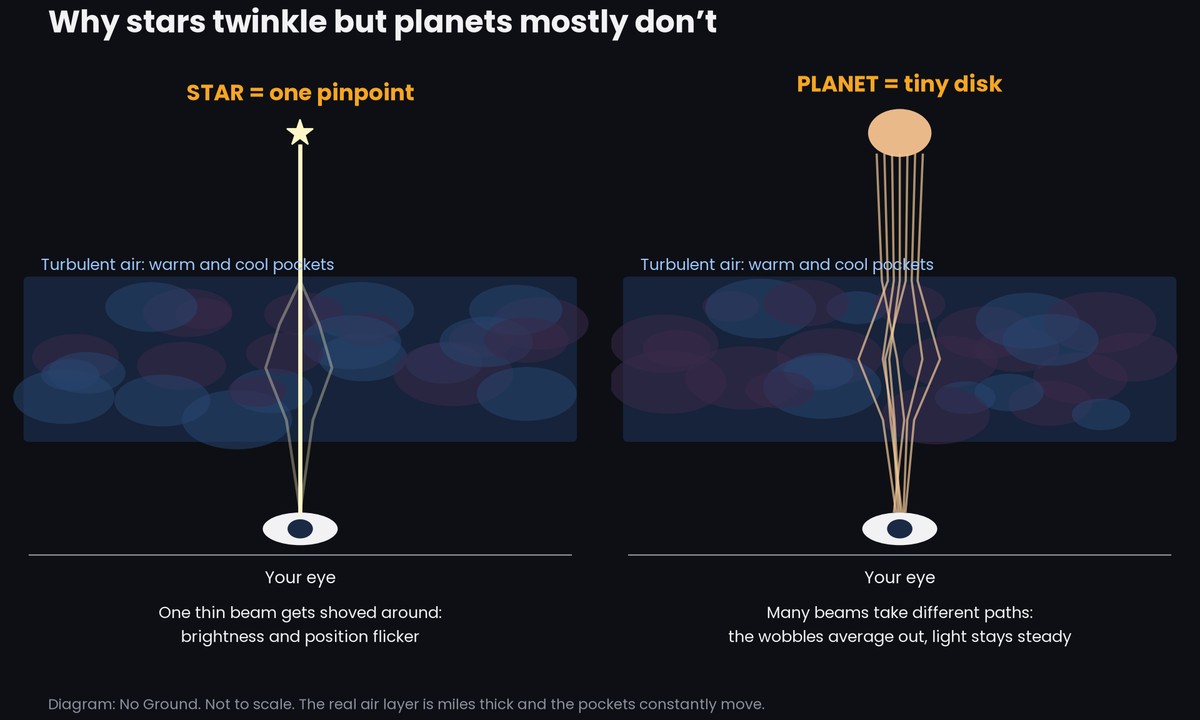
Here is the key difference. Stars are so far away that, even through most telescopes, they look like single points of light. All of a star’s light reaches you in one very narrow beam, and when the air shoves that beam around, the whole star flickers.
Planets are much closer, so they look like tiny disks instead of points. You usually cannot see the disk with your bare eyes, but it is there, and it matters. Light from one edge of a planet takes a slightly different path through the air than light from the other edge. Each of those paths twinkles on its own, but they twinkle out of step, so the ups and downs average out. The planet shines with a steady glow.
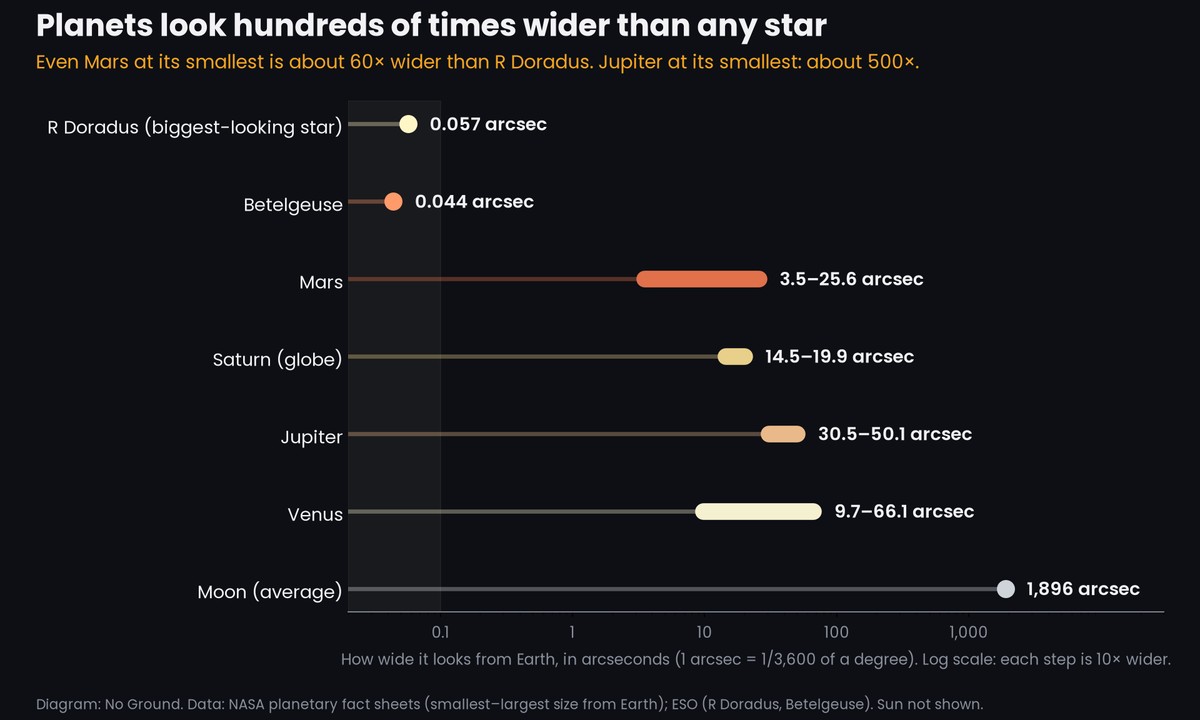
How big is the difference? We compared NASA’s numbers for how wide the planets look from Earth with the biggest-looking star in the sky after the Sun. Astronomers measure these tiny sizes in arcseconds; one arcsecond is 1/3,600 of a degree, and the full Moon is about 1,900 arcseconds across.
The star with the largest apparent size, a red giant called R Doradus, is only about 0.057 arcseconds wide. By our math, that is like looking at a quarter from about 55 miles away. Betelgeuse, the famous red shoulder of Orion, measures about 0.044 arcseconds.
Explore your sky tonightLive sky map for where you are: planets, the ISS and bright stars above your horizon.Now the planets. Mars, at its very smallest, is about 3.5 arcseconds wide: roughly 60 times wider than R Doradus. Jupiter never looks smaller than about 30 arcseconds, more than 500 times wider. Venus, at its closest, reaches about 66 arcseconds. Even a tiny-looking planet is a giant compared with any star.
That is why a useful rule of thumb works: if a bright point of light is shining steadily while the stars around it sparkle, you are probably looking at a planet. It is not a perfect test. Planets twinkle much less than stars, but when one sits very low in the sky, or when Mars is far away and looks small, it can shimmer a little too.
Why stars near the horizon twinkle most
Look straight up and starlight crosses the shortest possible stretch of air. Look toward the horizon and the light has to skim through far more of it, many times more, the same reason sunsets turn orange. More air means more pockets to bend the light, so stars low in the sky twinkle hardest. NASA suggests trying it on the next clear night: compare a star high overhead with one near the horizon.
Low stars can even flash colors. The air bends each color by a slightly different amount, so pockets of air act like little prisms as well as lenses. EarthSky notes that Sirius, the brightest star in the night sky, often flickers with many colors when it is low, flashing white, blue, red and green. That light show is bright and strange enough that people sometimes report Sirius as a UFO.
No twinkle in space
Take the air away and the twinkle goes with it. As Lattis puts it, seen from the Moon, where there is no atmosphere, stars do not twinkle at all. Astronauts in orbit see the same: steady points of light against black space.
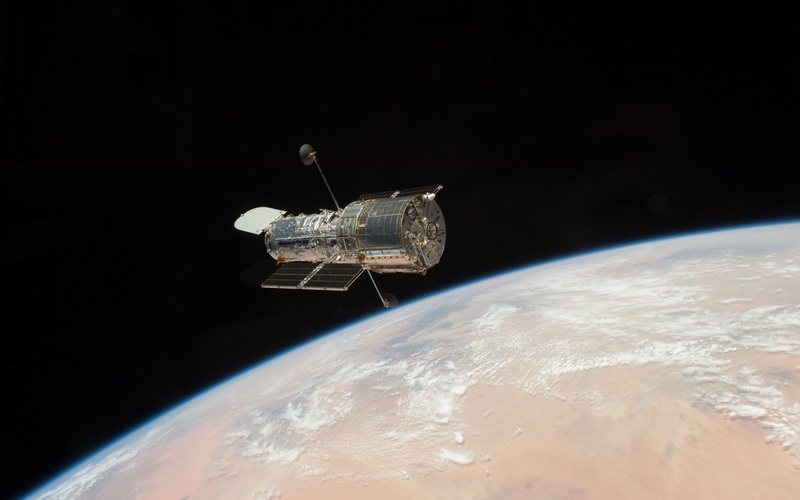
That is one big reason for putting telescopes in space. Orbiting 300 miles above Earth’s surface, NASA says, the Hubble Space Telescope avoids the distorting effects of our atmosphere, which is why its pictures look so crisp. Even up there, a trace of air is slowly dragging Hubble down, which is why NASA has asked companies how to save it.
How astronomers switch the twinkle off
Space telescopes are expensive and limited in size, so astronomers found a way to fight twinkling from the ground. It is called adaptive optics, and it is one of the cleverest tricks in modern astronomy.
The idea is to measure the twinkle and undo it. A camera watches a bright reference star near the target. Computers work out, moment by moment, exactly how the air is distorting that star’s light. Then a thin, flexible mirror in the telescope bends its own shape to cancel the distortion. The European Southern Observatory says this can make images almost as sharp as those taken from space.
It has to be fast. The main flexible mirror being built for ESO’s Extremely Large Telescope uses more than 5,000 tiny actuators to change its shape up to 1,000 times every second.
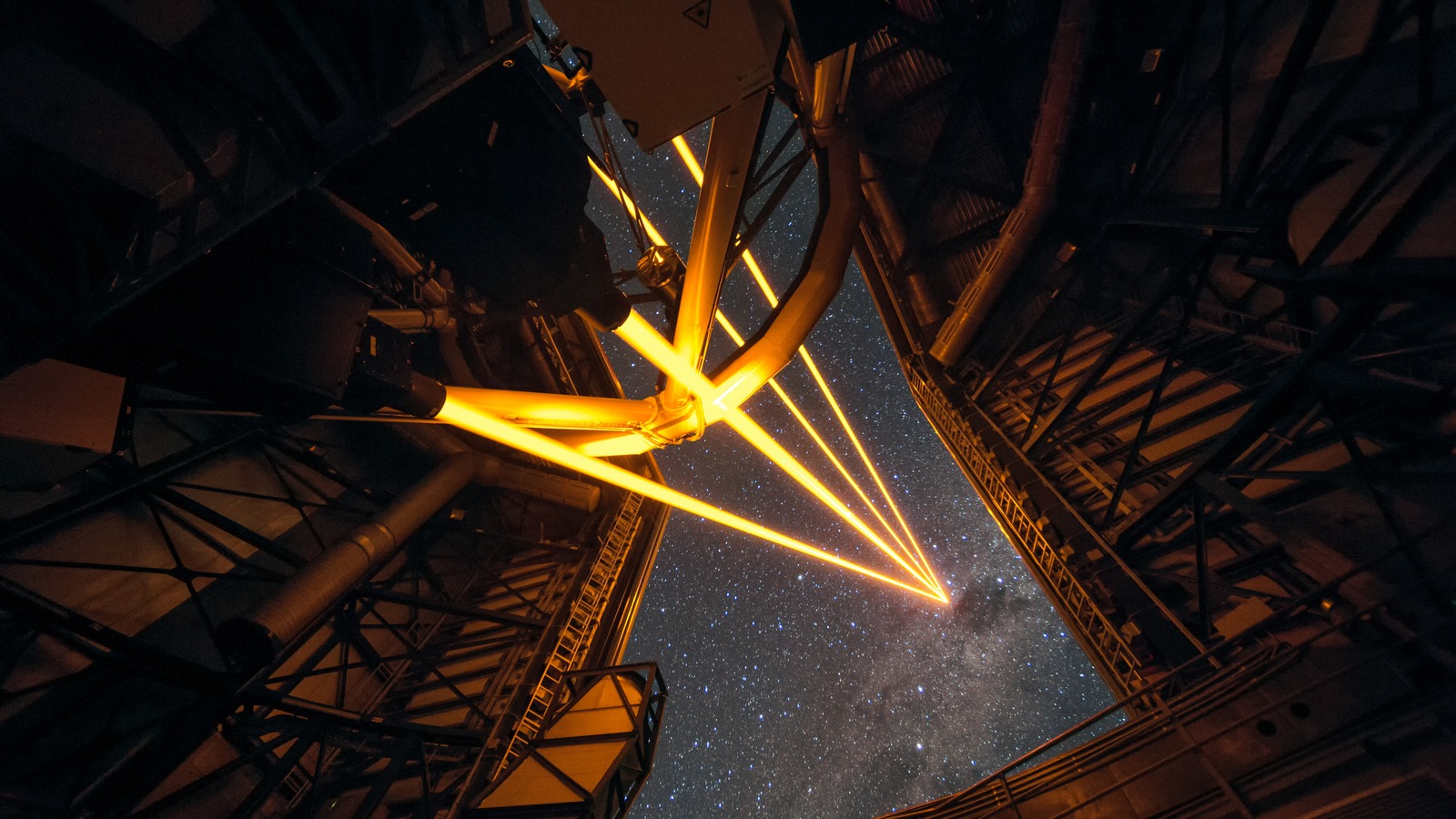
There is one problem: a bright reference star is not always close to the object astronomers want to study. So they make their own. Powerful lasers shine up into the sky and make sodium atoms about 56 miles up glow, creating an artificial “star.” At ESO’s Very Large Telescope in Chile, four lasers do this at once. In the photo at the top of this page, you can see them firing into the night. With laser guide stars, almost the entire sky can be observed this way.
So the twinkle that inspired a famous lullaby is, to professional astronomers, mostly noise they work hard to remove. It is the same atmosphere that gives us air to breathe and a sky full of stars to navigate by, but for a telescope, it is a blur to be erased.
Bottom line: Stars twinkle because moving pockets of warm and cool air in Earth’s atmosphere keep bending their pinpoint beams of light. Planets look like tiny disks, so their light takes many paths that average out, and they shine more steadily. Stars twinkle most near the horizon, where their light crosses the most air, and not at all from space.