Space

The Moon Is Slowly Leaving Us

The Moon drifts about 3.8 centimeters (1.5 inches) farther from Earth every year, and lasers bounced off Apollo-era reflectors let us measure it. NASA estimates total solar eclipses will end in more than 600 million years.

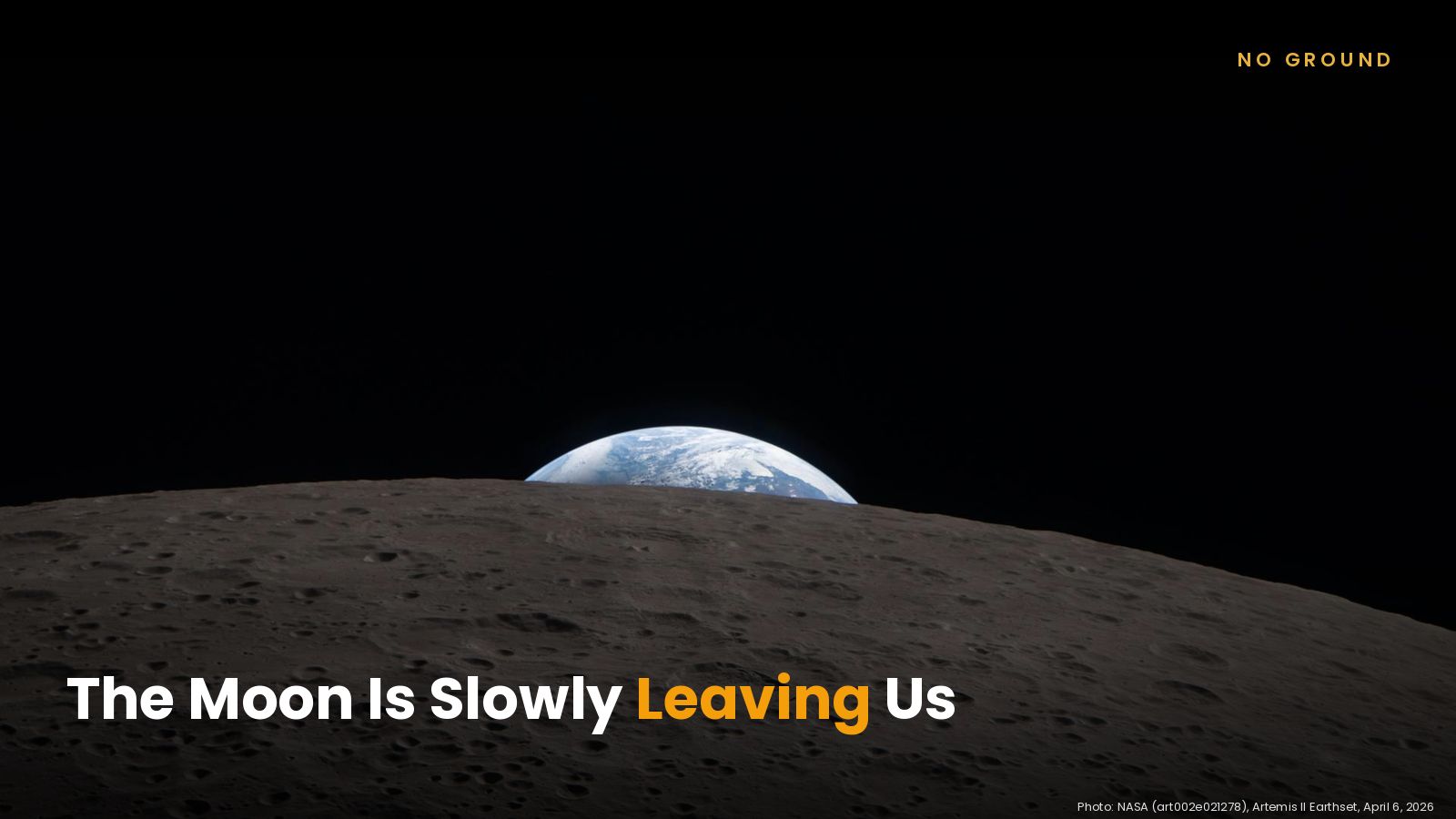
Earth rising above the curved gray surface of the Moon, seen by the Artemis II crew, with the headline The Moon Is Slowly Leaving Us

Photograph: Earthset over the Moon’s far side, captured by the Artemis II crew from Orion on April 6, 2026. Cropped, with No Ground headline overlay. Credit: NASA (art002e021278).

The Moon is moving away from Earth. Not in theory. We can measure it, to within a few millimeters, every year.

How we know

In July 1969, the Apollo 11 astronauts placed a panel of mirrors, called a retroreflector, on the Moon’s surface. Later, the Apollo 14 and Apollo 15 crews left more, and the Soviet Union’s robotic Lunokhod 1 and Lunokhod 2 rovers carried reflectors too. Scientists on Earth still fire laser pulses at these reflectors and time how long the light takes to come back. Light travels at a known speed, so the timing gives the distance to the Moon to within a few millimeters, NASA says.
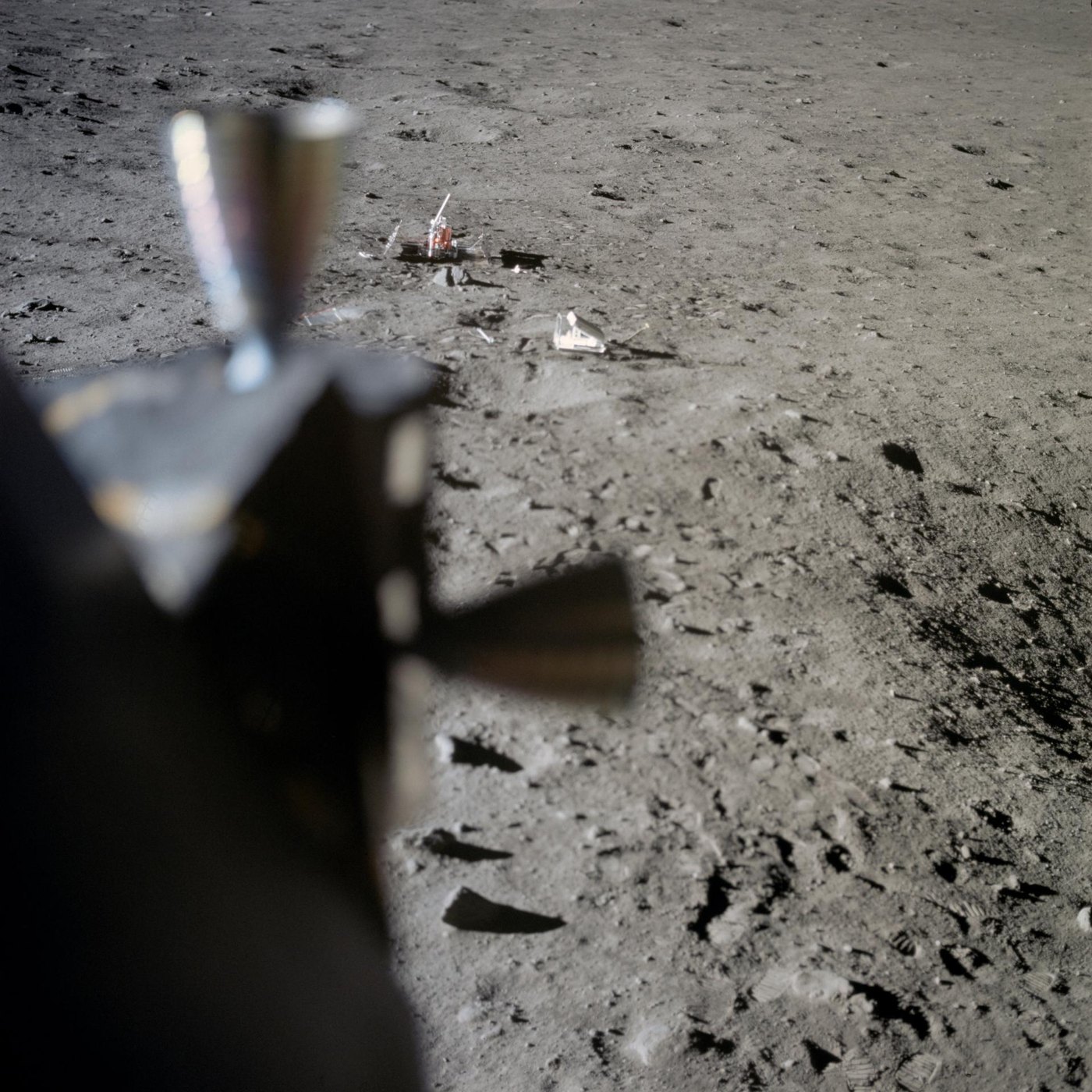
Apollo 11 lunar surface view from inside the Lunar Module showing the Laser Ranging Retro-Reflector, the seismometer and astronaut footprints in the lunar soil
The Apollo 11 landing site on July 20, 1969, photographed from inside the Lunar Module. The Laser Ranging Retro-Reflector is the small pale panel right of center and closer to the camera. The seismometer is farther away, and Neil Armstrong’s and Buzz Aldrin’s footprints are clear in the soil. The blurry shape on the left is part of the lander. Shown unaltered except for resizing. Credit: NASA (AS11-37-5551).
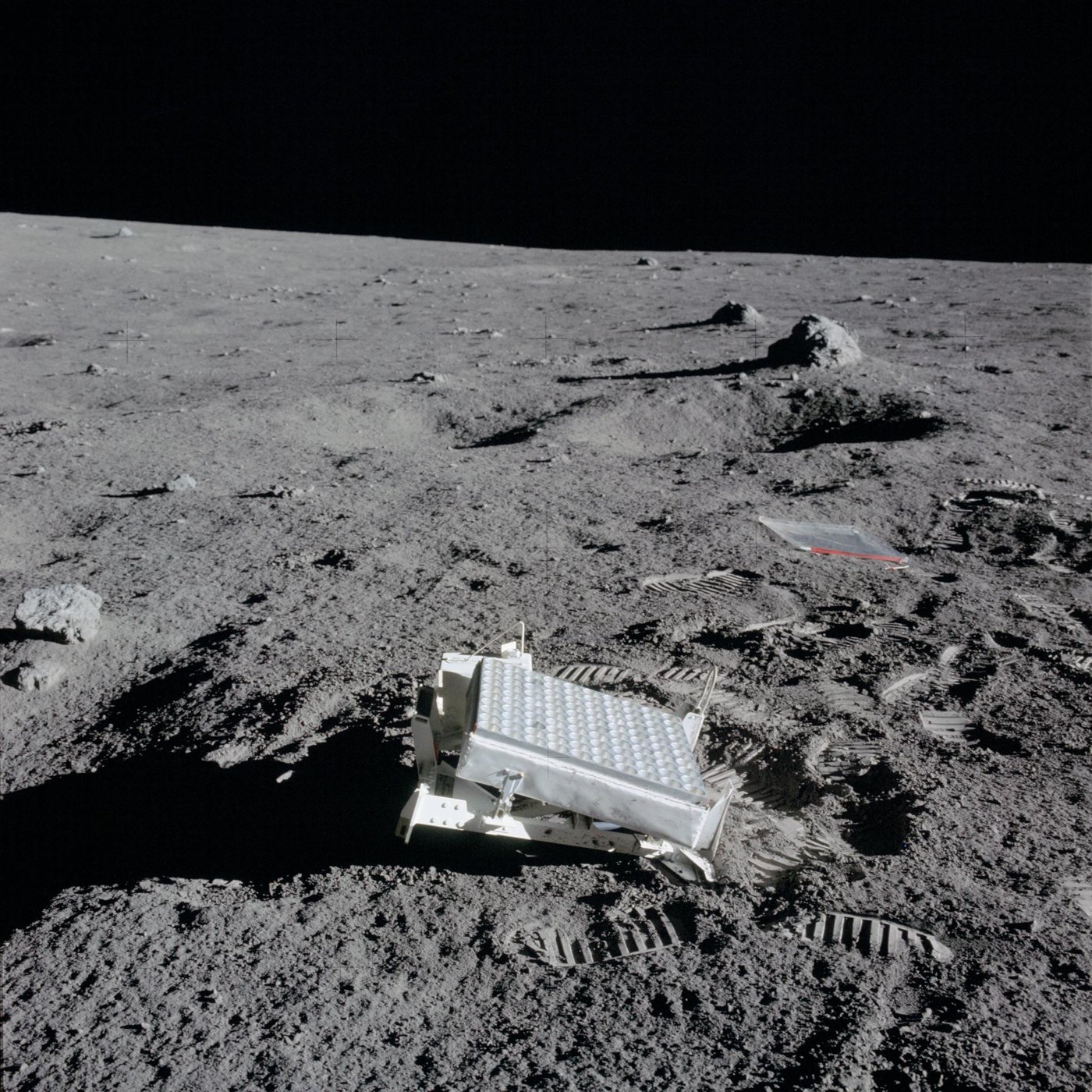
Close-up of the Apollo 14 laser ranging retroreflector, a flat panel of mirrors sitting on the gray lunar surface
The laser ranging retroreflector that Apollo 14 astronauts Alan Shepard and Edgar Mitchell deployed on Feb. 5, 1971. Shown unaltered except for resizing. Credit: NASA (AS14-67-9386).
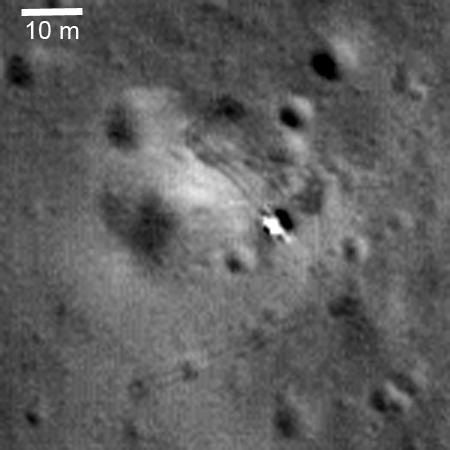
Orbital view of the Luna 21 lander on the floor of Le Monnier crater with the tracks of the Lunokhod 2 rover
The Luna 21 lander delivered the Lunokhod 2 rover to the floor of Le Monnier crater in January 1973. This image from NASA’s Lunar Reconnaissance Orbiter also shows the rover’s tracks. Shown unaltered except for resizing. Credit: NASA/GSFC/Arizona State University (PIA12976).

How fast

The timing shows the Moon drifts about 3.8 centimeters (roughly 1.5 inches) farther from Earth every year. NASA compares that to the rate at which fingernails grow.

Why it happens

The Moon’s gravity raises tides in Earth’s oceans. Because Earth spins faster than the Moon orbits, those tidal bulges are carried slightly ahead of the Moon, and their gravity tugs the Moon forward along its orbit. That forward pull is what makes the Moon spiral slowly outward. Earth’s spin slows a tiny amount in return, so the length of Earth’s day is slowly increasing.

What it means

Long ago the Moon was much closer to Earth than it is now, so it would have looked much bigger in the sky. Today the Moon and the Sun look almost exactly the same size from Earth. NASA explains why: the Sun is about 400 times wider than the Moon, and also about 400 times farther away. That match is why we get total solar eclipses.
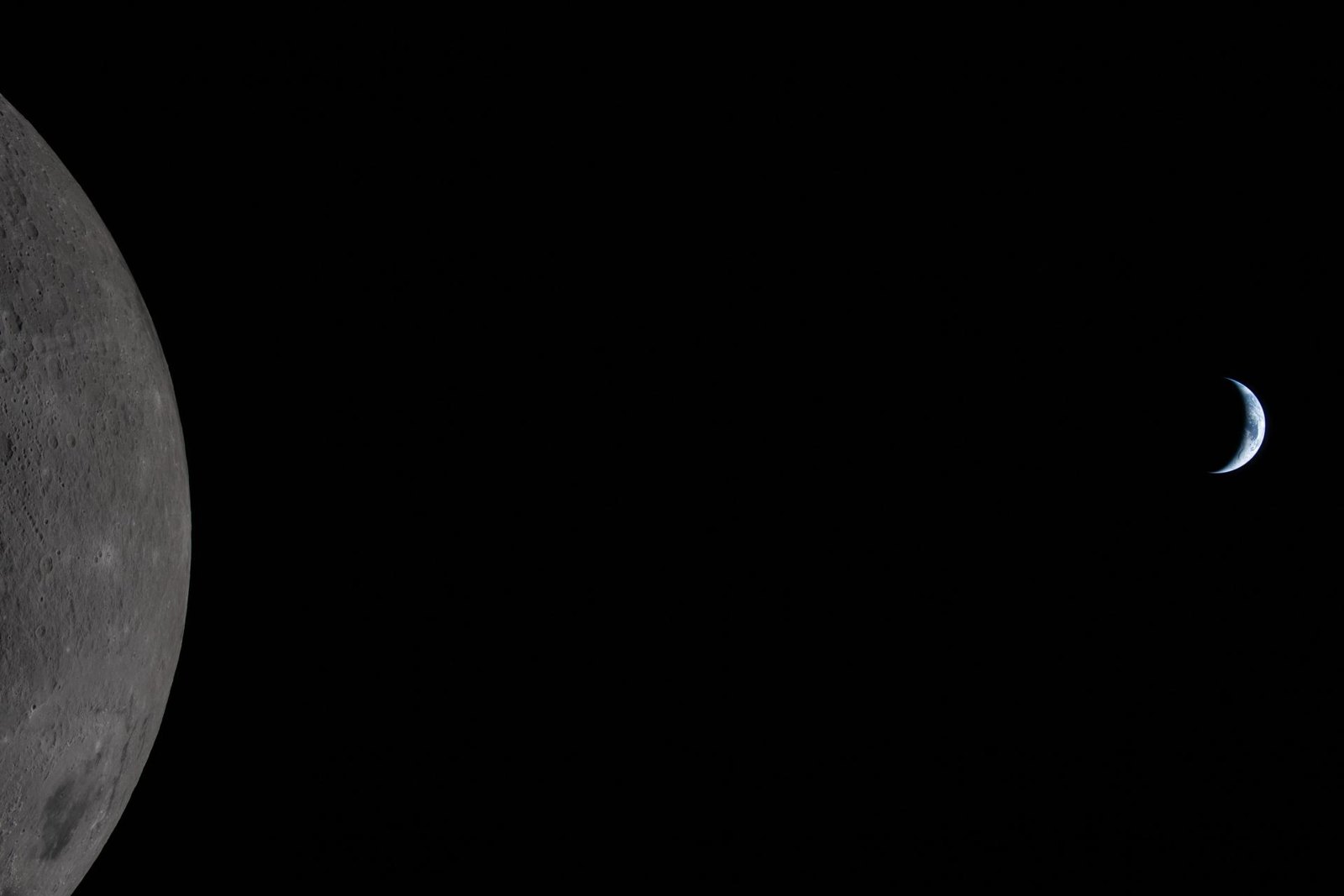
The Moon filling the left side of the frame with Earth as a small crescent in the blackness beyond the lunar limb, photographed by the Artemis II crew
Earth appears tiny beyond the lunar limb in this view from the Artemis II crew’s flyby on April 6, 2026. Shown unaltered except for resizing. Credit: NASA (art002e009284).

As the Moon keeps drifting away, it will appear slightly smaller. NASA says that once the Moon is about 14,600 miles (23,500 kilometers) farther from Earth than it is today, it will be too small in our sky to cover the Sun completely. If it keeps drifting at today’s rate of about 1.5 inches a year, NASA puts that at more than 600 million years from now. NASA lunar scientist Richard Vondrak has said that about 600 million years from now, Earth will see its last total solar eclipse. Treat that as a rough estimate for today’s rate, not a countdown. Total eclipses will get rarer first, and annular “ring of fire” eclipses already happen when the Moon is farther away in its orbit and looks a little too small to cover the Sun.
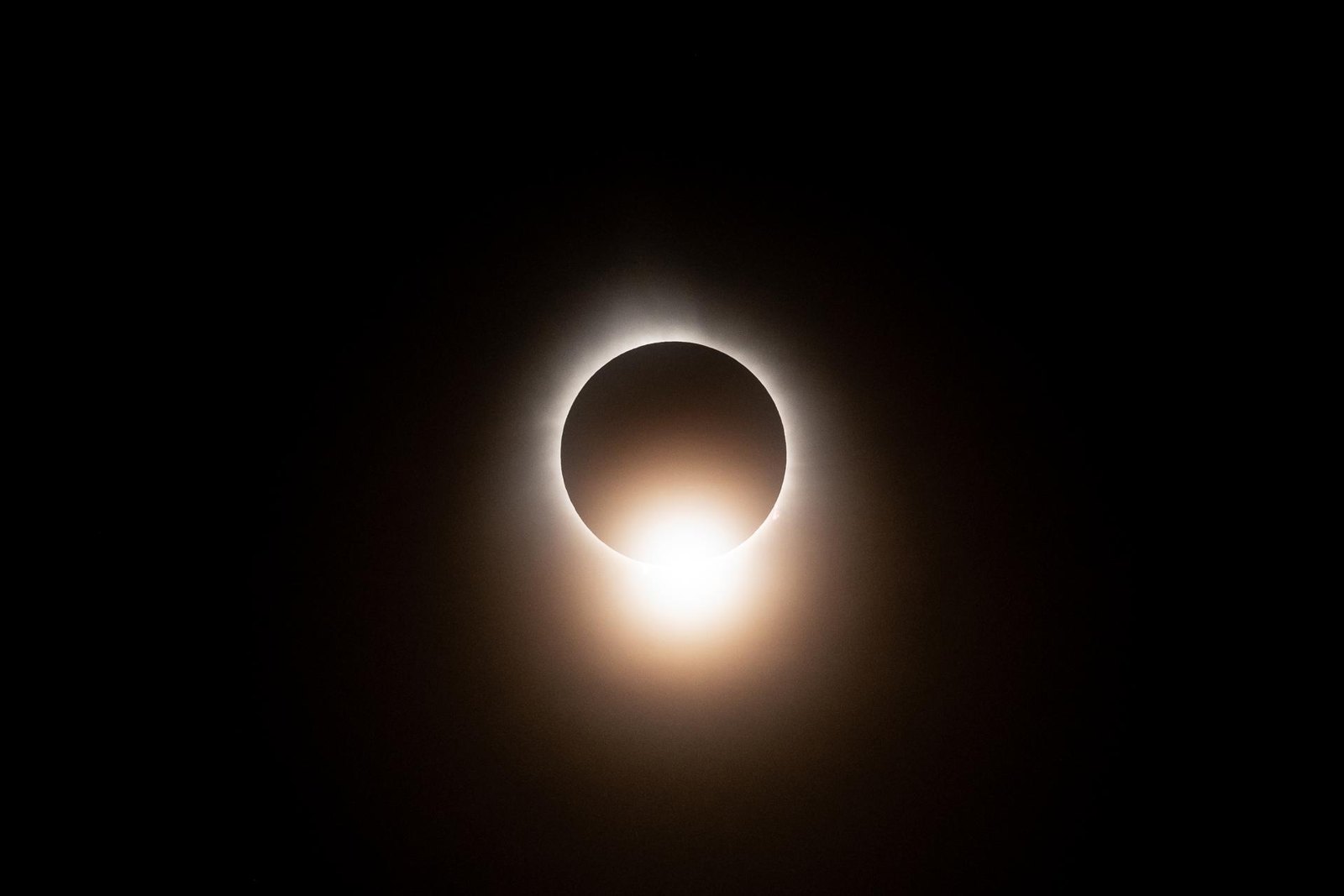
Total solar eclipse of April 8, 2024: the black disk of the Moon covering the Sun, with the Sun’s corona glowing around it
A total solar eclipse seen from NASA’s Glenn Research Center in Cleveland, Ohio, on April 8, 2024. Shown unaltered except for resizing. Credit: NASA/GRC/Jordan Salkin (GRC-2024-C-02616).

Bottom line: if you have ever seen a total solar eclipse, you saw something with an expiration date.

Watch the reel on the NO GROUND Facebook page.

No Ground. Stay curious.
Tags: Moon, tides, lunar laser ranging, Apollo, total solar eclipse, Earth