 No Ground

Every 8.25 days, a giant planet about 1,000 light-years away passed in front of its star. NASA’s TESS space telescope caught it doing so again and again, starting in 2019. Then, this year, the crossings stopped.
The planet had not been destroyed. Its orbit had tilted, and it slipped out of view while astronomers were watching. A UCLA-led team calls it the first known “disappearing planet.” Their paper, published Nov. 9 in The Astrophysical Journal Letters, describes it as the first confirmed planet orbiting a single star whose transits have been directly observed to disappear.
A shadow that kept shrinking
TESS, the Transiting Exoplanet Survey Satellite, finds planets by watching stars for tiny dips in brightness. When a planet passes in front of its star, it blocks a little of the light. Astronomers call that a transit, and it only works when the star, the planet and our line of sight line up just right.
The planet, TOI-2535 b, is a “hot Jupiter,” a gas giant that orbits extremely close to its star. It whips around in only 8.25 days, 10 times faster than the 88 days Mercury takes to circle the Sun. TESS observed the system many times between April 2019 and March 2026, and two things looked wrong.
First, the transits did not keep to a schedule. They came early or late by up to six hours. Second, they were getting shorter and shallower each year, until in 2026 they failed to appear at all.
“We think of the universe as resembling clockwork, where everything is regular, but that’s not true,” said Samuel Yee, a 51 Pegasi b Postdoctoral Fellow at UCLA and the paper’s corresponding author. “The planet’s orbit is tilting so quickly that its transit disappeared while we were watching.”
The neighbor nobody has seen
The culprit is a second planet that no one has seen yet. Its orbit is tilted compared with TOI-2535 b’s, and the two pull on each other hard enough to make both orbits wobble like a spinning top. As the wobble tips TOI-2535 b’s path, the planet stops crossing the face of its star from our point of view.
To work this out, the team combined the transit timings with measurements from NEID, an instrument on the WIYN 3.5-meter telescope at Kitt Peak National Observatory in Arizona that tracks how a star is tugged back and forth by its planets. Their modeling suggests the hidden neighbor is likely at least as massive as Saturn, with an orbit locked in step with TOI-2535 b’s. That makes this an unusual system, with two giant planets on short orbits.
Explore your sky tonightLive sky map for where you are: planets, the ISS and bright stars above your horizon.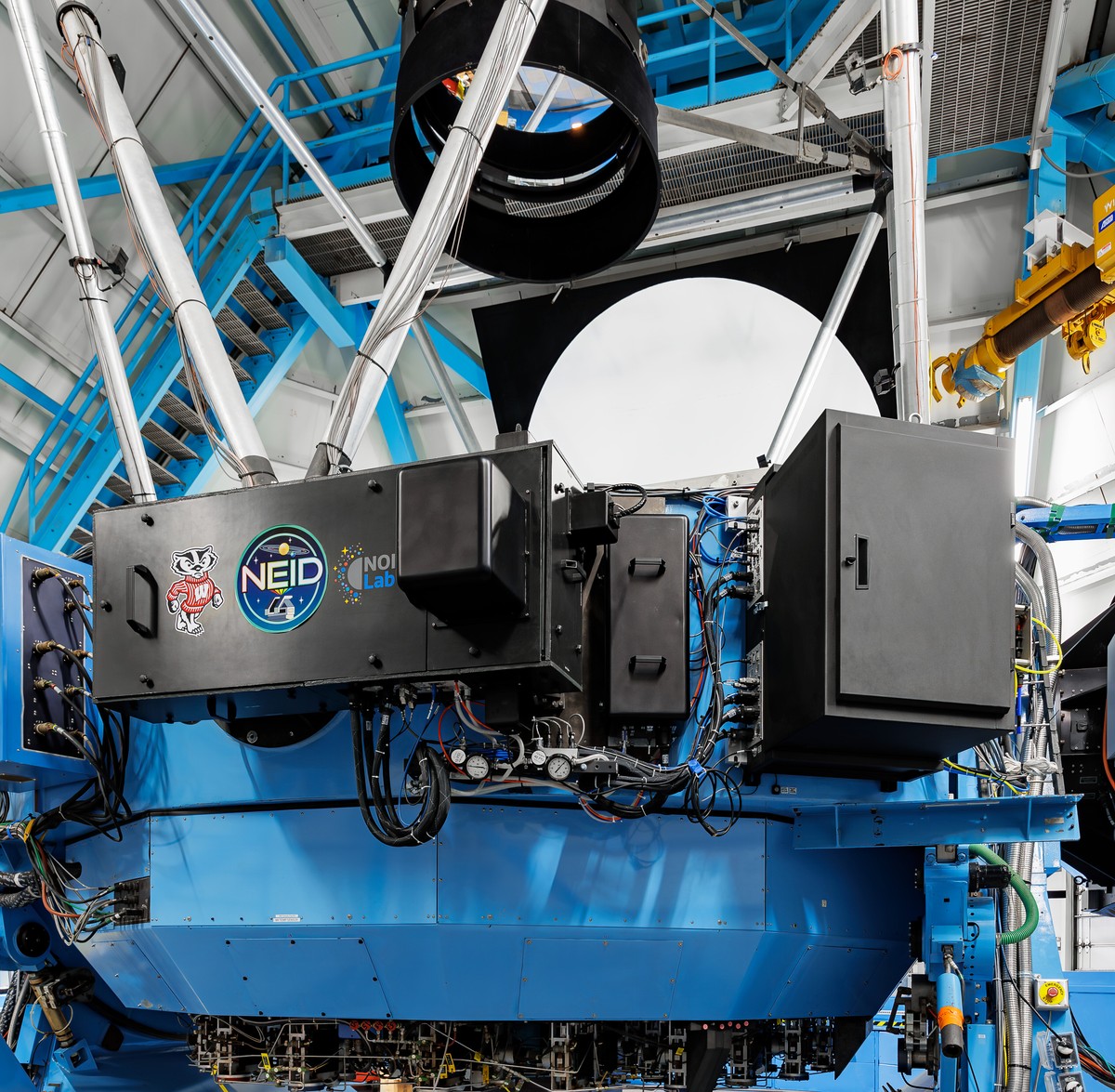
“This is the most extreme example we’ve seen because the two planets are interacting so strongly,” Yee said.
The same reason eclipses are rare
The geometry is the same as the one behind solar eclipses here on Earth. “If the moon’s orbit around the Earth was perfectly aligned with the Earth’s orbit around the sun, we would see an eclipse every month,” said UCLA astrophysicist and co-author Erik Petigura. “But because the moon’s orbit is tilted, eclipses are less common.”
TOI-2535 b is not gone for good. According to UCLA, it should transit its star again sometime in 30 to 50 years. Its hidden neighbor may come into view sooner.
A clue to how hot Jupiters are born
Hot Jupiters puzzled scientists when they were first found, because planet formation models suggested these giants need a lot of ice to form. Hundreds are now known, but they usually don’t have massive neighbors close enough to tug on them.
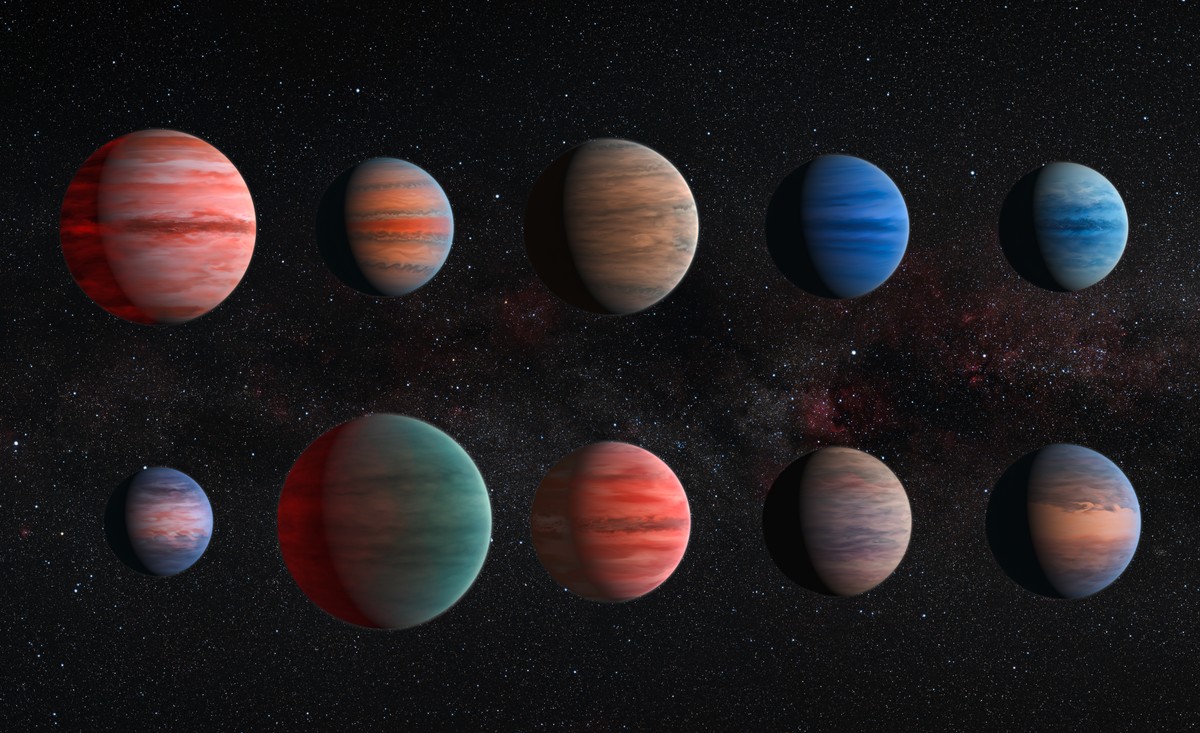
Yee and Petigura see two ways a hot Jupiter can end up so close to its star. One is violent: something like a near-collision flings the planet into a stretched-out orbit, and the star pulls it in. The other is gentle: the planet drifts inward along with other planets through the disk of gas and dust around a young star. The gentle route should leave a flat system, but the wobble of TOI-2535 b suggests the orbits in this one were tilted over time.
“Because TOI-2535 b has a close neighbor, it probably migrated by slowly spiraling in instead of getting flung in,” Yee said. “We may be seeing a formation channel that doesn’t happen very often but is very interesting.”
Bottom line: For seven years, a giant planet crossed its star like clockwork. Then a neighbor no one has seen tipped it out of line, and astronomers watched it vanish. It may not cross its star again for 30 to 50 years.
No Ground. Stay curious.