 No Ground

Two NASA missions at Mars are dealing with separate technical problems at the same time. One is a rover whose team has set aside both radios it normally uses to send its biggest batches of data. The other is an orbiter with a spinning part that stopped, one it needs to point itself.
NASA posted about both on Nov. 19, 2026, and it was plain about the important part: engineers do not yet know what caused the radio faults, and they do not yet know whether the wheel that stopped spinning can be saved. Here is what NASA has said so far, in plain words, and what it has not said.
The short version
NASA’s Perseverance rover has paused its science. Its two UHF radios, the ones it uses to hand large amounts of data to orbiters for relay to Earth, are both set aside while engineers investigate. The rover is stable and talking to the team, and NASA says the team is hopeful it could return to science by the end of November.
Separately, the 2001 Mars Odyssey orbiter has a reaction wheel that stopped spinning, and its science instruments are offline. NASA estimates Odyssey has enough fuel to steer without its wheels for only one to two months, though that estimate is still being refined. In one test the wheel did move when commanded, and more testing will show whether it can be recovered.
Perseverance: the heartbeat that stopped
On Oct. 30, the rover was powered on for the day’s work, and its primary downlink radio did not send the usual series of “heartbeats” to the rover’s main computer. A heartbeat is just an electronic ping, a regular “I’m fine” signal. NASA’s Steven Lee, the Perseverance project manager at the Jet Propulsion Laboratory (JPL) in Southern California, explained how the system works.
“The rover’s main computer continually listens for that ping,” Lee said. “Every time it hears the ping, it resets a counter. However, if the radio stops sending the heartbeat due to a fault, after a certain number of missing heartbeats in a row, the computer swaps to the redundant one.” This time there were 25 missed heartbeats, about 100 seconds of silence.
That silence did exactly what it was built to do. The onboard fault protection powered off the unresponsive radio, switched to a redundant duplicate radio that serves as a backup, and put the rover into safe mode. Safe mode is when a spacecraft shuts down all non-essential systems to protect itself, a bit like a computer dropping into a bare-bones startup so it cannot do more harm.
Then came a second surprise
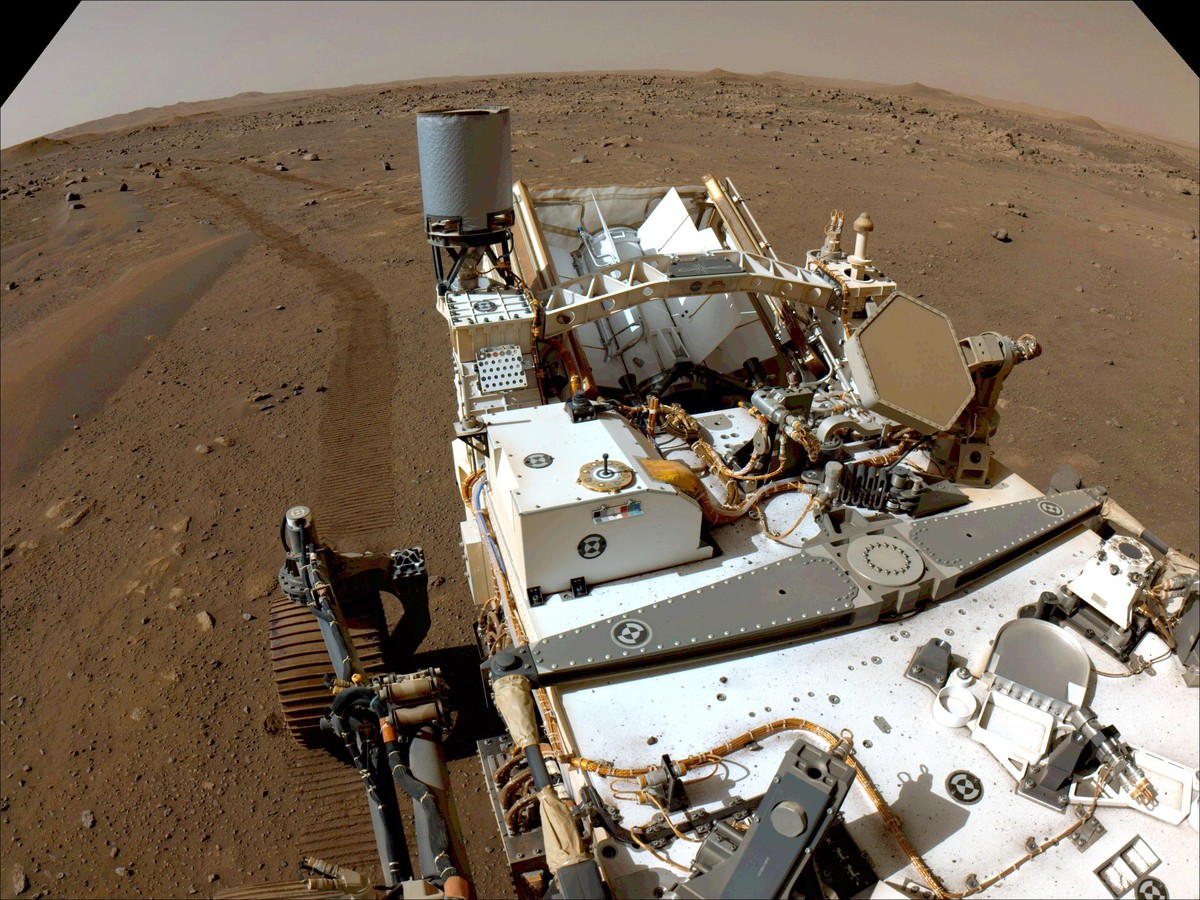
After the team brought the rover out of safe mode and studied the diagnostic data, engineers found a secondary issue. The backup UHF radio was transmitting at about half of its expected power. The team has now stopped using both radios until they can work out what is wrong and decide whether one or both are safe to use again.
NASA has not said what caused either problem. The post also does not say whether the two radio problems are related. NASA only says the team is evaluating “potential causes of the issues,” and that a JPL team has been assigned to study the backup radio first and look at ways to return it to operation. After that, they will keep working on recovering the primary radio.
How a rover phones home
This is the part that is easy to miss. Perseverance can talk to Earth in two different ways, and they are very different.
The usual route is a relay. The rover sends its data by UHF radio up to a spacecraft orbiting Mars, which passes it on to Earth. NASA describes the UHF radios as the ones used to transmit large volumes of data to orbiters. Think of it as handing a big package to a courier with a big truck.
The other route is direct. Right now, NASA says Perseverance is talking straight to the Deep Space Network, NASA’s system of big ground antennas, using X-band radio on its high-gain antenna. That keeps a steady line open to Earth. But NASA says this direct link has a significantly lower data rate. It works, but it is a thin line.
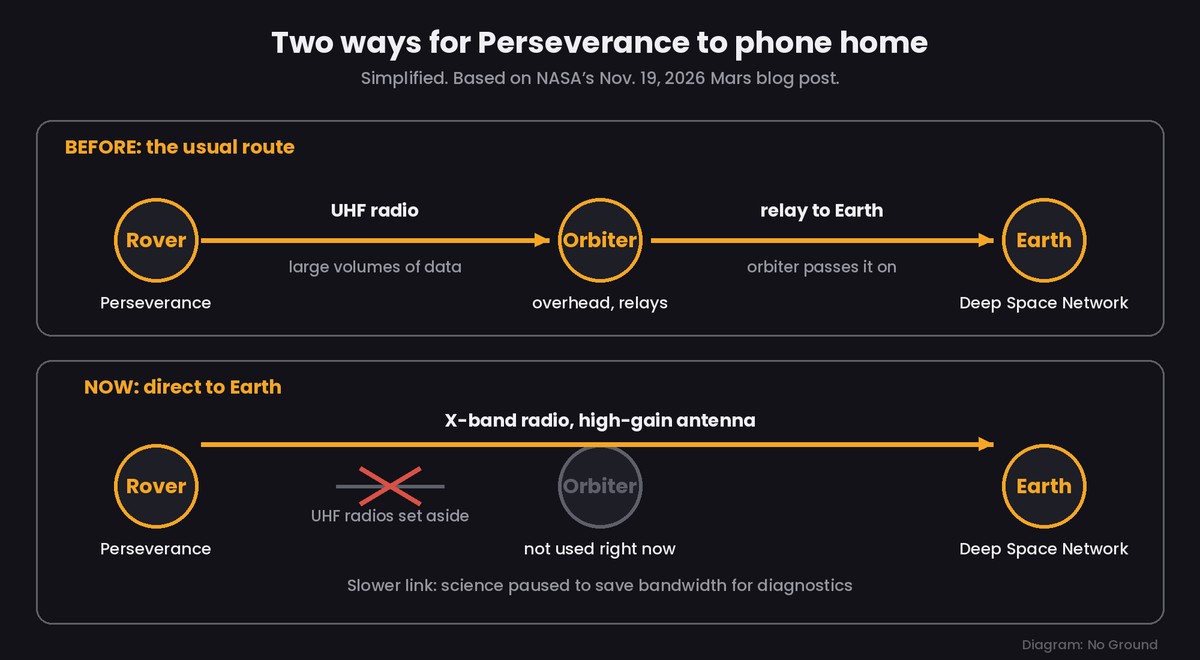
Because that line is so thin, NASA paused science and instrument operations to save bandwidth for diagnostic data, the information engineers need to figure out what went wrong. One visible effect: the rover is not capturing new images from its cameras, so the stream of raw, unprocessed pictures on the rover’s mission website has stopped adding new ones. If you were wondering why that page has gone still, that is why.
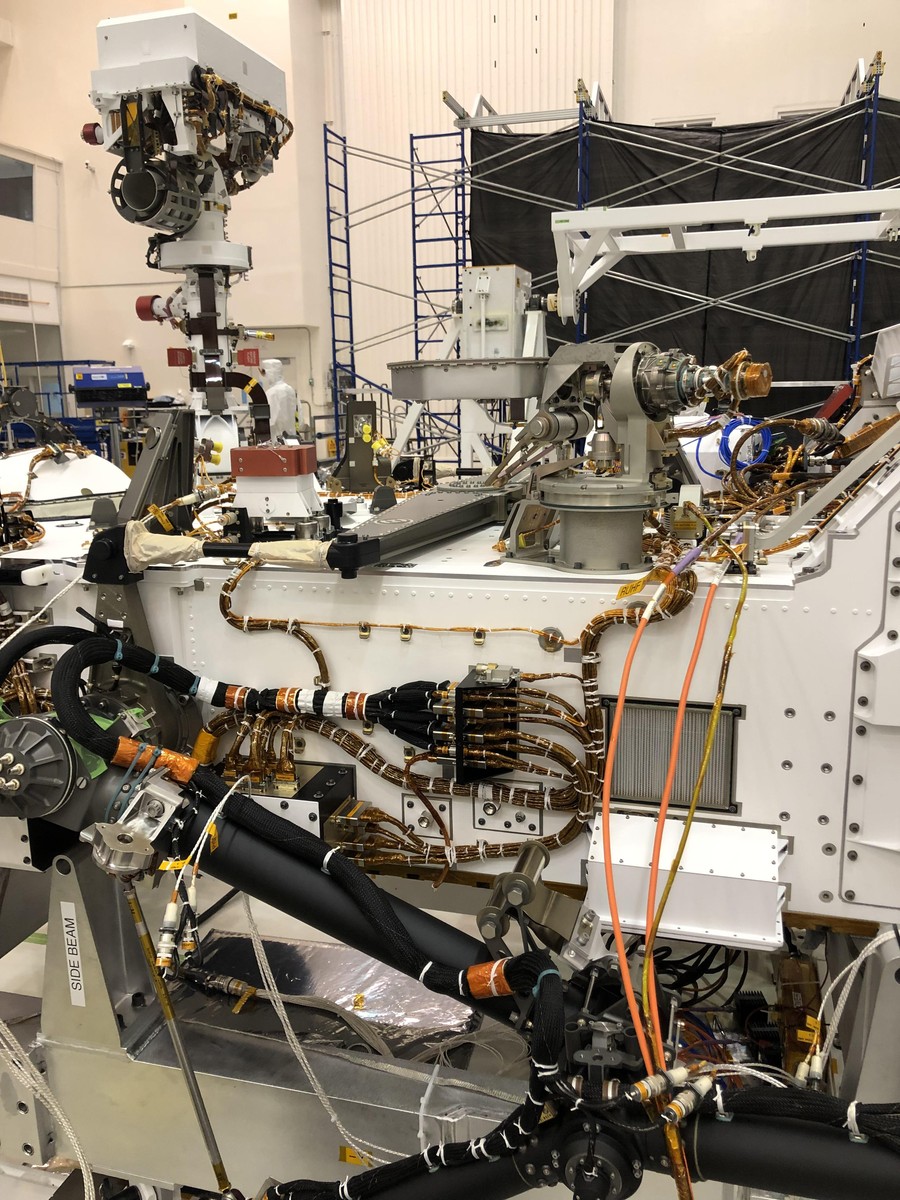
NASA says it will provide further updates as the team works the issue. The team’s hope that the rover could return to science by the end of November is a goal, not a promise.
Odyssey: a wheel that stopped spinning
Now to the orbiter. Mars Odyssey has been circling Mars for 25 years, and between Nov. 4 and 6 it went into safe mode. After investigating, engineers found that one of its reaction wheels had stopped spinning.
Explore your sky tonightLive sky map for where you are: planets, the ISS and bright stars above your horizon.A reaction wheel is a spinning wheel inside a spacecraft. NASA explains that spacecraft orient themselves by using thrusters together with sets of reaction wheels, which speed up or slow down to change their angular momentum. Changing that momentum creates a torque that turns the spacecraft, for example to point its solar arrays at the Sun. In everyday terms, it is like sitting in a spinning office chair and speeding up a heavy wheel in your hands. The chair turns the other way.
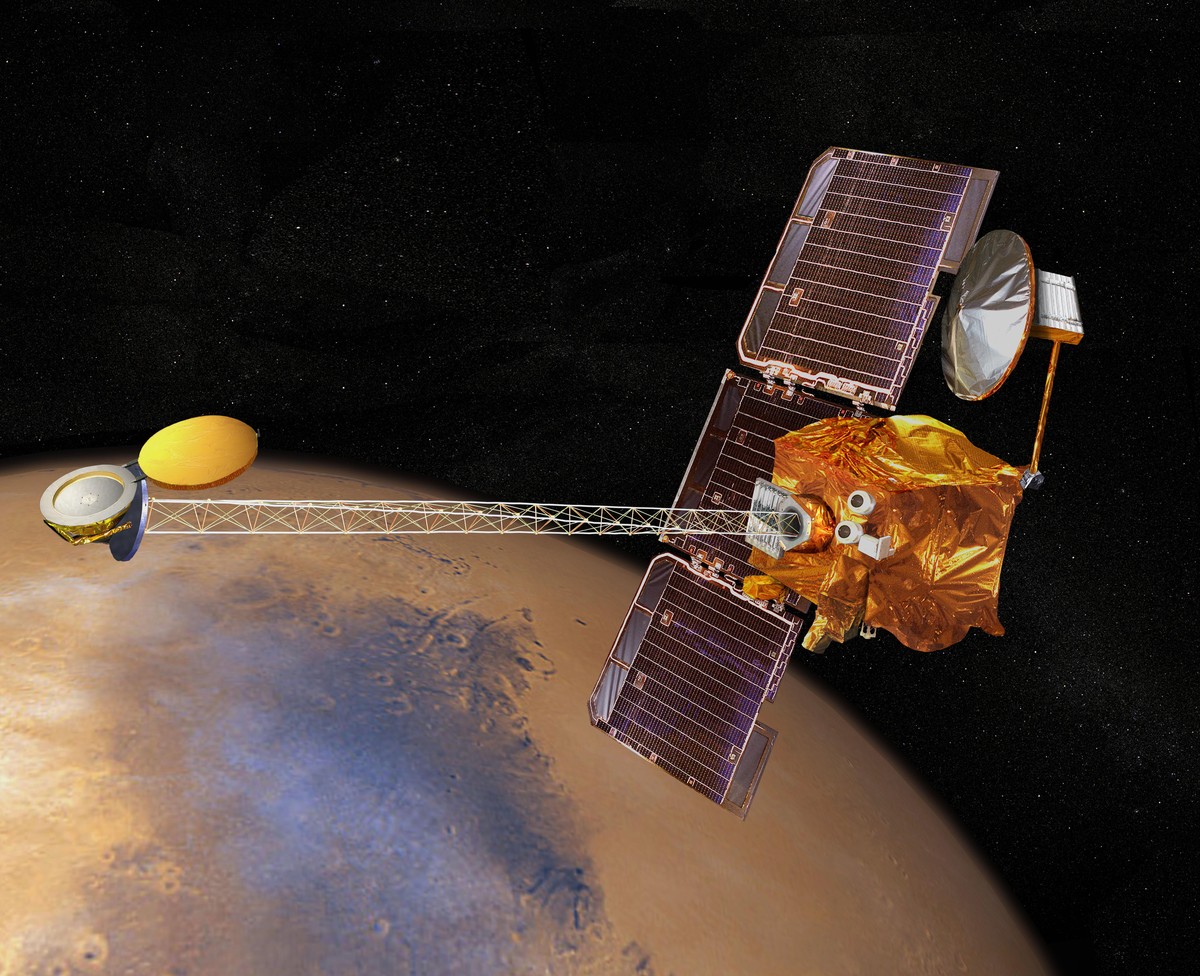
Odyssey has four reaction wheels, and one of them already failed back in 2013. NASA says at least three wheels are needed to help orient the spacecraft. By our math, with one wheel gone since 2013 and another one stopped, that leaves two working normally, one short of the minimum.
Without enough wheels, the orbiter has to rely only on its hydrazine thrusters to stay pointed the right way, and thrusters burn fuel. The Odyssey team estimates there is only enough hydrazine to do that for one to two months. NASA says efforts to refine that estimate continue. It is an estimate, not a countdown clock, and NASA has not said what happens at the end of it.
There is some good news in the post. Odyssey is no longer in safe mode. Teams at JPL, which leads the mission, and at Lockheed Martin, which built and operates the spacecraft, are analyzing Odyssey’s data and running tests on the wheel. During one test, the wheel was able to move after being commanded. NASA says more testing is needed to confirm whether the wheel is recoverable. Right now, Odyssey’s science instruments are offline, and nobody can say yet how the wheel tests will end.
The goal is for Odyssey to return to science and relay operations once those tests and analysis wrap up, during the last week of November. Again, that is a goal. NASA says it will share updates on status and timeline as the team learns more.
Why Odyssey matters
Odyssey is the old-timer. It launched in April 2001 and entered orbit around Mars in October 2001, on a mission designed to last just over two and a half years. NASA says it has now operated at Mars longer than any other mission.
Its maps are a big reason why. NASA says Odyssey made the first global maps of the composition of the Martian surface, which became foundational for Mars geologists. Its maps have also helped find hazards at landing sites, pick out places for landers and rovers to explore, and map water molecules in the top 3 feet of the surface, including buried ice that could be useful to the first astronauts on Mars.
Odyssey is also part of NASA’s Mars Relay Network. It sent back the first images taken after landing by the Phoenix lander and by the Spirit, Opportunity and Curiosity rovers. For more on how long a trip to Mars takes, see How Long Does It Take to Get to Mars? and for another look at the red planet, Mars Dust Is Finer Than We Knew.
What nobody knows yet
It helps to be clear about what NASA has actually said, because this story could easily get blown out of proportion. These are two separate issues on two separate missions, and NASA calls both of them technical issues under investigation.
Here is what is not known yet. NASA has not said what caused the radio faults on Perseverance. It has not said whether the wheel on Odyssey can be recovered. The end-of-November dates for both missions are hopes and goals. NASA has said it will post updates as the teams learn more.
It is also worth noting what NASA has said is going fine. The rover is stable and communicating with the team, and NASA says the missing heartbeats “correctly triggered” its onboard fault protection. Odyssey is no longer in safe mode. Both missions have teams working on them, testing before they decide what to turn back on.
One more quiet spacecraft
NASA is also working on a data problem far from Mars. NASA’s Voyager team said that on Nov. 14 it became aware that Voyager 1 had stopped sending science and engineering data, and that finding the cause “may take weeks or longer.” That is a different spacecraft and a different problem, but we covered the milestone it was approaching in Voyager 1 Is Now One Light-Day From Earth.
Bottom line: As of NASA’s Nov. 19, 2026 post, Perseverance has paused science while engineers study problems with both of its UHF radios, and Mars Odyssey is working through a stopped reaction wheel with an estimated one to two months of fuel for steering by thrusters alone. NASA does not yet know the cause of the radio faults or whether the wheel can be recovered, and its late-November restart dates are goals, not promises.
No Ground. Stay curious.