 No Ground
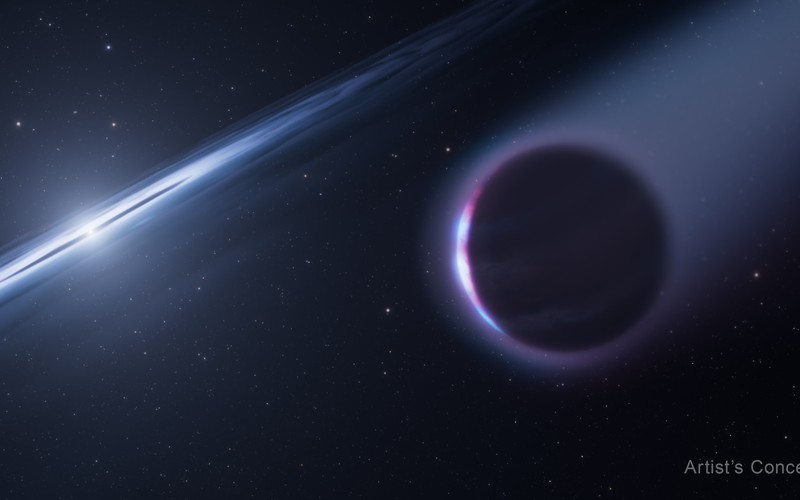
One proven way to find a planet around another star is to watch the star wobble. As the planet orbits, its gravity tugs the star back and forth. The star’s light shifts slightly redder as it moves away from us and slightly bluer as it moves toward us.
Two new studies led by NASA astrophysicists show how the same trick could work with something that isn’t light at all: gravitational waves, the tiny ripples in space-time made by orbiting masses. And the planets it could find would belong to a kind no one has ever seen: worlds circling pairs of dead stars.
Two dead stars, one steady signal
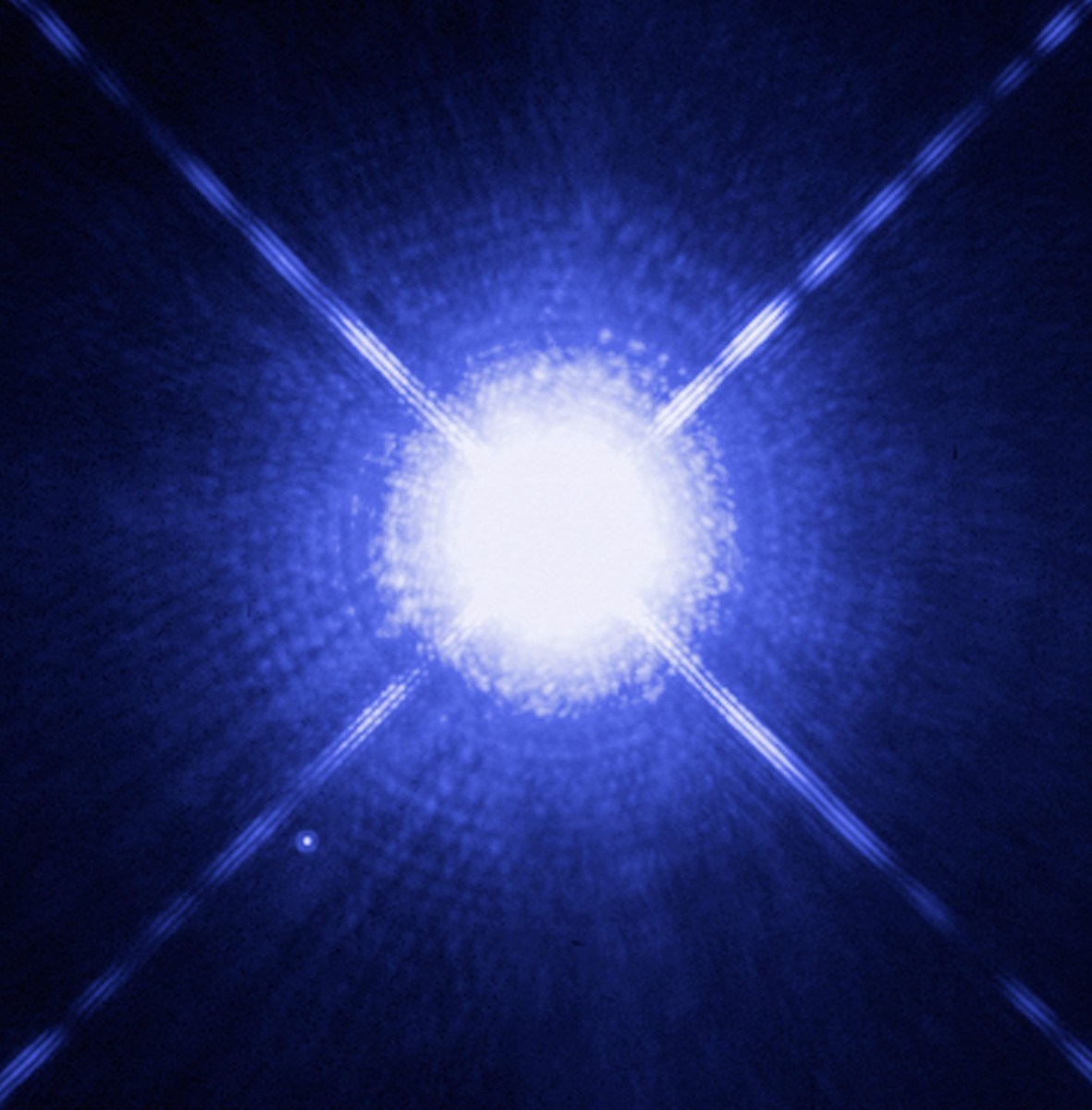
The dead stars are white dwarfs, the Earth-sized remnants of stars like the Sun. Some come in pairs locked in orbits so tight that they circle each other in less than an hour. Astronomers estimate our galaxy holds 10 million of these pairs, and they send out gravitational waves in just the range that LISA, a future space observatory, is built to catch.
“The most common source for LISA is expected to be double white dwarf systems, which are binaries composed of white dwarfs in tight orbits,” said Casey McGrath, a postdoctoral researcher at the University of Maryland, Baltimore County and NASA’s Goddard Space Flight Center. “If an exoplanet also orbits within one of these systems, its presence becomes imprinted on the gravitational wave signal in a way we’ll be able to uncover.”
A planet hidden in the signal
“By themselves, double white dwarfs will emit gravitational waves at a nearly continuous frequency,” said Scott Noble, a theoretical astrophysicist at NASA Goddard. Add a massive enough planet, and its gravity tugs the pair back and forth. That adds a Doppler wobble to the gravitational signal.
In LISA’s data, the wobble would show up as sidebands: faint secondary signals just above and just below the main one. McGrath compares it to radio, where some of a station’s main carrier signal is spread into sidebands that carry the voices or music. Here, the sidebands carry a message about a planet. The title of McGrath’s paper says it plainly: “Receiving Exoplanet Messages with Gravitational-wave Carriers.”
NASA says LISA could detect a Jupiter-mass planet in such a system up to thousands of light-years away, and under ideal circumstances, one smaller than Jupiter.
Explore your sky tonightLive sky map for where you are: planets, the ISS and bright stars above your horizon.A new kind of world
Planets have been found around a few lone white dwarfs. None has ever been found around a pair. If LISA finds them, NASA says, they would be a distinct new population of exoplanets. The idea goes back to 2008, when Japanese astronomer Naoki Seto first proposed it.
The second study asks how to prove such a planet is real. “Once LISA captures its first exoplanet detections, it will be critical for us to validate some of them,” said Mary Anne Limbach of the University of Michigan.
The team’s answer is NASA’s James Webb Space Telescope. A planet in one of these systems gives off a larger share of infrared light than the two stars alone would. Webb can pick up that extra infrared glow out to at least 500 light-years. For a test system at that distance, based on a real white dwarf pair called ZTF J2243+5242, Webb could detect a planet about five times the mass of Jupiter. The paper adds a second check: measuring the stars’ tiny shifts in position with ESA’s Gaia or NASA’s future Habitable Worlds Observatory.
An observatory still being built
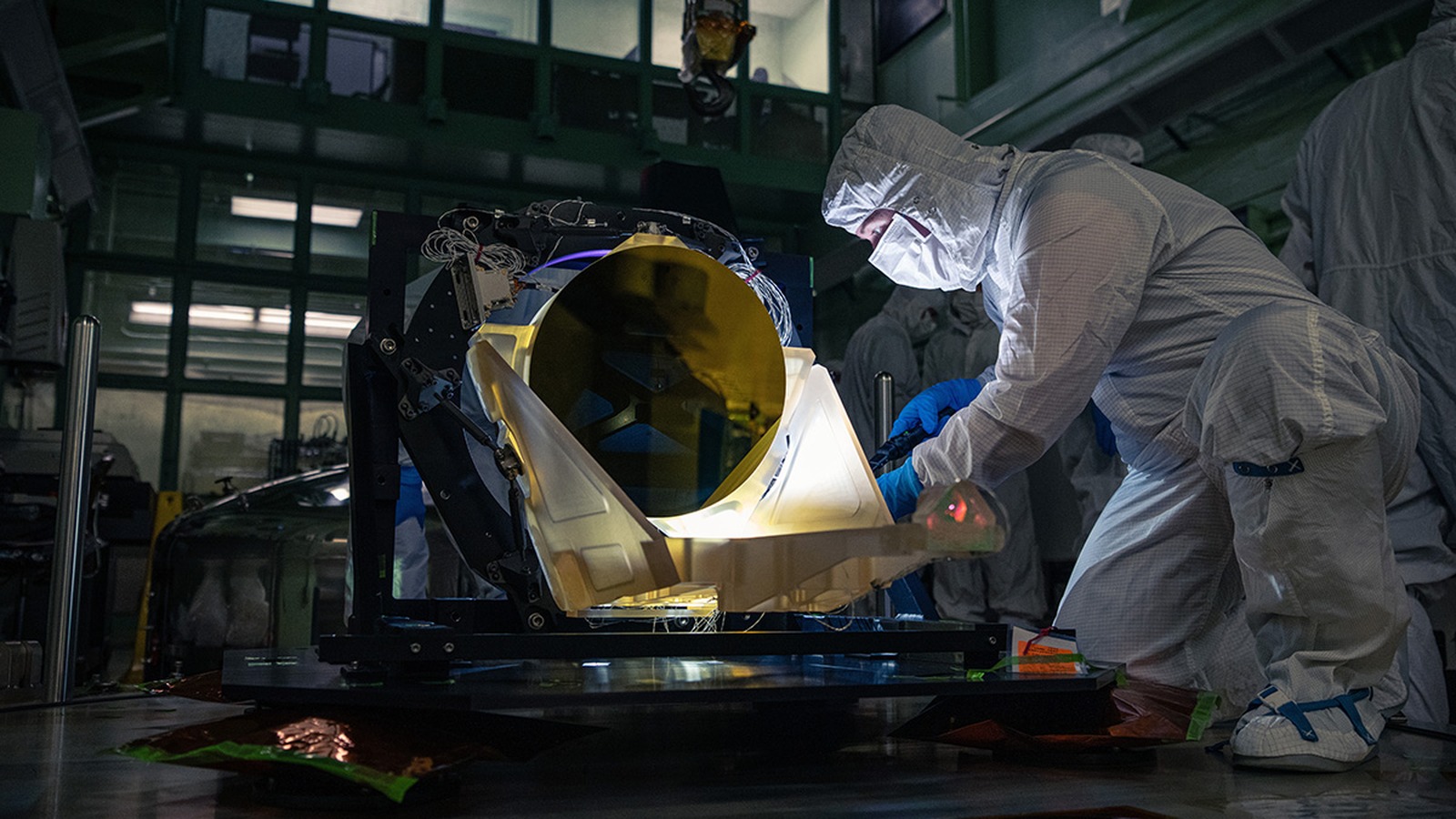
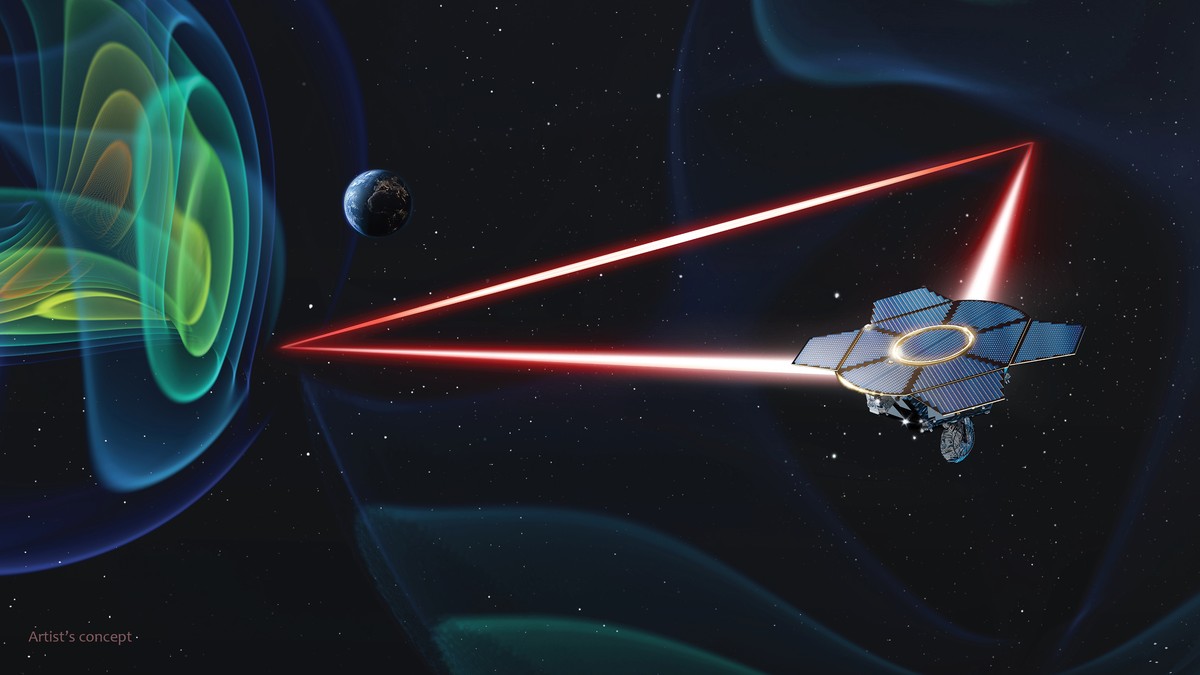
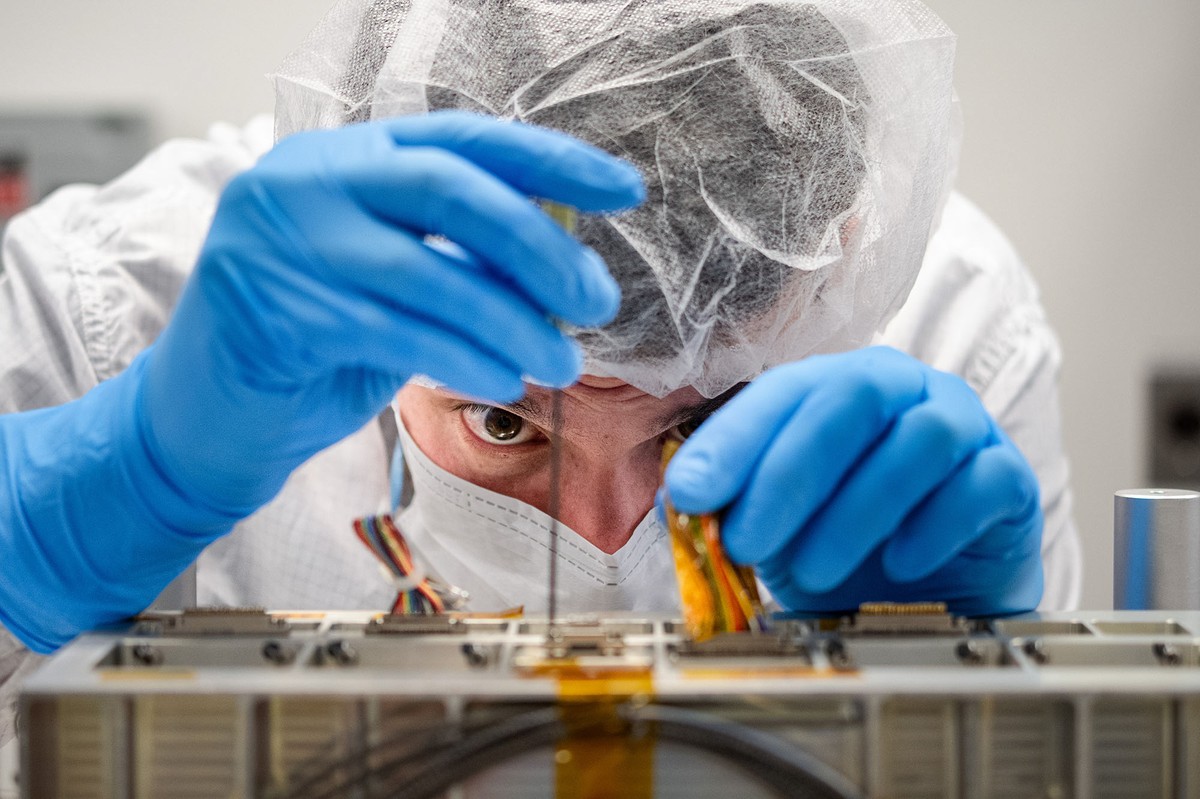
LISA is led by ESA, the European Space Agency, and slated to launch in the mid-2030s. Three spacecraft will follow Earth around the Sun in a triangle 1.6 million miles (2.5 million kilometers) on a side, firing infrared lasers between them. They will measure changes in their separation smaller than the width of a helium atom. NASA is supplying the telescopes, the laser system and other key hardware.
Bottom line: No planet has ever been found around a pair of white dwarfs. If LISA works as planned, some could give themselves away without being seen, through the way they make two dead stars wobble, written into ripples of space-time.
No Ground. Stay curious.