 No Ground
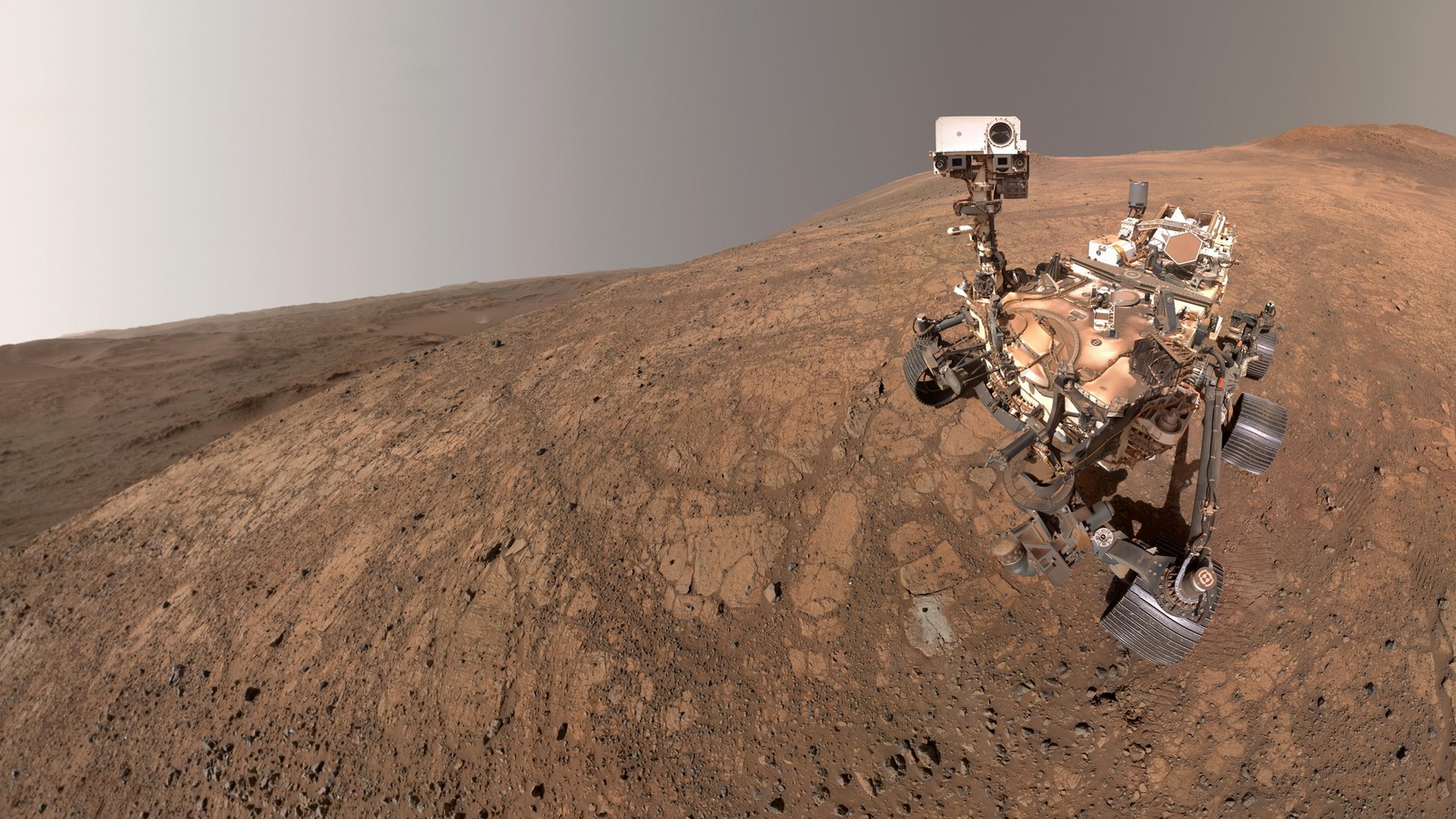
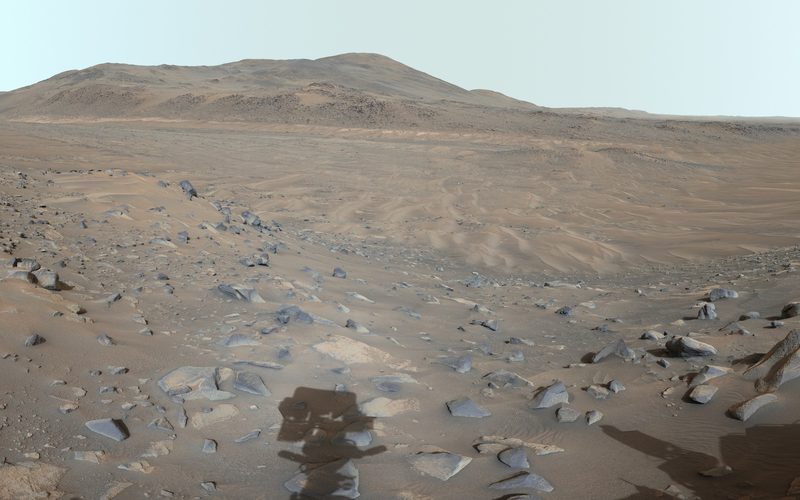
NASA has four missions still working at Mars: two rovers on the ground and two orbiters overhead. Right now, two of them have stopped doing science. The Perseverance rover is waiting on its radios. The Mars Odyssey orbiter, the oldest spacecraft at Mars, is testing a wheel that stopped spinning, and it does not have much fuel to spare while it does.
NASA described both problems in a Nov. 19, 2026 post. Ars Technica called it half of NASA’s aging Mars fleet knocked offline. As of the morning of Nov. 27, NASA had not posted a newer update. Both teams set goals of getting back to work by the end of November, so the next few days should tell us a lot. We first covered the problems in Two NASA Mars Missions Are Having Trouble at the Same Time. Here is where things stand.
Who is still working at Mars
According to Ars Technica, NASA’s four working Mars missions are the Perseverance and Curiosity rovers on the surface and the Odyssey and Mars Reconnaissance Orbiter (MRO) spacecraft in orbit. Curiosity is still driving and collecting data after 14 years on Mars. MRO reached Mars in 2006. Two European Space Agency orbiters, the ExoMars Trace Gas Orbiter and Mars Express, also help relay data from the rovers.
The list used to be longer. NASA lost contact with its MAVEN orbiter in December 2025, after 11 years at Mars, when the spacecraft suddenly spun out of control. Ars reports that an investigation could not pin down one root cause. Engineers concluded that a radiation-induced glitch or a software issue made MAVEN’s flight computer reboot, according to Tiffany Morgan, director of NASA’s robotic Mars Exploration Program.
Perseverance: a rover with a weak voice
Perseverance’s trouble started on Oct. 30. When the rover powered on for the day, its primary UHF radio did not send its usual “heartbeat” pings to the main computer. After 25 missed heartbeats, about 100 seconds of silence, the rover’s fault protection did what it was built to do. It switched off that radio, switched on the backup and put the rover into safe mode, where it shuts down everything it does not need.
Then engineers found a second problem. The backup UHF radio was transmitting at only about half of its expected power. NASA says the team has stopped using both radios “until they can evaluate potential causes of the issues and one or both are deemed safe to resume operating.” NASA has not said what caused either fault.
The thin line home
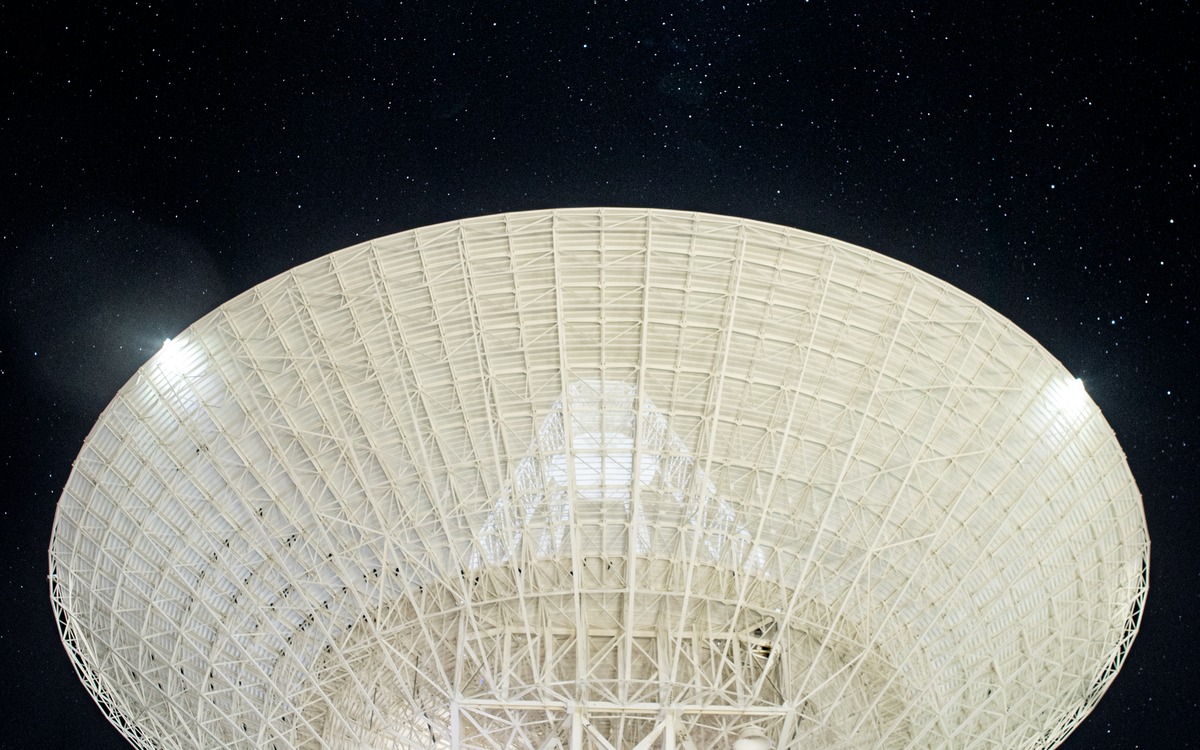
The UHF radios are how Perseverance usually sends large amounts of data, by passing it up to orbiters that relay it to Earth. Without them, the rover is talking straight to NASA’s Deep Space Network of big ground antennas, using X-band radio on its high-gain antenna. That keeps contact steady, but NASA says the data rate is “significantly lower.”
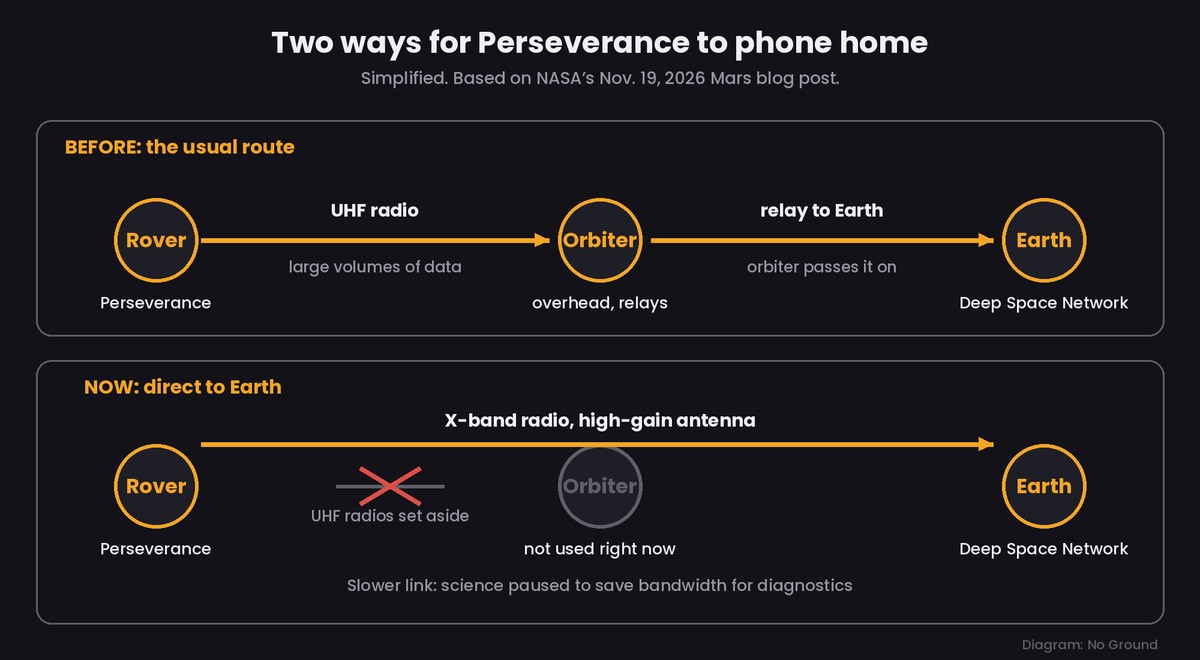
To save that thin connection for diagnostic data, NASA paused science and instrument work “out of an abundance of caution.” The rover is not taking new pictures, so its raw-images page has stopped filling up. NASA says the rover is stable and in contact with the team. A JPL team is working on the backup radio first and will then turn to the primary one. The team is hopeful Perseverance could return to science by the end of November.
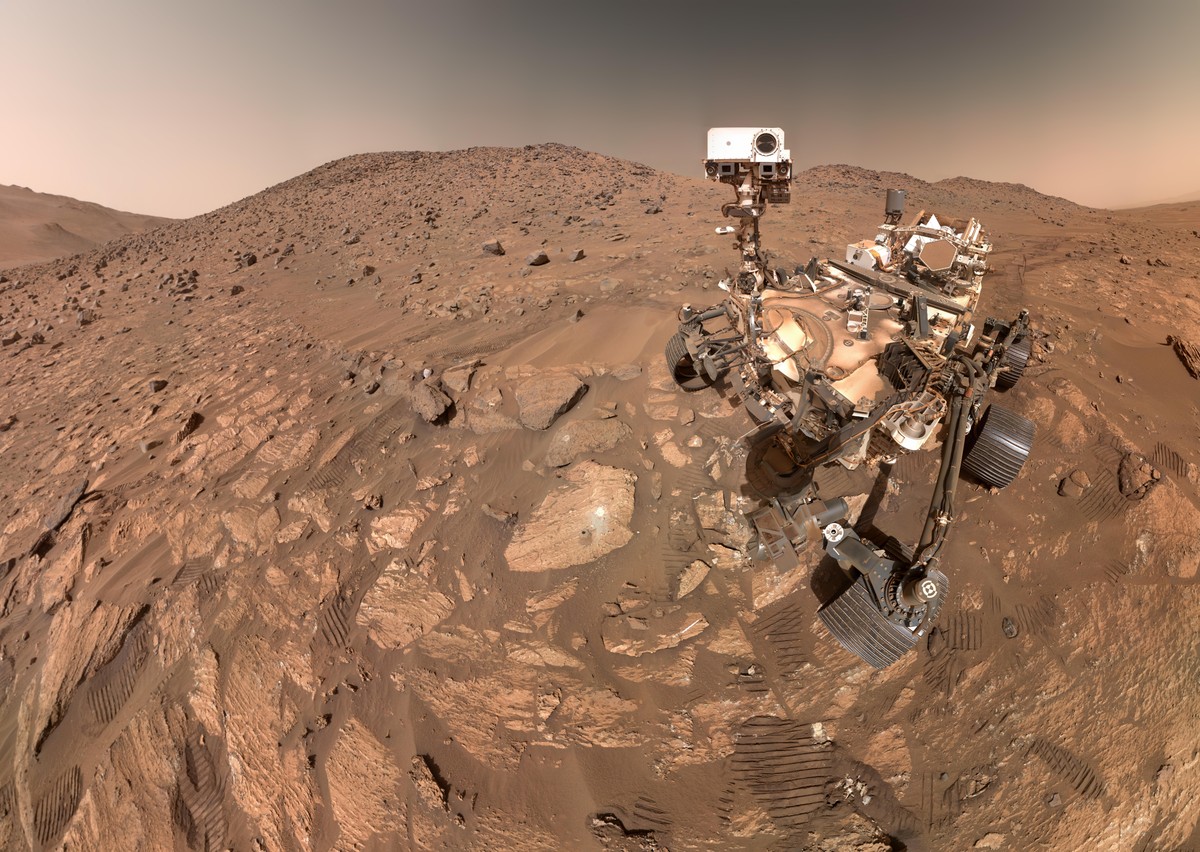
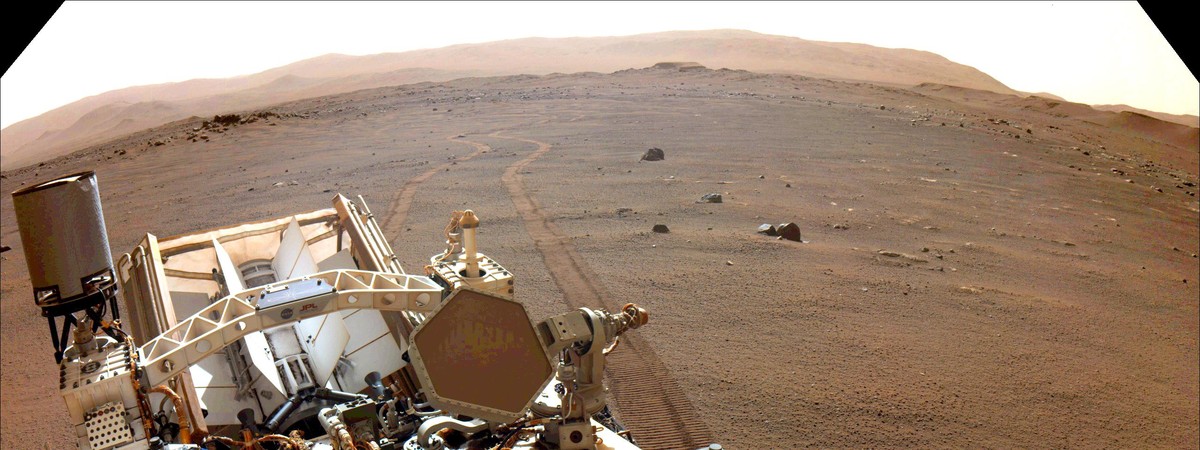
The timing is hard. Ars notes that last month Perseverance passed the 28.06-mile mark set by the Opportunity rover, which made it the farthest-driving vehicle on another world. It is in its sixth year on Mars, studying the rim of a crater that once held a lake.
Explore your sky tonightLive sky map for where you are: planets, the ISS and bright stars above your horizon.Odyssey: a stuck wheel
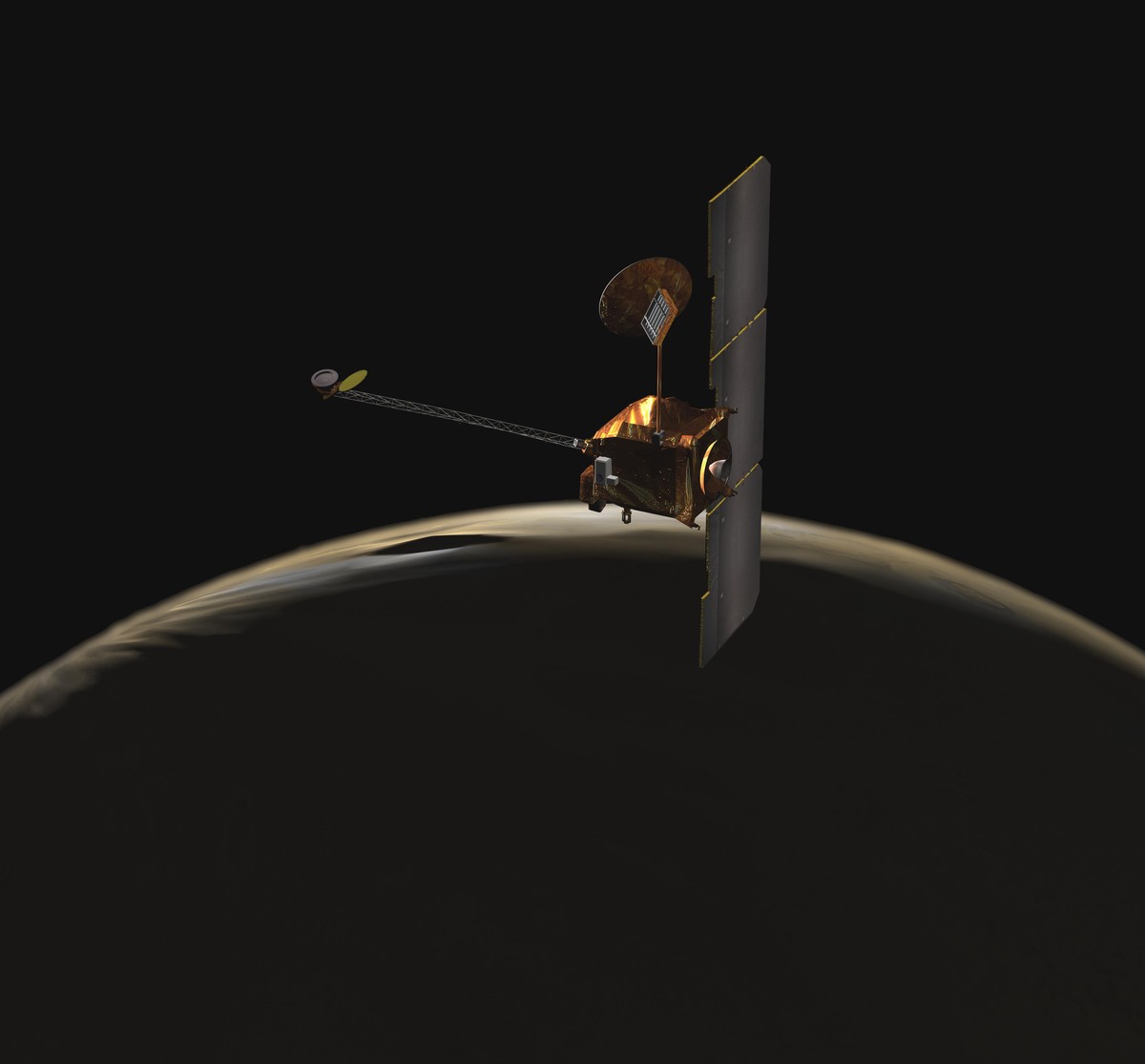
Odyssey went into safe mode between Nov. 4 and 6. Engineers found that one of its reaction wheels had stopped spinning. A reaction wheel is a spinning wheel inside the spacecraft. Speeding it up or slowing it down turns the spacecraft, which is how Odyssey points its solar arrays at the Sun and its instruments at Mars.
Odyssey has four reaction wheels, and one already failed in 2013. NASA says it needs at least three to stay oriented. With two healthy wheels, it has to lean on its hydrazine thrusters, and every thruster firing burns fuel.
A fuel clock
This is the part that sounds the most serious. NASA says that without its reaction wheels, Odyssey has enough hydrazine to keep itself oriented for only one to two months. NASA calls that an estimate and says work to refine it continues.
It is a big change from earlier this year. Ars reports that Odyssey was already low on fuel, but its managers expected that, with “extremely low” fuel use, it could keep working through at least the end of 2028. That was the view of Jeffrey Plaut, Odyssey’s project scientist at JPL, in a presentation earlier this year. It assumed the three remaining wheels kept working.
There is some hope. Odyssey is out of safe mode, and during one test the stuck wheel moved when it was commanded to. NASA says more testing is needed to know whether the wheel can be recovered. Teams at JPL and at Lockheed Martin, which built and operates the orbiter, are studying the data. Odyssey’s science instruments are offline for now. The goal is to resume science and relay work in the last week of November, which is this week.
Why one old orbiter matters
Odyssey launched in April 2001 and reached Mars that October, on a mission planned for just over two and a half years. NASA says no other mission has worked at Mars longer. Its maps showed what the Martian surface is made of, and it mapped water molecules in the top 3 feet of the ground, including buried ice that future astronauts might use. It also relays data from rovers to Earth. It sent back the first images from the Phoenix lander and the Spirit, Opportunity and Curiosity rovers after they landed.
Help is planned, but it is not coming soon. Ars reports that NASA gave Blue Origin a $700 million contract in September for the Mars Telecommunications Network, an orbiter built to relay data at high speed. NASA wanted it working at Mars in 2030. The project is on hold while the Government Accountability Office reviews a protest by Rocket Lab, which lost the bid. Ars reports a ruling is expected in December.
What we are watching
As of NASA’s Nov. 19 post, nobody knows what caused the radio faults, whether either radio can be used again, or whether Odyssey’s wheel can be saved. NASA’s end-of-November dates are goals, not promises, and NASA says it will share updates as the teams learn more. If the wheel cannot be recovered, NASA’s estimate gives Odyssey one to two months of fuel for pointing itself, and NASA has not said what it would do after that. We will update this story when NASA does.
For more on how Mars works, read what Perseverance learned about Martian dust and how long it takes to get to Mars.