 No Ground
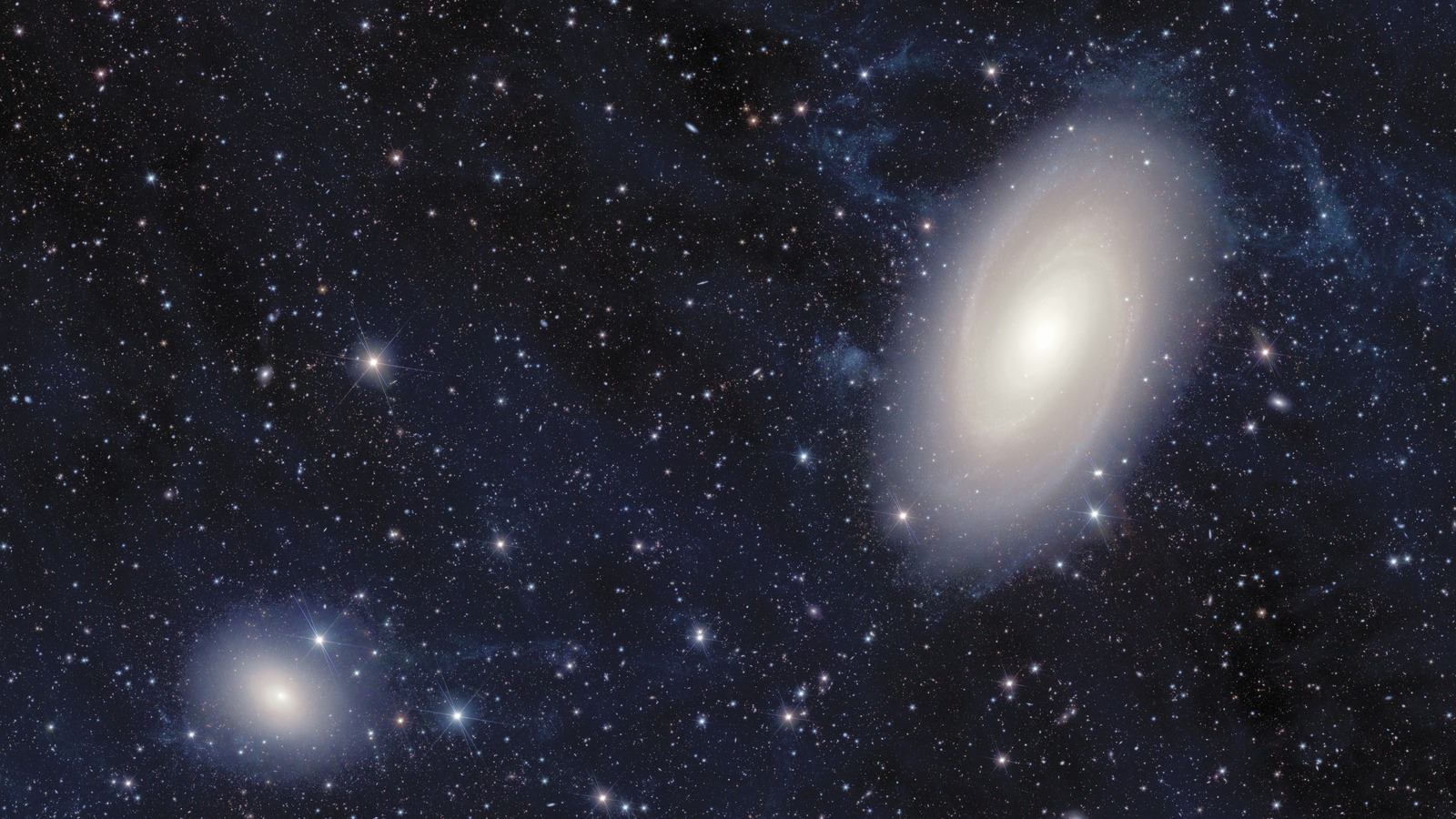
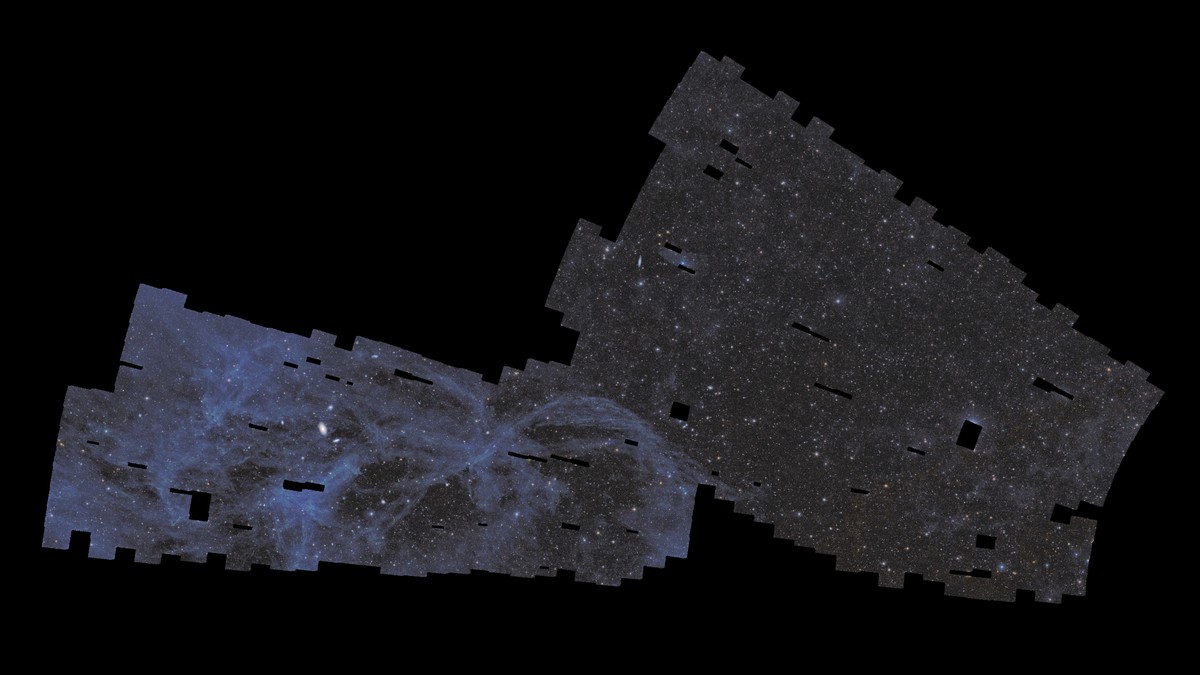
Euclid looked at one patch of sky, about five times the size of the full Moon, for just over an hour. The picture at the top of this page is what came back: the core of the Messier 81 galaxy group, around 12 million light-years away.
It is one image out of something much bigger. On Nov. 12, 2026, the European Space Agency released DR1-Foundation, the first major batch of data from its Euclid space telescope since launch in July 2023. According to the University of Oxford, part of the Euclid Consortium, Euclid has catalogued more than 900 million galaxies across the area released so far.
A map of 1,900 square degrees
The new data cover around 1,900 square degrees of sky, an area ESA compares to 9,500 full Moons. Oxford puts it at about 5% of the whole sky. The observations were gathered over about 13 months, from spring 2024 to spring 2025, by a telescope Oxford describes as a million miles from Earth.
ESA says the release includes raw data, calibrated images, catalogues and spectra, about 1.7 million gigabytes in all. Earlier Euclid releases held a few days of observations over around 60 square degrees, said Valeria Pettorino, ESA’s Euclid project scientist. “We’re now releasing more than a year of data covering a significantly larger area. This unlocks ground-breaking science.”
Single stars, 12 million light-years away
In the image at the top, the large spiral on the right is Messier 81, the biggest galaxy in the group. ESA calls it a “grand design” spiral: a bright center and well-defined arms rich in gas and dust. The smaller galaxy on the left is NGC 3077, one of its neighbors. Messier 81’s gravity influences nearby galaxies like it, triggering bursts of star formation and changing their shape over time.
The faint blue threads drifting across the frame are not out there with the galaxies. ESA calls them galactic cirrus: dusty clouds inside our own galaxy, hanging in the foreground between us and Messier 81.
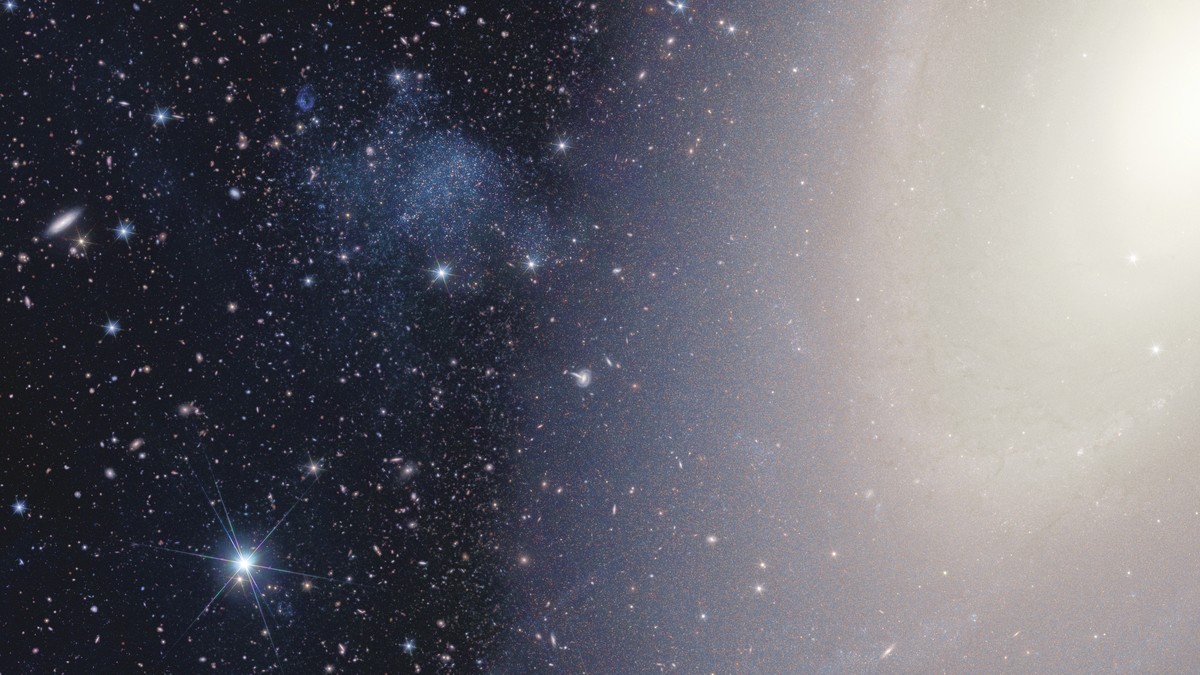
See where Messier 81 is in your skyIt sits near the Big Dipper. The live map shows where to point and when it is up.Zoom in further and the haze of Messier 81’s disc breaks apart. ESA says the galaxy is close enough for Euclid’s sharp optics to capture its individual stars.
15,000 cosmic magnifying glasses
A strong gravitational lens forms when a foreground galaxy lines up with a more distant one, and its gravity bends the background galaxy’s light into arcs or rings. They are rare. ESA says only about one galaxy in several thousand acts as a lens.
To find them, according to Oxford, the team showed galaxies to trained machine-learning lens finders. The results were then checked by eye, by volunteers in the citizen science project Space Warps and by the Euclid strong lensing team. Some 68 million images have been classified so far, revealing about 15,000 high-quality strong lenses. ESA says it is the largest strong lens catalogue ever, bigger than all previous catalogues combined.
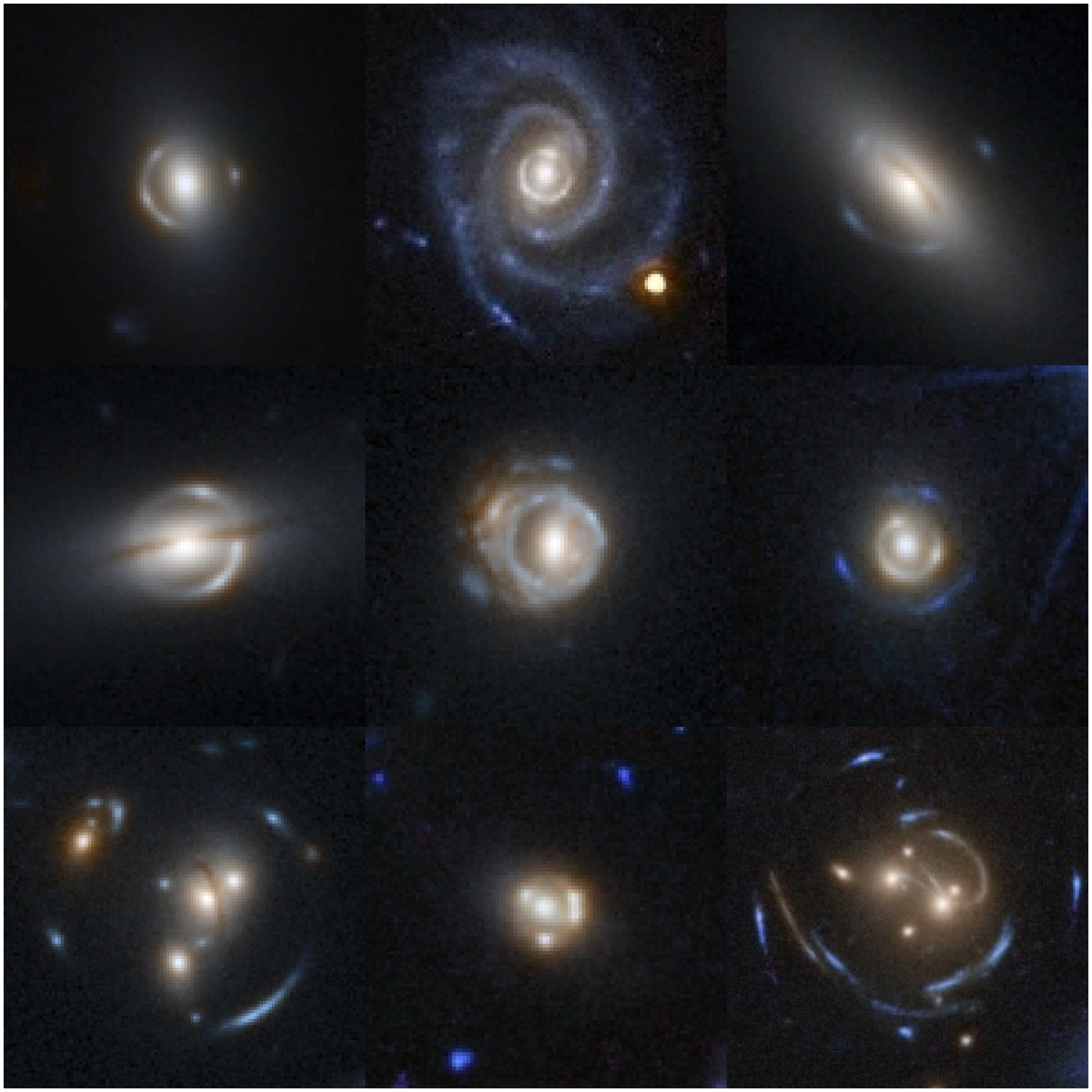
“Citizen scientists have played a central role in delivering what is the largest set of strong lenses known to date,” said Aprajita Verma of Oxford, one of the leads of Space Warps. “Tantalisingly, we also know we haven’t found everything and there’s yet much more Euclid data to come.”
Only the first piece
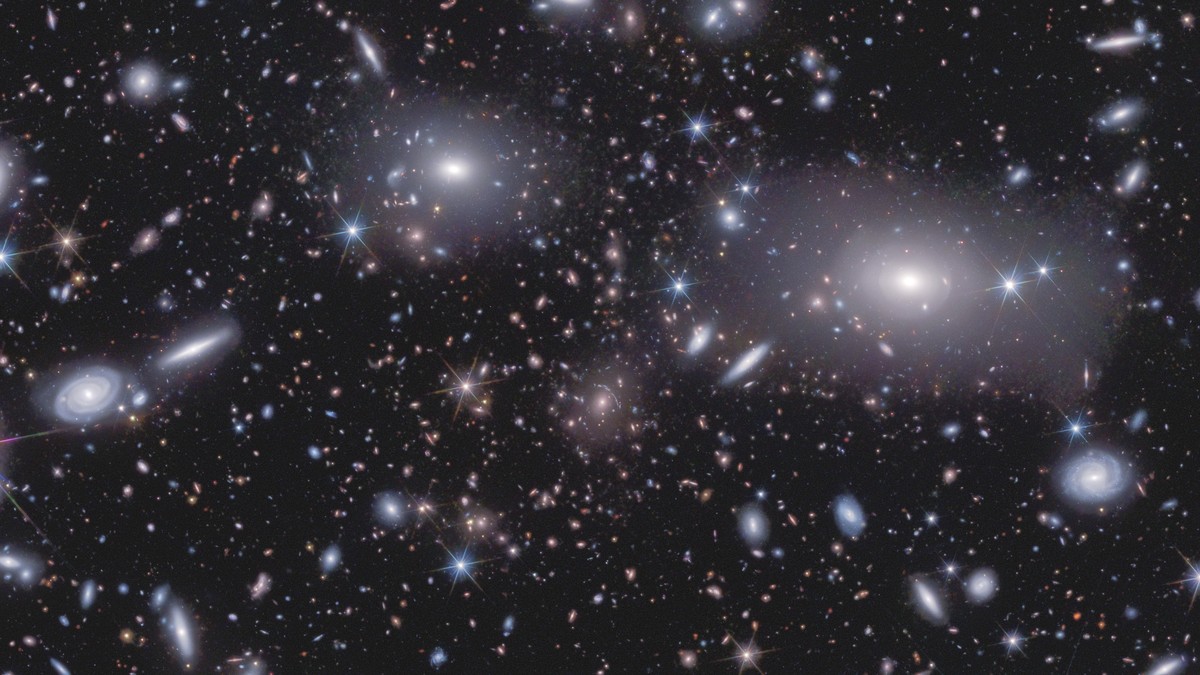
The release also holds Euclid’s first big batch of spectra: more than 160 million, Oxford says. Each one splits an object’s light into a rainbow, which can reveal how far away it is and what it is made of. With distances, scientists can start placing galaxies into the 3D structure of the Universe and the cosmic web, a mesh of filaments made mostly of invisible dark matter.
That map is the real goal. Euclid was built to explore two of astronomy’s biggest mysteries, dark matter and dark energy. And for all its size, this release covers only about 14% of the area Euclid is meant to survey over six years.
The next part, the full DR1, is scheduled for June 16, 2027, ESA says. It will add weak lensing, the much subtler stretching of galaxy shapes by gravity, and how galaxies and galaxy clusters fit into the cosmic web. “So much discovery is yet to come,” Pettorino said.
Bottom line: Euclid’s first big data release holds more than 900 million galaxies by Oxford’s count, plus about 15,000 strong lenses, and it covers only about 14% of the sky the mission plans to map. The 3D map that is meant to probe dark matter and dark energy is still being built.
No Ground. Stay curious.