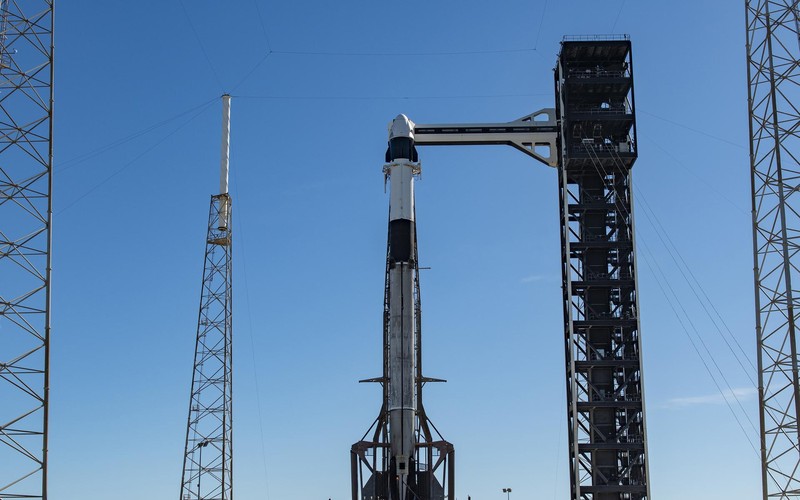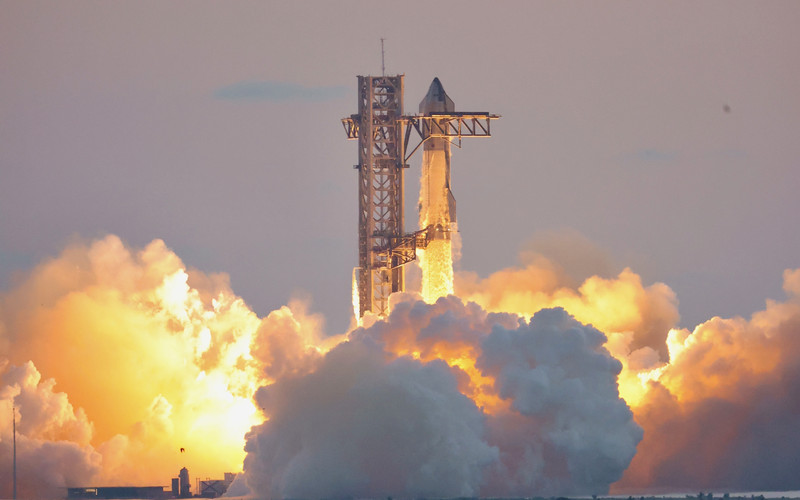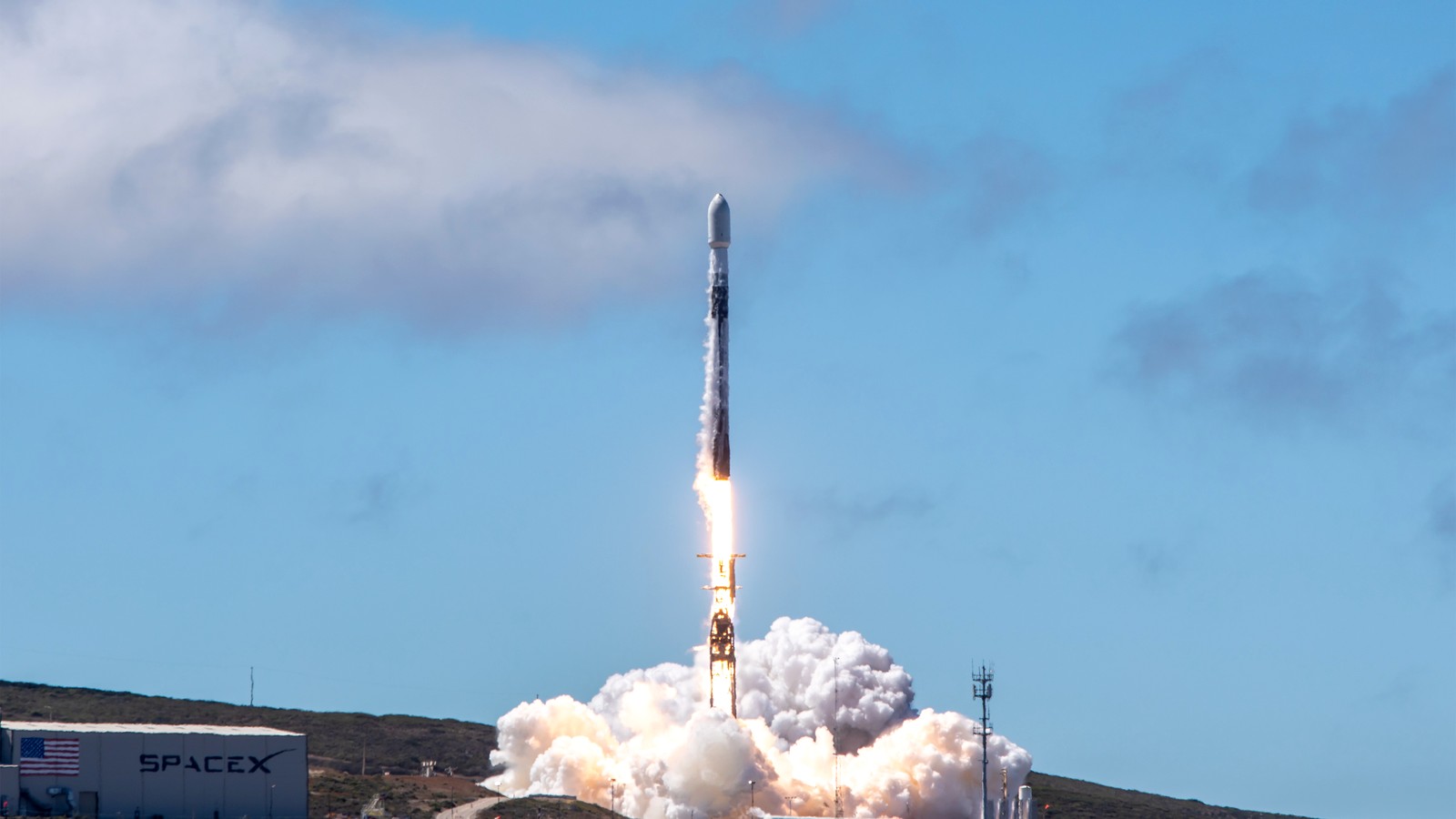
Update — Oct. 1, 2026: SpaceX’s dedicated smallsat rideshare Transporter-18 launched successfully at about 11:32 a.m. PT (2:32 p.m. ET) from Space Launch Complex 4 East at Vandenberg Space Force Base in California. A Falcon 9 lofted roughly 130 payloads toward a sun-synchronous low-Earth orbit — the second Falcon flight of a packed SpaceX day that had already sent NASA’s Crew-13 crew to orbit from Florida that morning.
One pad on the California coast. About 130 spacecraft headed for polar orbit. The booster came home to LZ-4.
Landing, then the long deployment chain
After stage separation, Falcon 9’s first-stage booster returned to Vandenberg and touched down at Landing Zone 4 (LZ-4). Mission coverage identified the booster as B1082 on its 25th flight — a reused vehicle that had previously flown USSF-62, NROL-145, OneWeb Launch 20, and multiple Starlink batches.
Upstairs, the second stage continued into orbit and began releasing satellites. Deployment work started about 54–55 minutes after liftoff and ran for roughly 11 minutes of sequential separations. SpaceX later confirmed that the rideshare deployment sequence had concluded at about 3:41 p.m. ET.
Official mission materials describe the stack as cubesats, microsats, and hosted payloads, plus two spacecraft with reentry vehicles and four orbital transfer vehicles carrying 41 payloads scheduled for later release. Across the Transporter program, SpaceX says it has now flown more than 1,800 rideshare payloads to orbit.
Project Suncatcher and a crowded manifest
Among the highest-profile riders: a prototype for Google’s Project Suncatcher, manifested by Planet Labs. Google describes Suncatcher as a research moonshot to test how its Tensor Processing Units (TPUs) — chips built for machine-learning workloads — handle launch stress, radiation, vacuum cooling, and heat in orbit. Planet also flew Tanager-2, a methane-tracking satellite tied to Carbon Mapper, on the same mission.
The rest of the stack looked like a cross-section of the smallsat economy: Earth-observation birds (including ICEYE SAR spacecraft and Satellogic optical sats), GHGSat methane monitors, Sateliot IoT satellites, NASA’s SPRITE CubeSat, StarCatcher’s Protostar power-beaming demonstrator, Starfish Space’s first Otter servicing vehicle for NASA’s SSPICY effort, and reentry capsules from Varda Space Industries — among many others listed on SpaceX’s deployment timeline.
Why this flight matters
Transporter flights are how a lot of modern space gets to orbit without owning a rocket: shared Falcon 9 rides to sun-synchronous orbits that favor Earth-imaging and climate monitoring. Today’s flight also sat in the middle of an ambitious SpaceX tripleheader — Crew-13 in the morning from the Cape, Transporter-18 from Vandenberg in the afternoon, and a planned Falcon Heavy National Reconnaissance Office mission later from Florida.
For Google and Planet, Suncatcher is an early on-orbit data point, not a finished constellation. For everyone else on the manifest, it is simpler: another reliable path from California fog to polar daylight. The countdown is over. The satellites are on their way.
No Ground. Stay curious.