 No Ground
The next three weeks have a good run of sky events, and none of them need a telescope. Here is the order they come in.
Nov. 12: the Northern Taurids
The Northern Taurids peak around Nov. 12. Under ideal conditions NASA’s guide counts about five meteors an hour, so this is a quiet shower. The Moon is new on Nov. 9, so its light will not get in the way. The Taurids are slow and sometimes bright, and the Southern Taurids, which peaked around Nov. 5, can throw a fireball. Give it a few minutes of looking away from city lights.
Nov. 15 and 16: Mars and Jupiter side by side
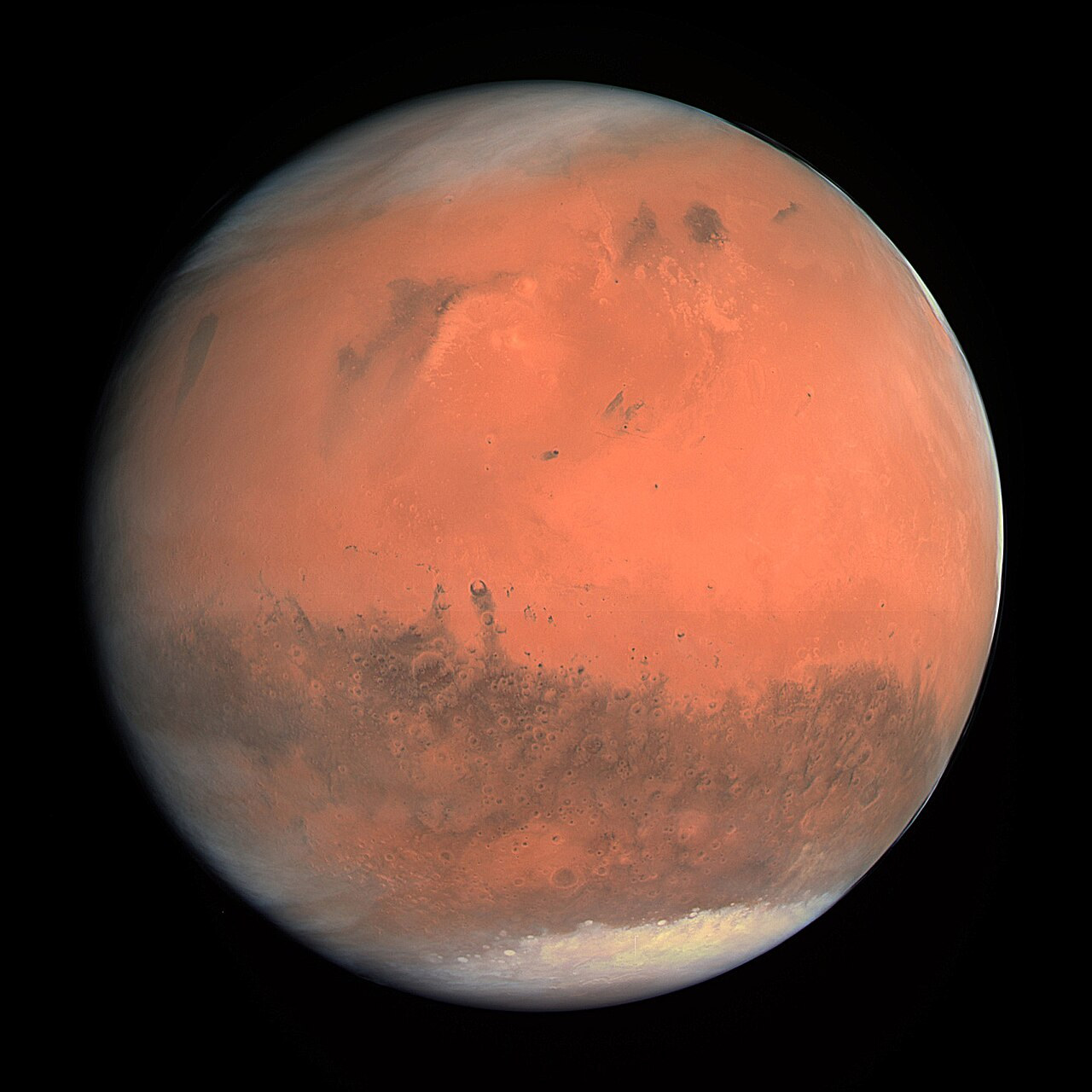
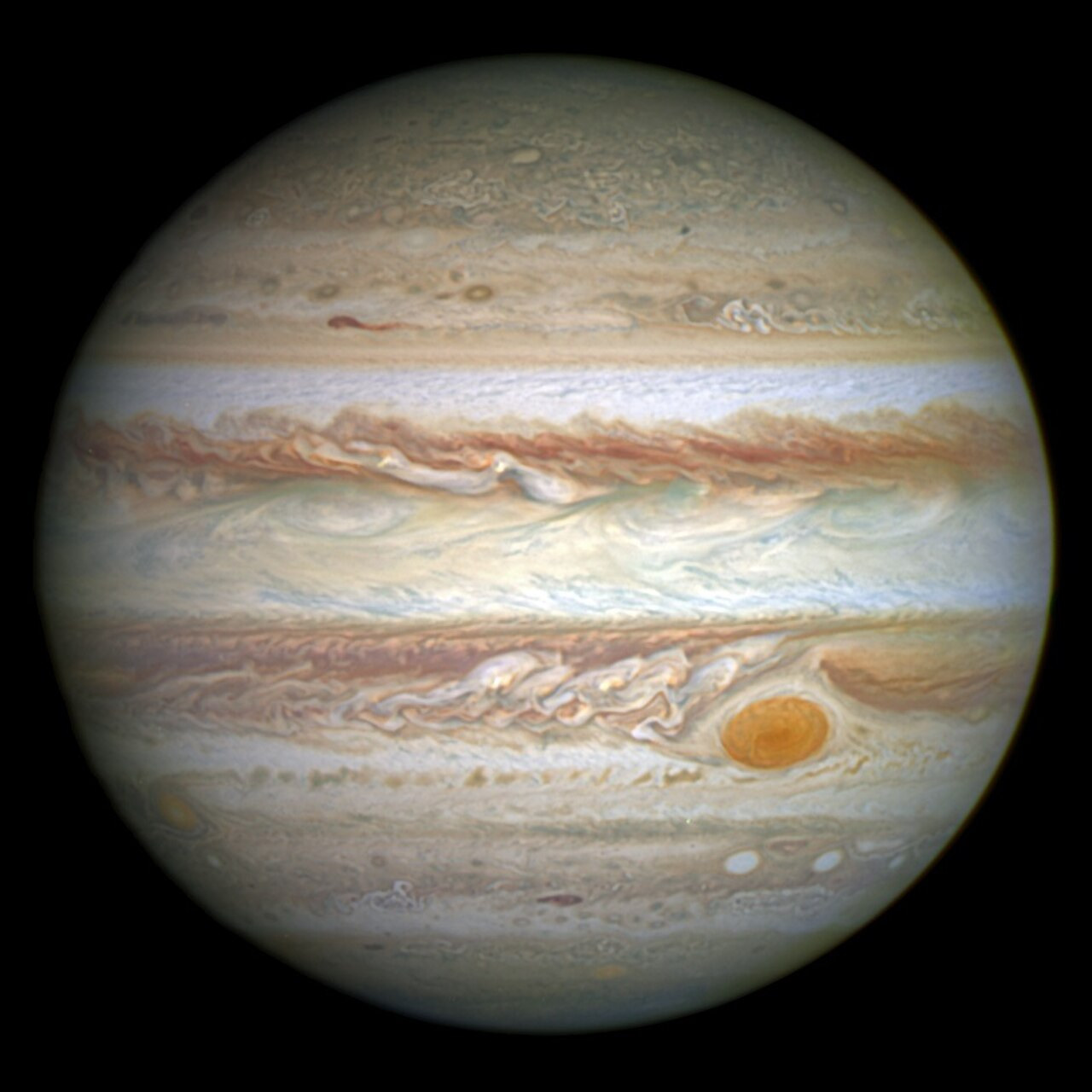
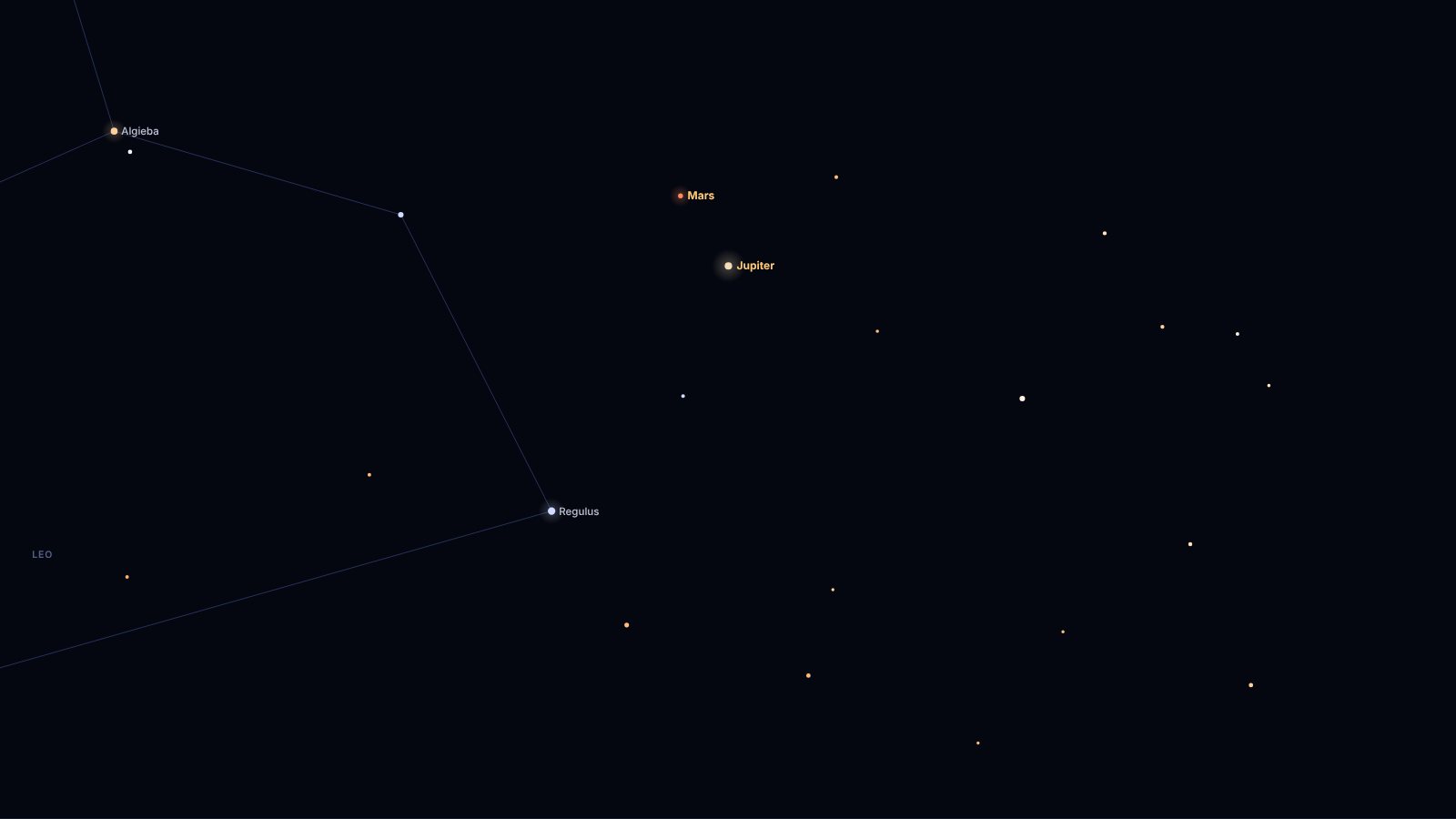
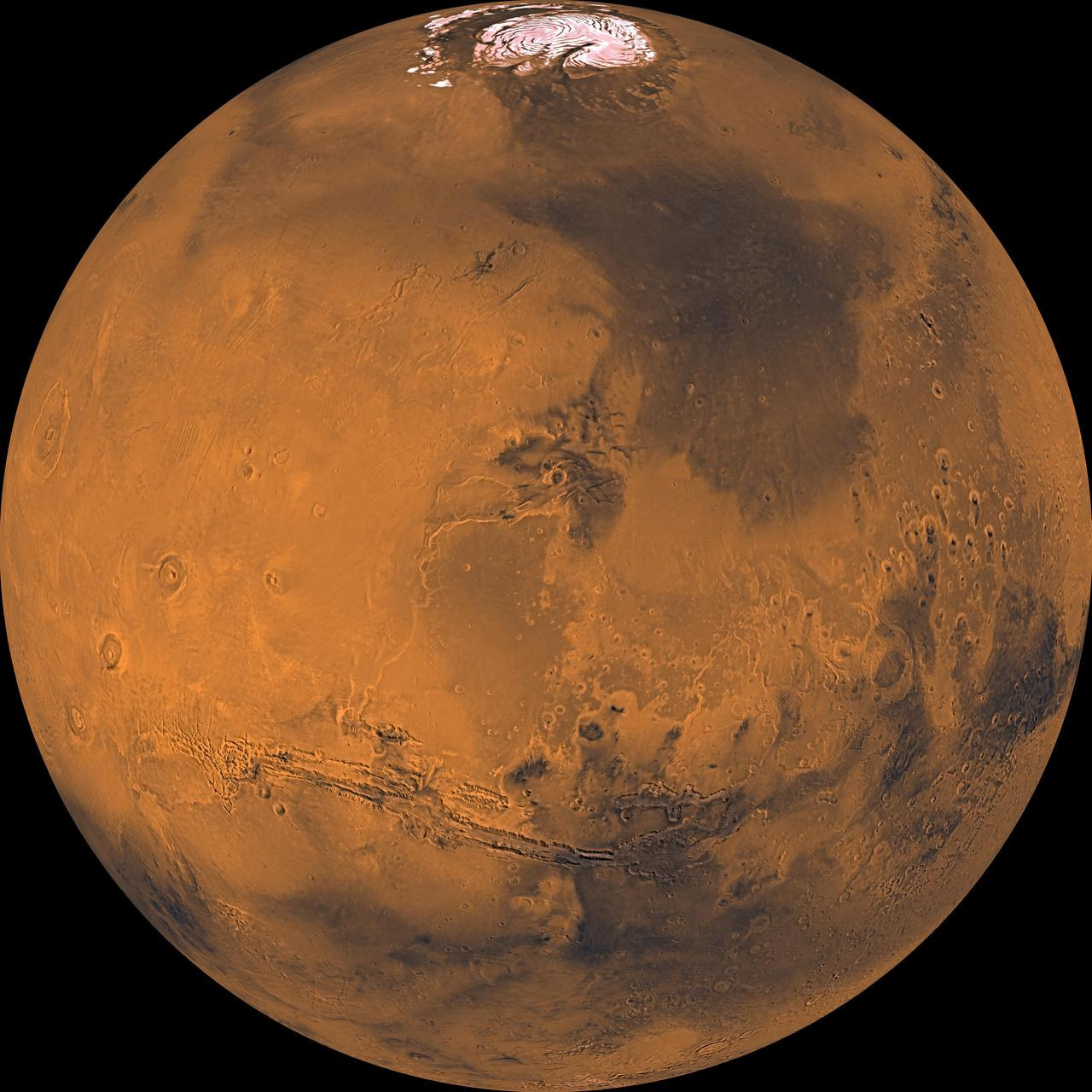
Before sunrise on Nov. 15 and 16, look toward the southeast. Mars and Jupiter will be only about 1.2 degrees apart, a little more than two full Moons side by side. Both are easy to see with your eyes. Jupiter is the brighter one, and Mars has a reddish color.
They are up for most of the night. In New York they rise around 11:15 p.m. and stand about 57 degrees high in the southeast at 4:45 a.m. Your town will see different times.
Find Mars and Jupiter in your skyFree sky map for where you are: when they rise and which way to face.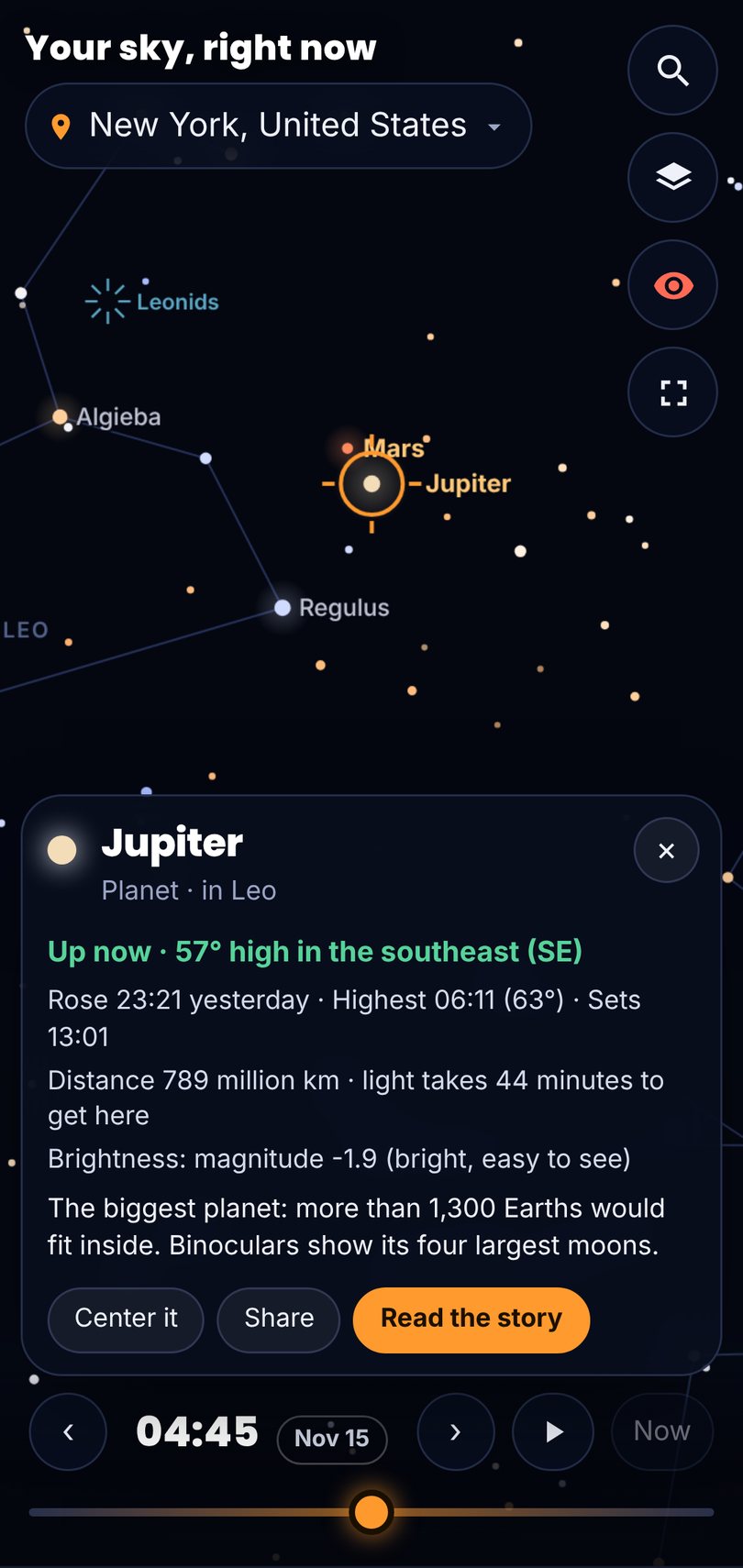
Nov. 17 and 18: the Leonids
The Leonids are best before dawn on Nov. 17 and 18, once the Moon has set. NASA’s guide says ideal conditions could give about 15 meteors an hour, and real counts are usually lower. They seem to come from the constellation Leo, which is high in the sky before sunrise. Get away from streetlights, let your eyes adjust for 20 minutes, and look up. You do not need to stare at Leo itself.
Nov. 24: a supermoon
The full Moon on Nov. 24 is a supermoon, and it is the first of three in a row, with the next ones in December and January. The best time to look is around sunset, when the Moon is rising over the eastern horizon and looks biggest next to trees and buildings. That size effect is partly an illusion your brain adds, but it is a good one.
A few tips
Dress warmer than you think you need to, because meteor watching means standing still. Skip the binoculars for meteors, since your eyes see more of the sky at once. Check the weather the night before, because cloud decides everything. And if you only do one, make it the Mars and Jupiter pairing. It is the easiest, and it takes two minutes.
Bottom line: A quiet meteor shower on Nov. 12, Mars and Jupiter together on Nov. 15 and 16, the Leonids on Nov. 17 and 18, and a supermoon on Nov. 24.
No Ground. Stay curious.