 No Ground
Since the beginning of spaceflight, anything big that went into orbit got there in one of two ways. It was folded up to fit inside a rocket and opened in space, or people pieced it together by hand from sections sent up on separate launches.
Now a third way has worked. A robotic builder designed at Caltech and funded by DARPA, the Pentagon’s research agency, assembled part of a structure in orbit with no astronauts involved. “This is the first time that a structure has been autonomously constructed in space,” said Sergio Pellegrino, the Caltech aerospace engineer who leads the team. DARPA calls it the first ever demonstration of automated in-space assembly.
A box of parts
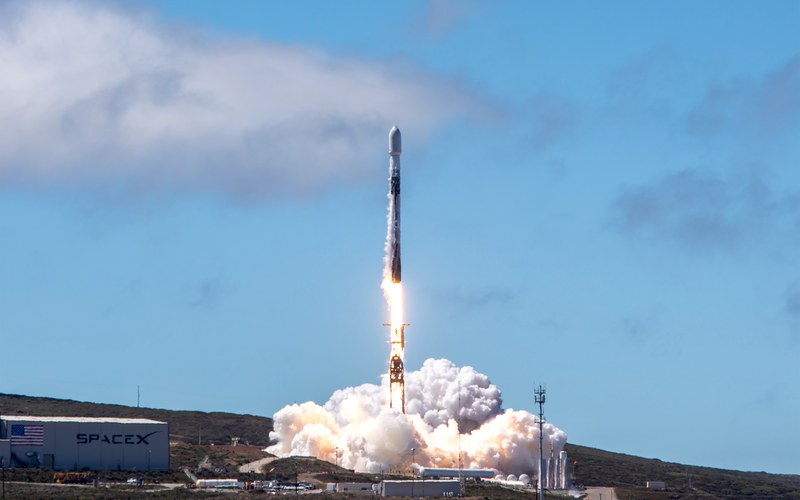
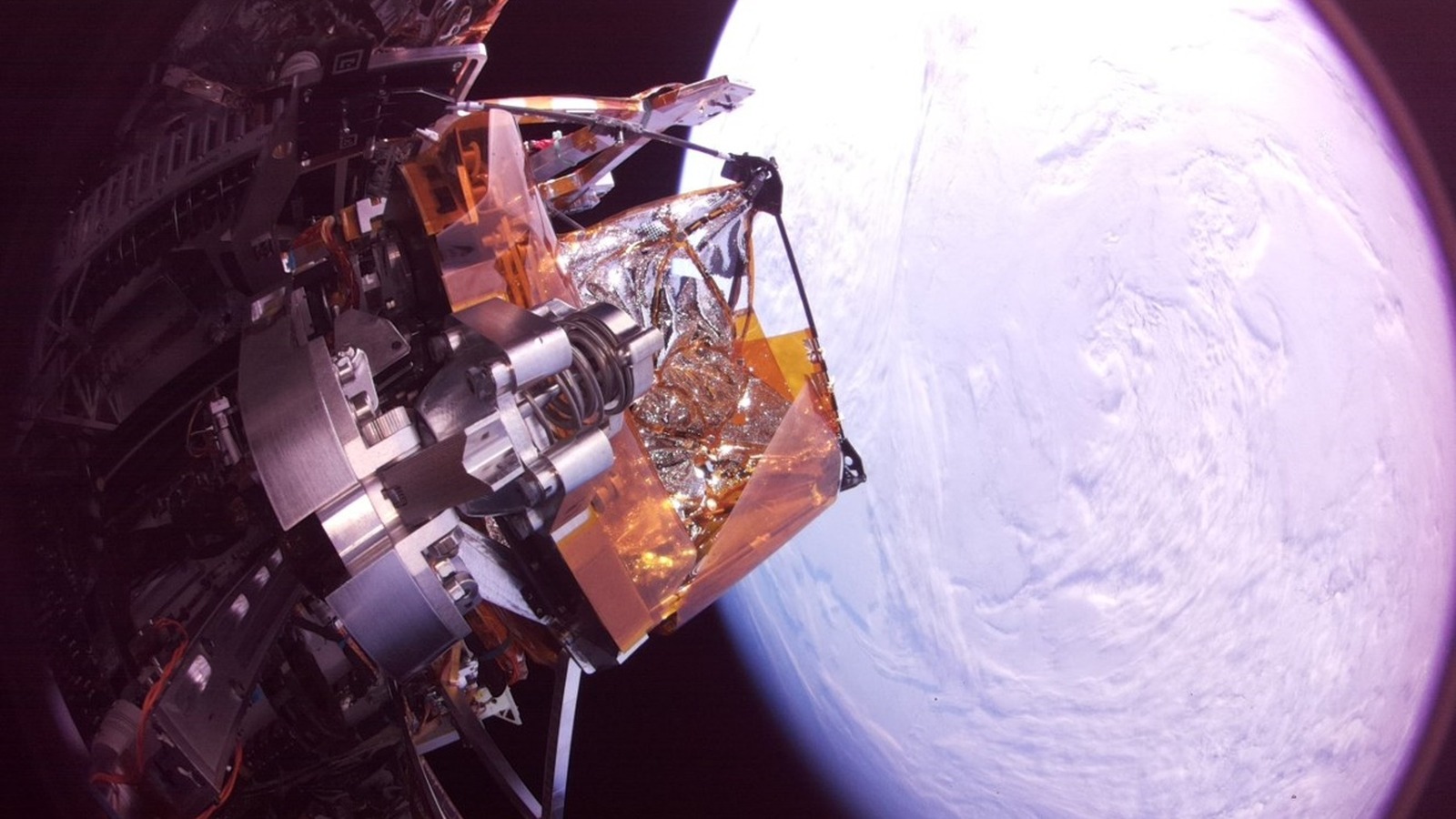
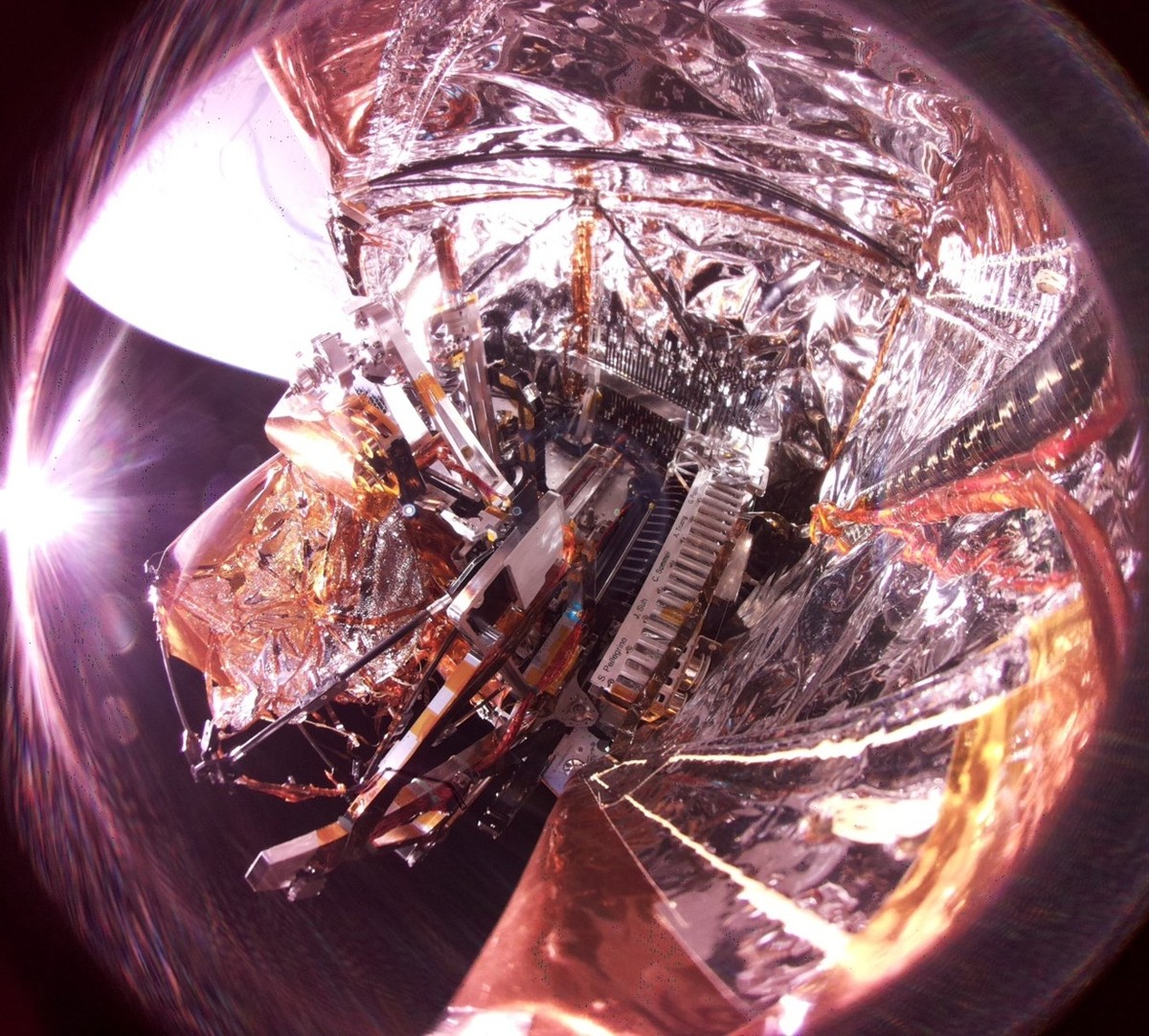
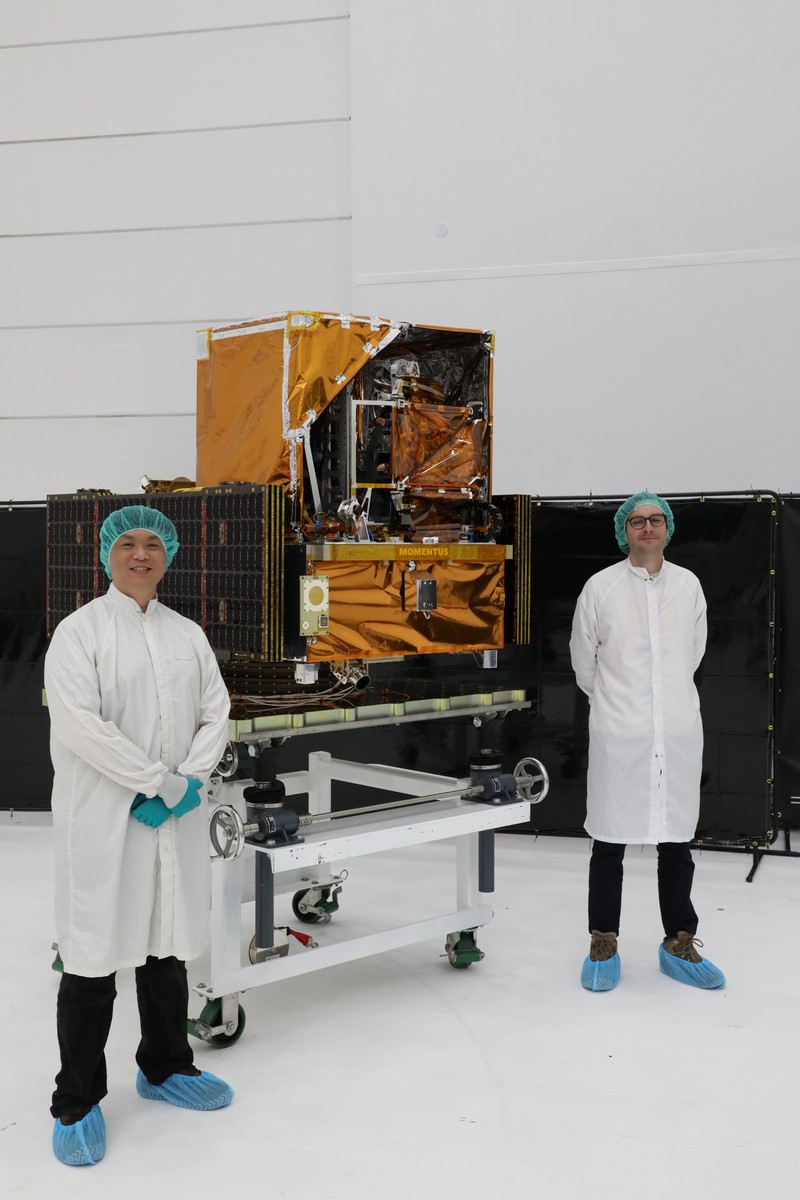
The experiment is called ASTRA, short for Autonomous In-Space Tensioned Reflector Assembly. It launched on March 30, 2026, from Vandenberg Space Force Base on SpaceX’s Transporter-16 rideshare mission, as one of 10 payloads aboard Momentus Inc.’s Vigoride 7 space vehicle. The payload is roughly one cubic meter in size.
Inside were two sections of truss, called bays, already built on the ground, an armlike manipulator, and motorized dispensers holding the struts and joints for the rest. The goal was the frame of a reflector antenna 1.4 meters across, made of composite fiber tubes, aluminum joints and a reflective Kapton surface.
DARPA program manager Andrew Detor compares it to Tinkertoys or K’Nex: “individual truss members are joined at nodes, one section at a time, to create a larger structure.” The robot itself is a relatively simple gantry that moves along three straight axes. “There are no complicated robotics or advanced algorithms,” Detor said.
One bay at a time
In orbit, the team first released the launch restraints and pushed the two prebuilt bays out of the builder. Then the robot assembled a third bay on its assembly plate.
Normally, the manipulator picks up parts, moves them into position and builds a bay. Then it attaches a netlike perforated film that forms two reflective nets, held taut against each other by springs. Each finished bay is pushed out into space and the next one begins. The complete truss needs 11.
The team sent commands up through the Vigoride vehicle and checked each step against photos from the payload’s 11 cameras. They had only seven or eight short windows a day to talk to it, each about 15 minutes long.
Explore your sky tonightLive sky map for where you are: planets, the ISS and bright stars above your horizon.Lots of little surprises
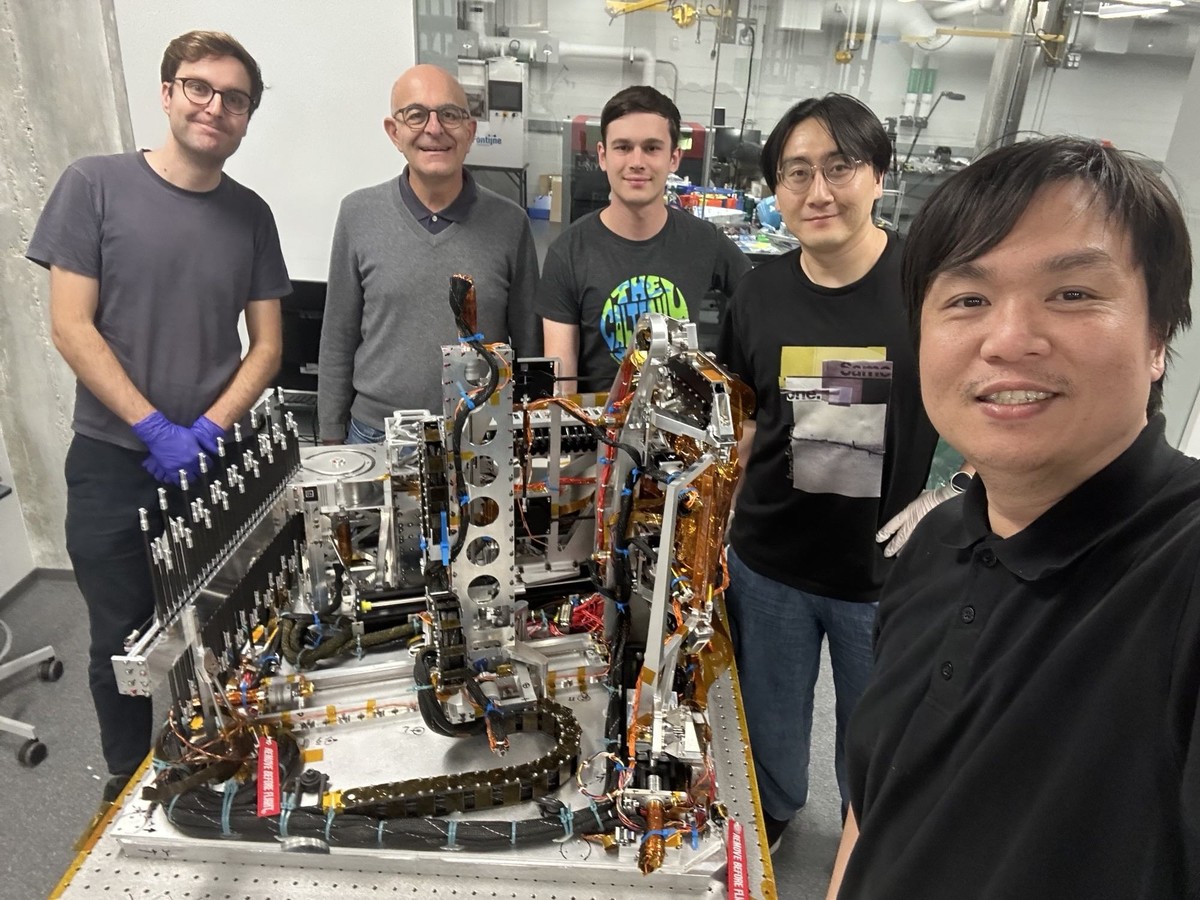
Problems came up, and Caltech says there were “many.” The team had built a twin for this: a flight spare that stays in Pellegrino’s lab. “Every time we confirm there is an issue in space, we come to the laboratory and try to mimic the problem on the ground,” said Charles Sommer, a former Caltech systems engineer on the team. They test fixes on the twin, then send the workaround to the one in orbit.
“There are always lots of little surprises,” said Jaden Suh, a former Caltech postdoctoral scholar on the team, now at the University of Texas at Austin.
Time ran out first. The team was only able to build the initial section of the antenna, and with the mission ending in December, Caltech says it is unlikely the full truss will be finished. The team says it has learned enough to show the approach works, and that the design now needs to be simplified and refined.
Why build in space at all
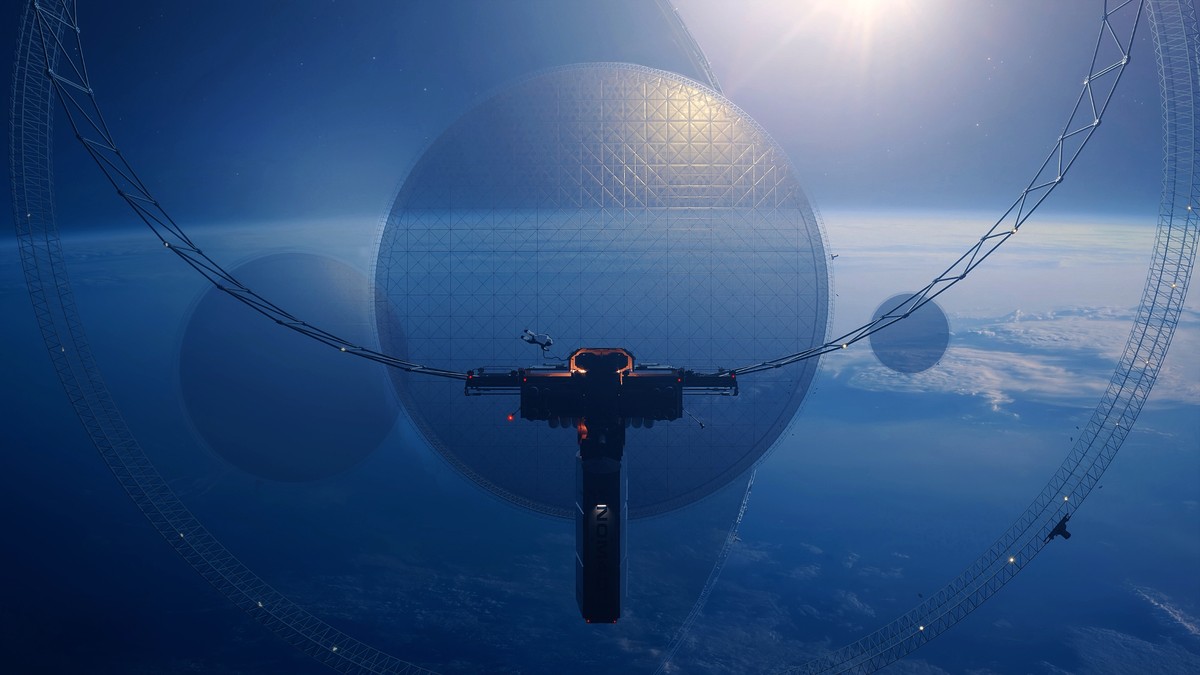
Today, the size of a structure sent to space is limited by the size of the rocket’s nose cone. DARPA’s program, called NOM4D, is aiming far past that. “By ‘very large,’ I mean hundreds of meters or kilometers in scale,” Detor said. “Nothing approaching that scale can be achieved today.”
Pellegrino points to giant mirrors for space telescopes, large radio antennas and very large solar arrays for collecting solar power in space. “In a future space economy, we’re going to need large things,” Detor said.
DARPA says it went from the idea of an orbital demo to launching a working prototype in 15 months. The program has one more milestone: a University of Illinois Urbana-Champaign experiment, headed to the International Space Station, that will test a new way to make composite material in space.
Bottom line: A box of struts and a fairly simple robot built one new section of an antenna frame in orbit. It is small, and it won’t finish. But according to Caltech and DARPA, it is the first time a structure has been put together in space without astronauts.
No Ground. Stay curious.