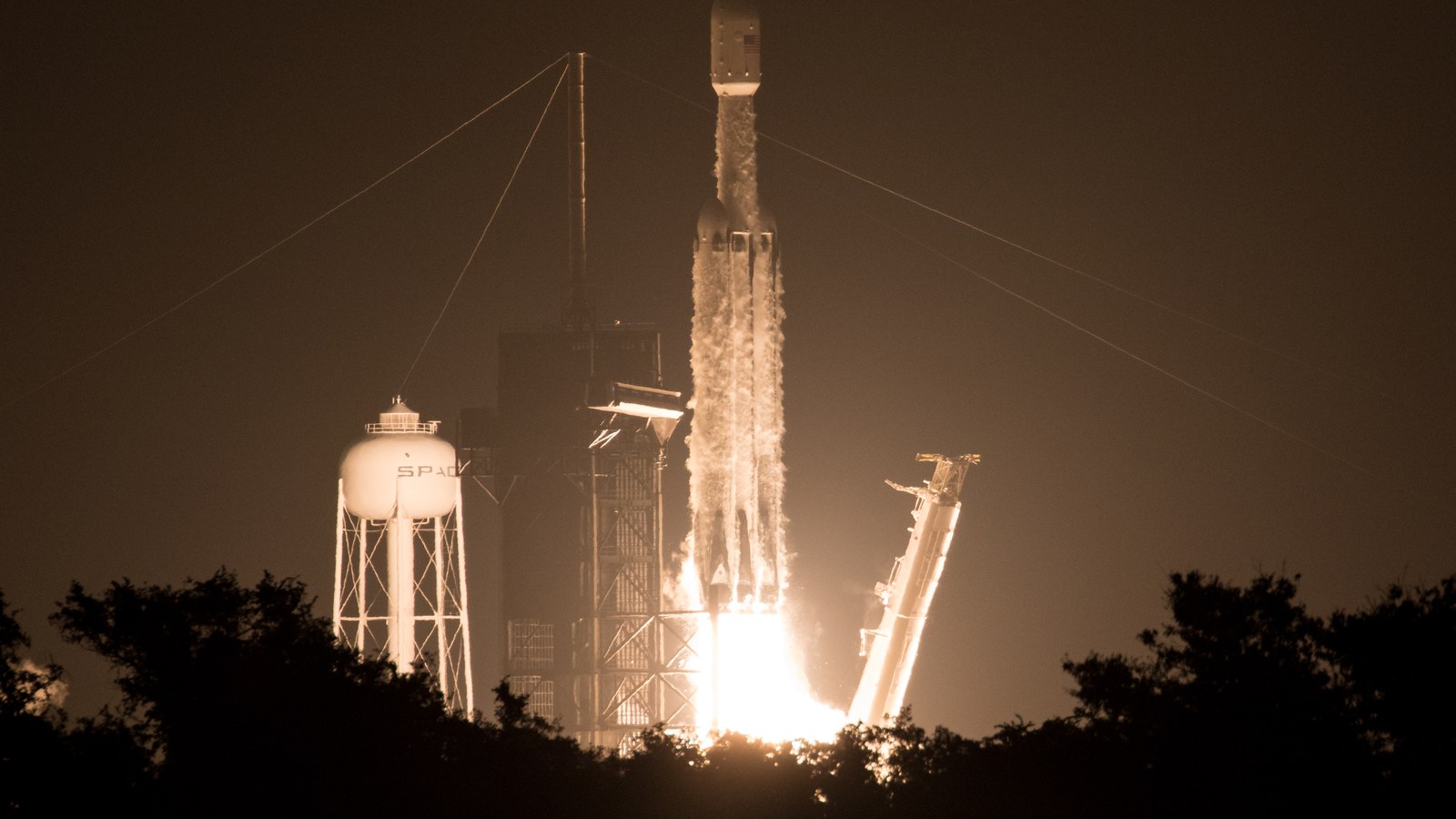
Update — Oct. 2, 2026: SpaceX’s Falcon Heavy launched the classified NROL-97 mission for the U.S. National Reconnaissance Office at 11:54 p.m. ET on October 1, 2026, from Launch Complex 39A (LC-39A) at NASA’s Kennedy Space Center in Florida. SpaceX later confirmed that both side boosters returned to Cape Canaveral Space Force Station and landed at Landing Zones 1 and 2 (LZ-1 and LZ-2).
Three cores. One classified NRO payload. A midnight Florida sky — and two boosters home to the Cape.
What launched — and what we don’t know
NROL-97 is a national-security mission. The payload itself remains classified, and No Ground is not inventing details about what rode inside the fairing. What is public: this was the first time the NRO flew on a Falcon Heavy, after more than twenty successful Falcon 9 launches for the agency. Mission coverage described a northeasterly departure from Florida’s Space Coast.
SpaceX’s own mission page framed the flight simply: Falcon Heavy lofted NROL-97 from pad 39A, then brought the two side boosters back to LZ-1 and LZ-2. An official SpaceX social post put it even shorter: “Falcon Heavy launches NROL-97 from pad 39A in Florida.”
Boosters, landings, and a busy SpaceX day
Falcon Heavy flies with three first-stage cores — two reusable side boosters flanking a center core. SpaceX said the side boosters on this mission were making their second and fourth flights; their prior work included missions such as GOES-U, Viasat-3 F3, and NASA’s Nancy Grace Roman Space Telescope. Reporting after liftoff identified the side boosters as B1104 and B1072, with a brand-new center core (B1106) expended on the flight — a standard heavy-energy profile when the customer needs every bit of performance.
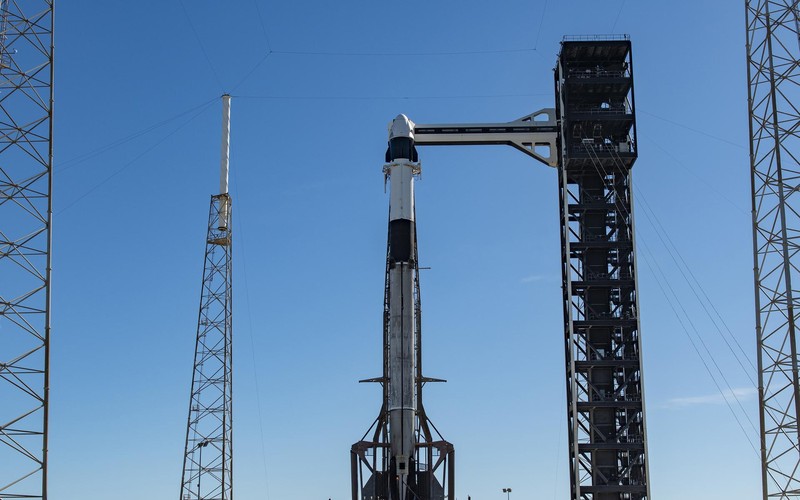
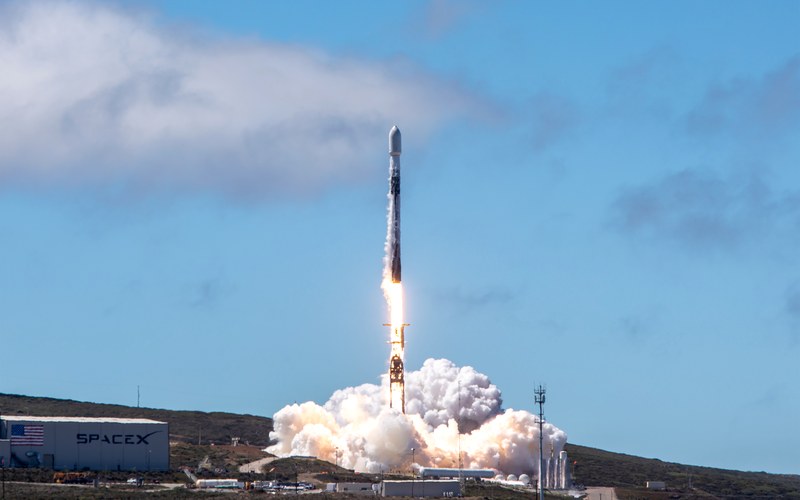
Minutes after liftoff, both side boosters touched down at LZ-1 and LZ-2, sending sonic booms across parts of East-Central Florida — exactly the recovery plan SpaceX had advertised. NROL-97 closed a packed calendar day for SpaceX: NASA’s Crew-13 crew launch from Florida that morning, the Transporter-18 rideshare from Vandenberg in the afternoon, then Falcon Heavy from 39A near midnight.
Why the first NRO Falcon Heavy matters
Falcon Heavy is SpaceX’s heavy-lift workhorse for missions that need more energy than a single Falcon 9 can deliver. For the NRO, putting a classified payload on that vehicle expands the agency’s options after years of Falcon 9 flights — without telling the public what the satellite does. That silence is the point of classification. The open facts are still striking: a three-core rocket at Apollo-era pad 39A, two boosters back on land, and a national-security customer trusting Falcon Heavy for the first time.
The countdown is over. The side boosters are home. Whatever NROL-97 carries is now on its classified path — and that is as much as the public record allows.
No Ground. Stay curious.