 No Ground
Before SuperCam left Earth, its team put a real ruby in front of the instrument’s laser. The whole room pulsed a brilliant red, recalls Roger Wiens, SuperCam’s principal investigator, in a NASA blog post this week. “It was extremely bright.”
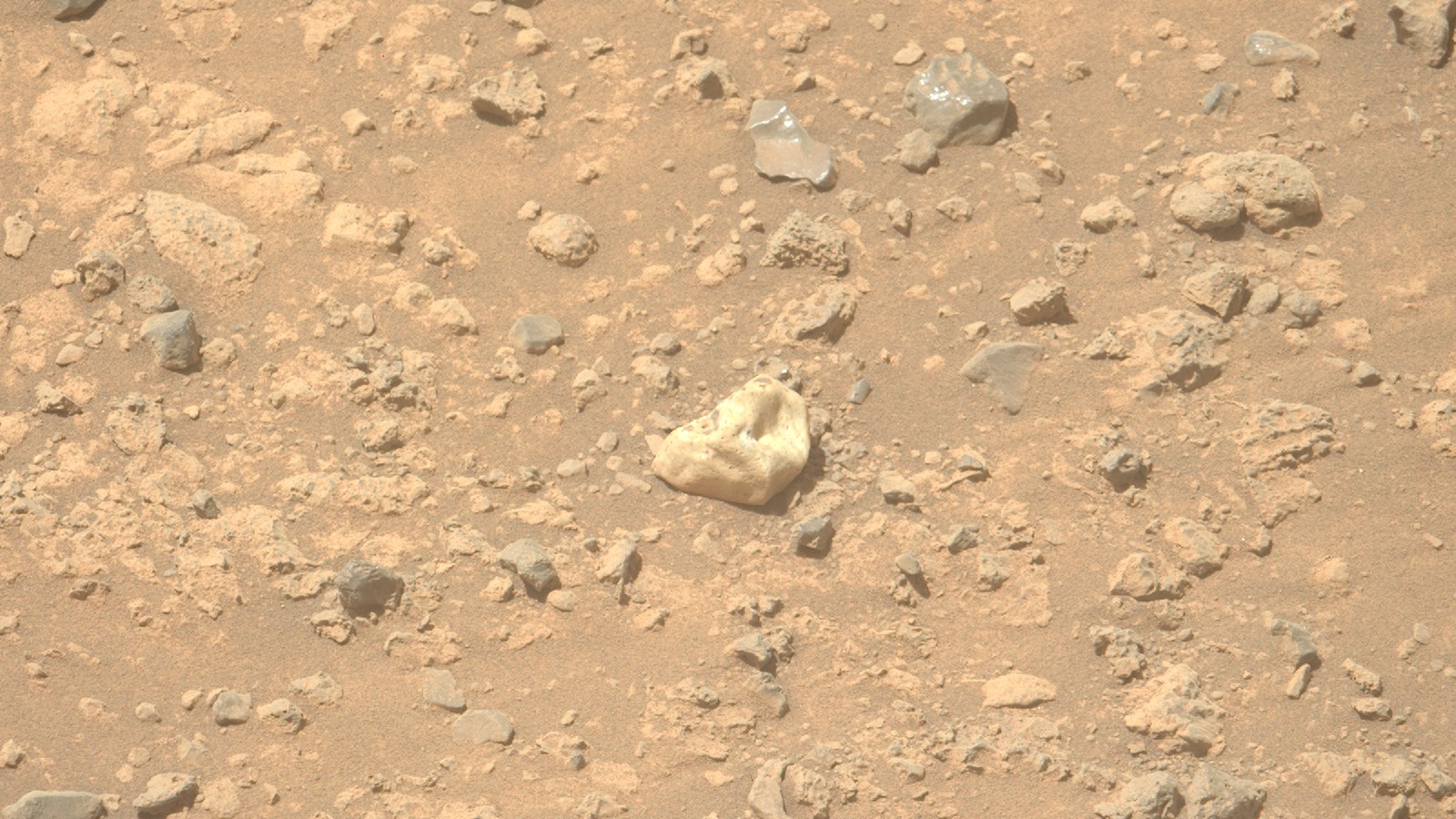
Years later, on Mars, the same laser hit a pale little rock on the rim of Jezero Crater and caught the same kind of glow. The rock was not a ruby. But inside it was the mineral rubies are made of.
Find Mars in your skyLive sky map for where you are: when it rises and where to look.A fingerprint in red light
SuperCam sits at the top of Perseverance’s mast. It fires a laser at rocks up to about 20 feet (7 meters) away and reads the light that comes back. One of its side tricks, Wiens wrote, is time-resolved luminescence: it measures the glow a mineral gives off after the laser pulse, and how long that glow lasts.
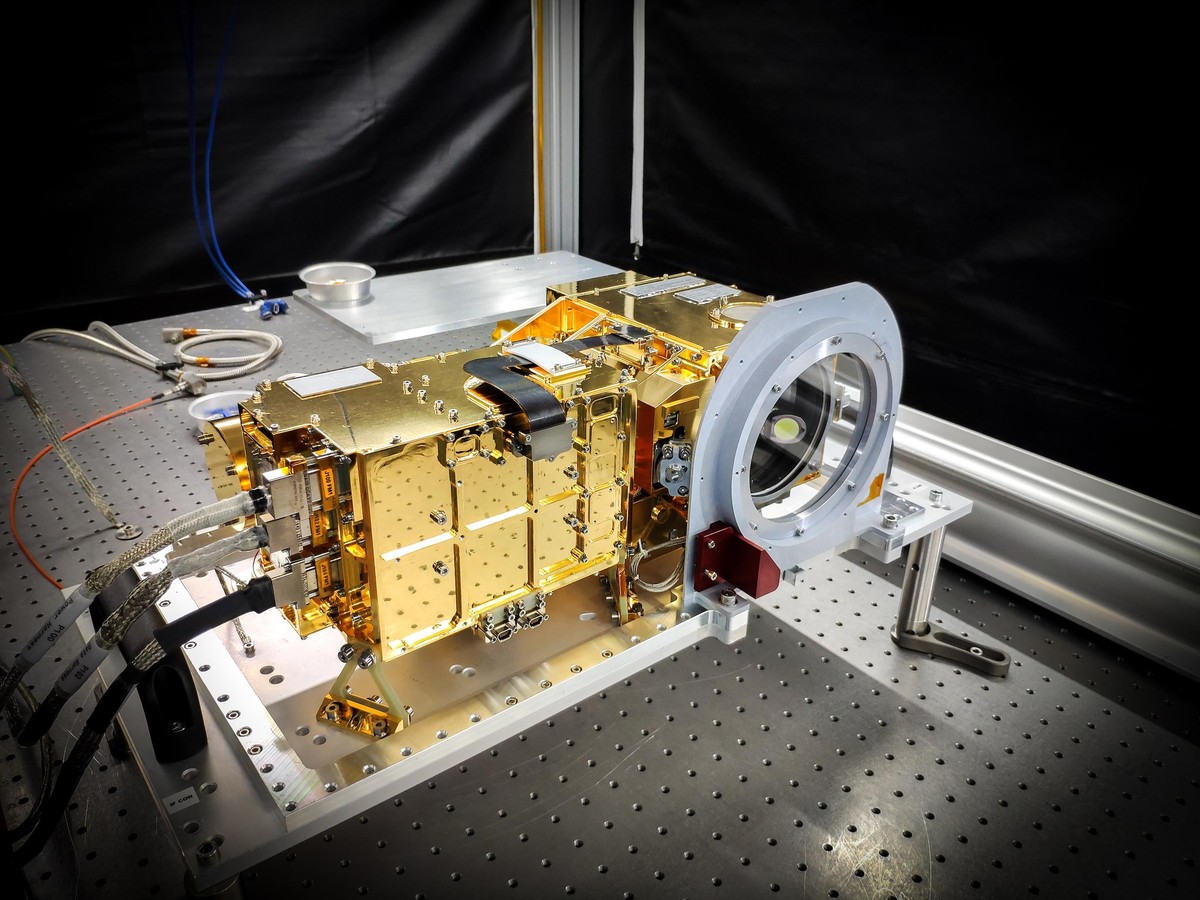
That kind of glow is usually spread across a broad range of colors. This rock gave two sharp, narrow lines of deep red light, at 692.7 and 694.1 nanometers. That pair is a fingerprint. It comes from chromium atoms sitting inside corundum, a crystal of aluminum oxide. By timing the delayed glow, the team confirmed that it really was chromium in corundum.
Corundum is the mineral that rubies and sapphires are made of. When gem-quality corundum carries chromium, it is a ruby.
Three rocks, tiny grains
The first signal came from a small rock nicknamed Hampden River, in March 2025. In April, a second pale rock a few meters away, Coffee Cove, showed the same two lines in all four spots SuperCam tested. In July, a third, Smiths Harbour, glowed for milliseconds after the pulse, just as corundum does.
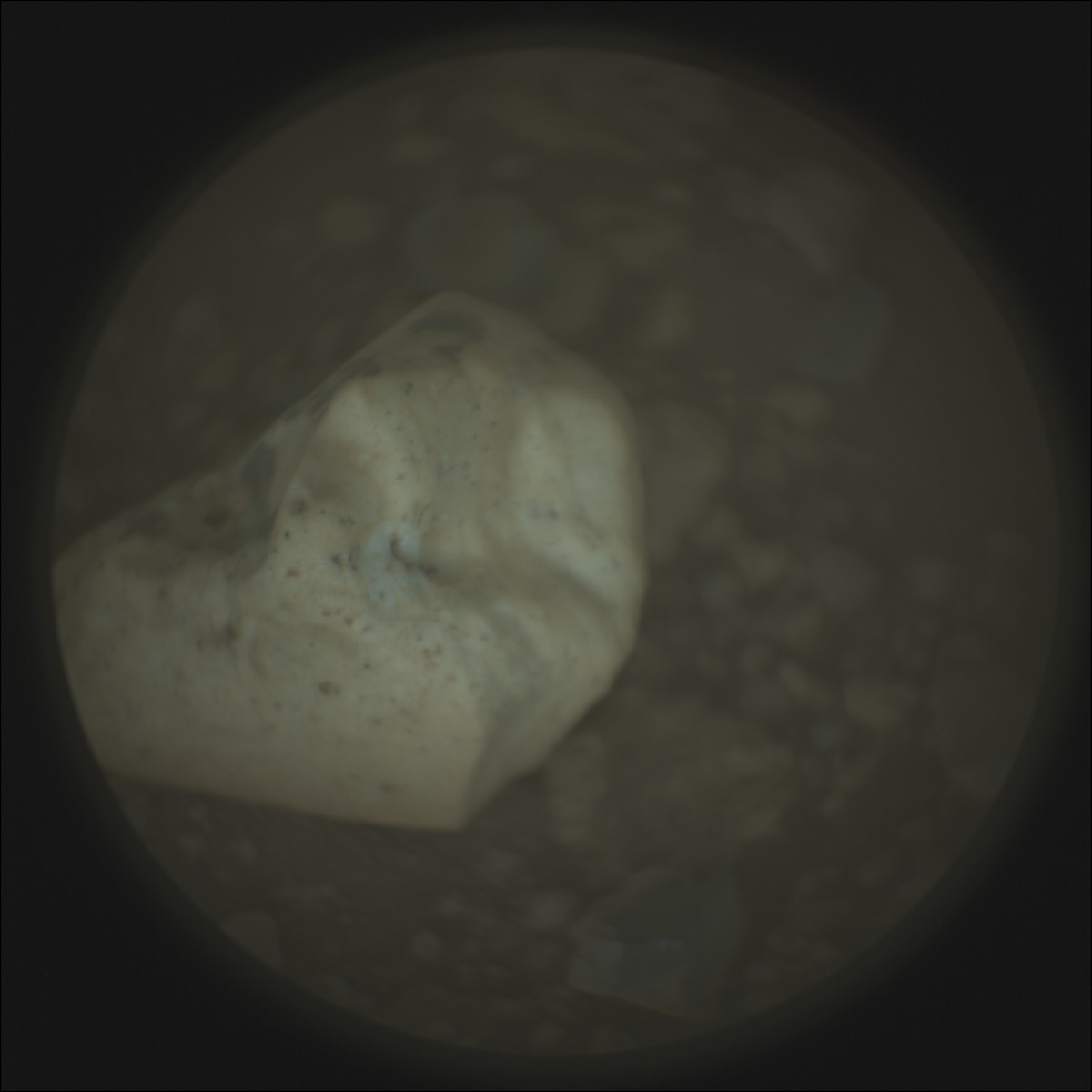
Nobody will be making jewelry from them. The grains were too small to see even in SuperCam’s close-up camera, which puts them under about 0.2 millimeters. All three were “float” rocks, loose pieces lying on the surface rather than part of the bedrock, so they may have come from somewhere else. Their red lines also sat slightly lower than a lab ruby’s, by 0.3 nanometers, and the team thinks the main reason is simply that Mars is much colder than a lab.
The results were published this year in Geophysical Research Letters by a team led by Ann Ollila of Los Alamos National Laboratory.
Why it shouldn’t be there
Corundum is picky. It forms only where there is plenty of aluminum and very little silica, either from magma or when rock is transformed by heat and pressure. On Earth, that transformation often happens where continents collide. Mars lacks plate tectonics. Wiens calls corundum a mineral “which we would not expect to find on Mars.”
The team’s best explanation is a giant impact. Large asteroid and meteor impacts can heat rock for a long time and transform it locally, Wiens wrote, and Perseverance is driving through very ancient terrain on Jezero’s rim. Corundum has been found in impact-made material on Earth and on the Moon, and impact-made grains are typically very small, like these. The paper’s authors favor impact-driven metamorphism, likely with fluids involved at some stage, but they do not rule out other explanations.
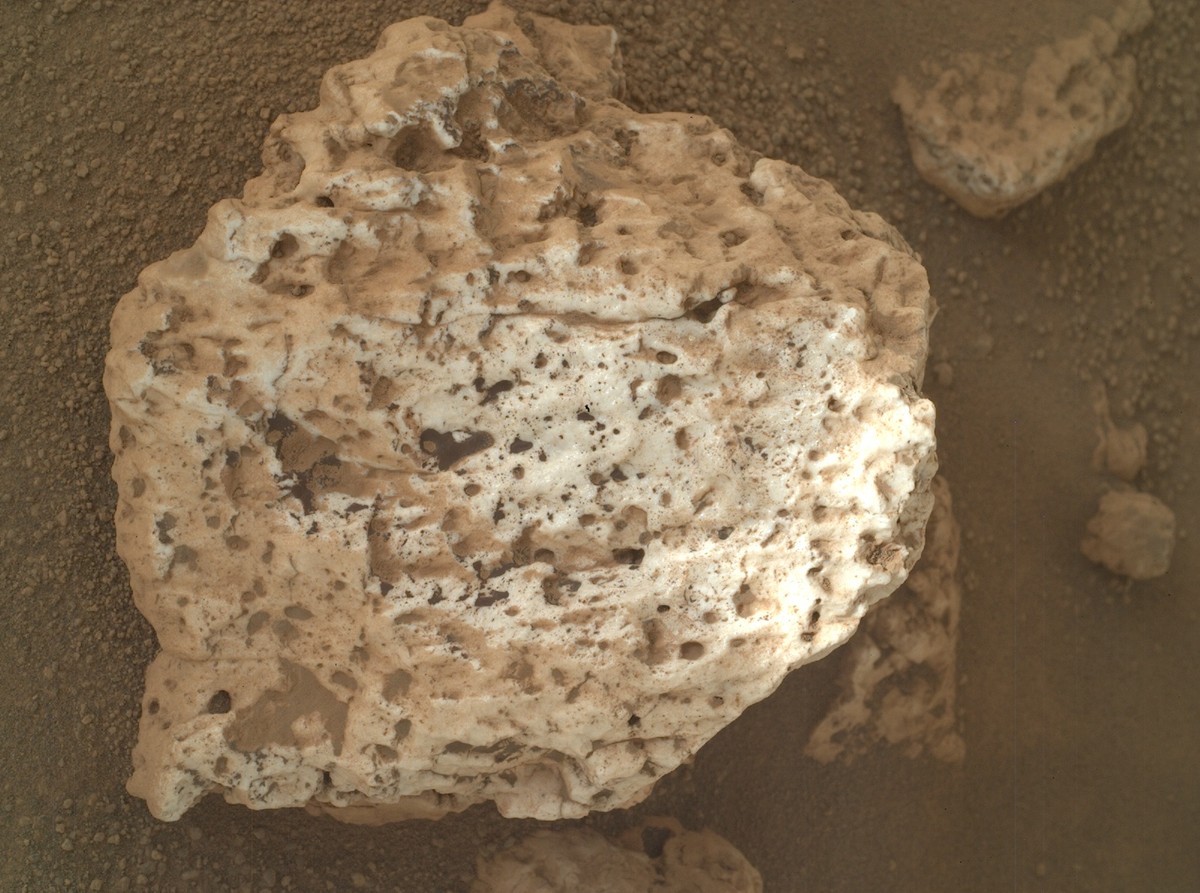
The surprise has changed how the rover works. Early in the mission, the team rarely used this technique. Now, Wiens says, they run it often on light-toned rocks, hunting for more evidence of ancient impacts.
Bottom line: Mars has no colliding continents to make ruby’s mineral. Perseverance found it anyway, in three pale rocks, and the most likely reason is an ancient impact that heated the crater rim long enough to remake its stone.
No Ground. Stay curious.