 No Ground
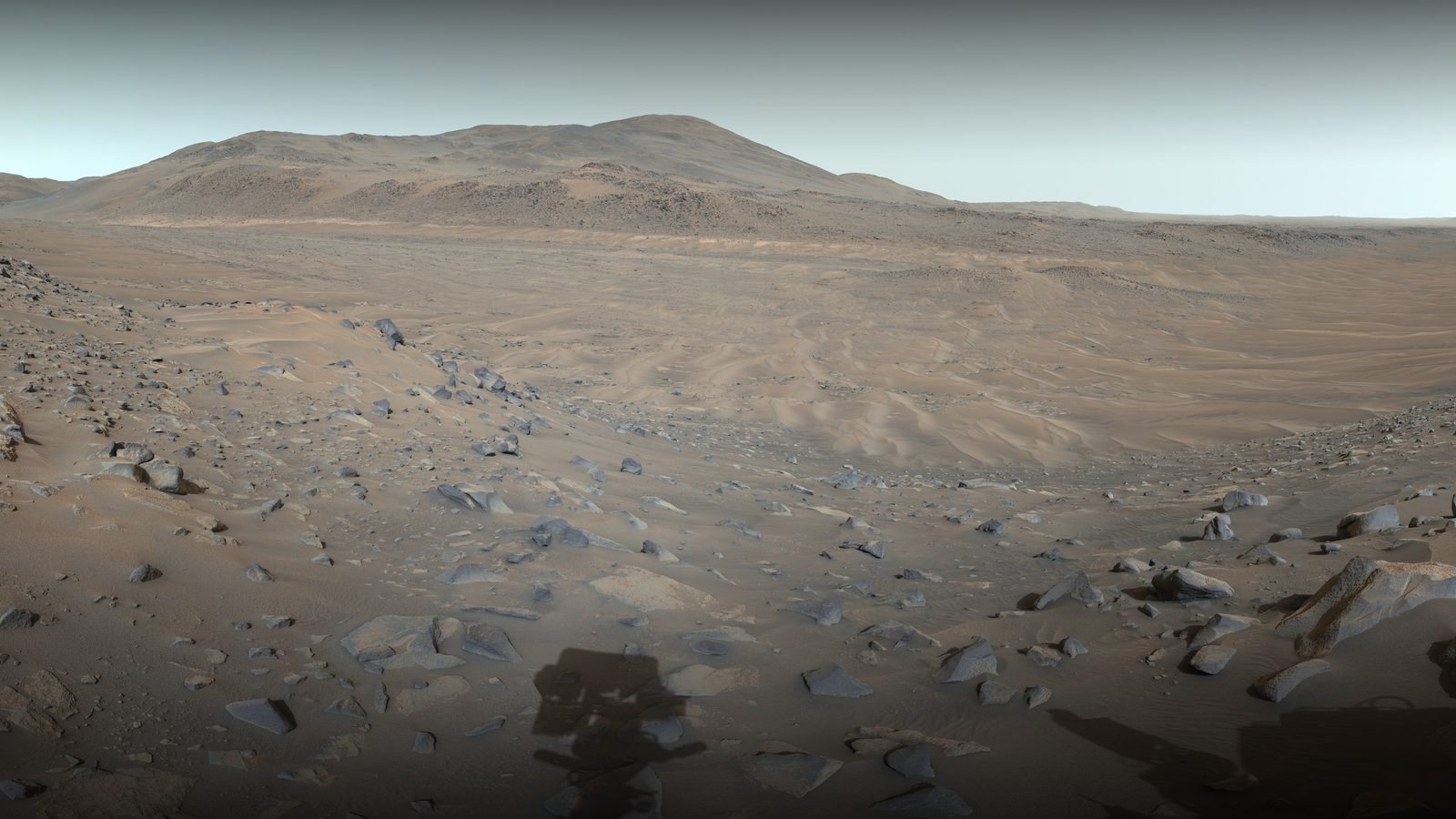
For years, a rover on Mars has been carrying small squares of spacesuit fabric. Nobody wears them. They sit on a small plate at the front of the rover, open to the Martian air, collecting whatever the planet throws at them.
Mostly, it throws dust. And NASA now says some of that dust is finer than any measured on Mars before: grains around 100 nanometers across, small enough that, on Earth, particles like them can work their way deep into the lungs.
The finding comes from NASA’s Perseverance rover and was published this week in the Proceedings of the National Academy of Sciences. It is not about life on Mars. It is about the people who might one day walk there.
The swatches nobody wears
Perseverance carries five samples of spacesuit material, each about three-quarters of an inch (20 millimeters) square. They are mounted on a calibration target, a plate of reference materials that the SHERLOC instrument on the rover’s arm uses to check its settings. NASA sent them to Mars to see how spacesuit materials hold up on the surface.
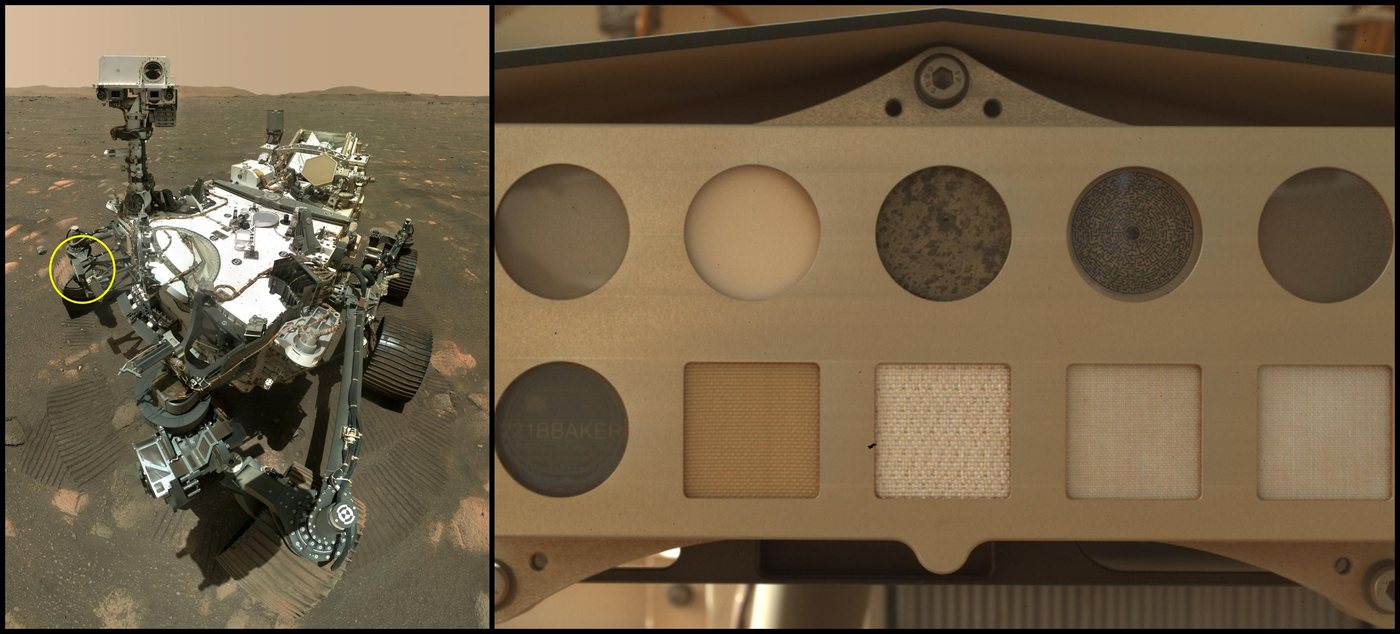
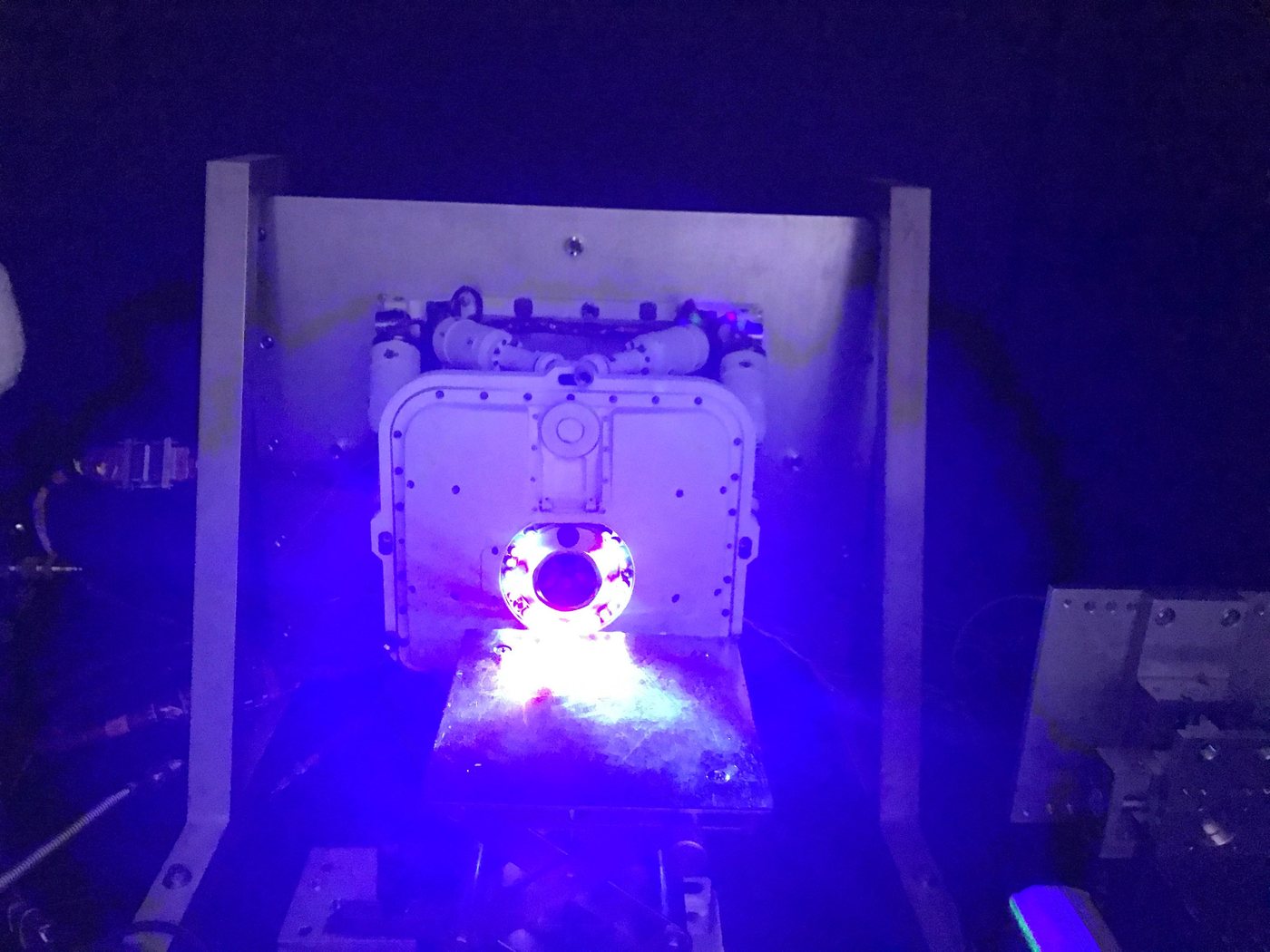
A second instrument did the measuring. PIXL, the Planetary Instrument for X-ray Lithochemistry, has its own calibration target, which carries a piece of Teflon and a piece of basaltic glass. Teflon contains no elements PIXL can directly detect. So any signal PIXL picks up from that Teflon has to be coming from dust lying on it. The team also analyzed the Teflon and Vectran swatches on SHERLOC’s target.
How small is small
Earlier measurements on Mars could resolve dust grains down to about 3 micrometers across. A human hair, for comparison, is about 70 micrometers wide.
PIXL went smaller. Over 1,645 Martian days, NASA says, it picked up two classes of tinier particles: fine particles under 2.5 micrometers, and ultrafine particles around 100 nanometers, which NASA puts at about 700 times thinner than a human hair. On PIXL’s Teflon and SHERLOC’s Vectran, the grains averaged about 2 micrometers. On PIXL’s basaltic glass and SHERLOC’s Teflon, they went down to about 100 to 300 nanometers. (The paper’s abstract says particles “as small as 100 to 200 nm.”) NASA calls these the first on-site measurements of fine and ultrafine particles on Mars.
Chemically, the dust matches the iron- and sulfur-rich makeup that earlier missions measured. PIXL also found it enriched in phosphorus, with signs of calcium sulfate.
The small ones stay
Static electricity seems to decide which grains stick where. Dust grains pick up a charge as they collide in the air, NASA says, and different materials attract grains of different sizes. The finest particles stayed attached through years of driving and drilling. Organic polymers like Teflon are common in the outer layers of spacesuits, and the results show they readily collect fine dust.
“The larger clumps, the Martian dust bunnies, get shaken off over time,” said Scott VanBommel, a Perseverance scientist at Washington University in St. Louis and the paper’s lead author. “But the smallest particles stay behind, and those are the ones that pose the greatest challenge for human support systems.”
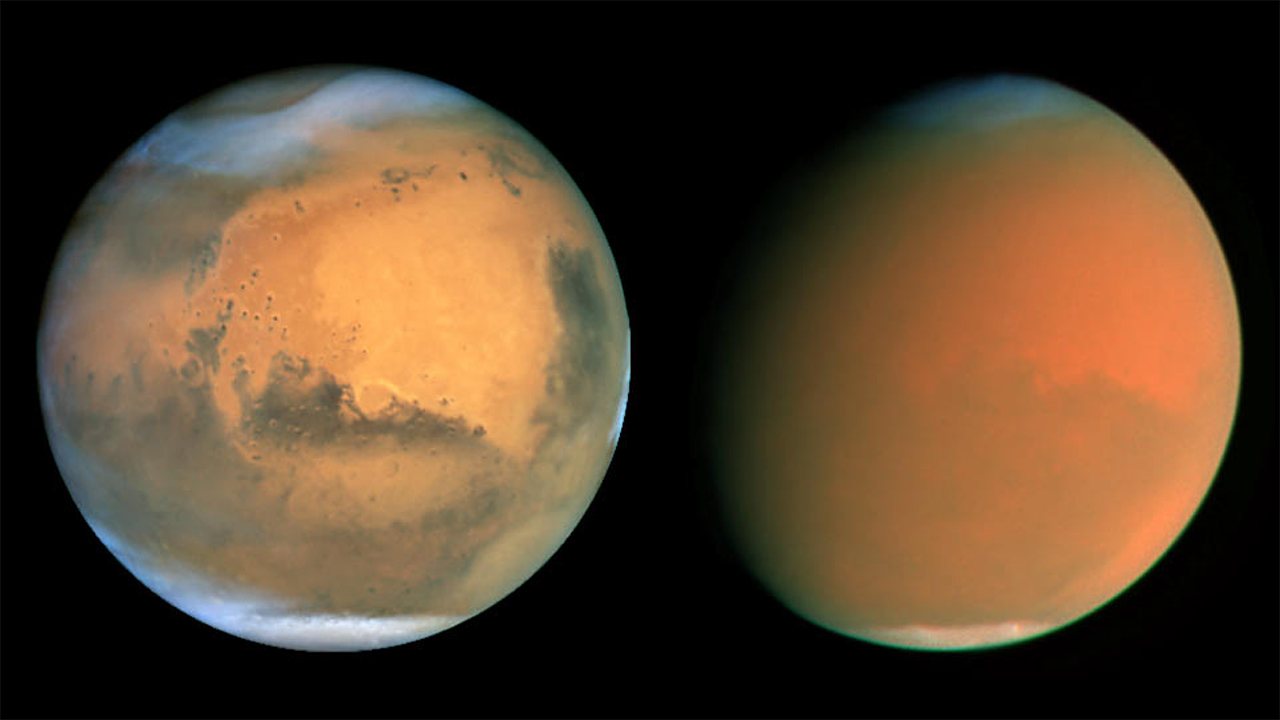
Find Mars in your skyLive sky map for where you are: when it rises and where to look.And the dust does not stay put. Regional and global dust storms on Mars can keep grains recirculating through the atmosphere, NASA says.
Why size matters to a body
On Earth, airborne particles smaller than 2.5 micrometers are tied to a range of health effects because they can penetrate deep into the lungs and enter the bloodstream. Studies have shown that ultrafine particles, those no larger than 100 nanometers, can travel from the nose to the brain along the olfactory nerve, NASA notes.
Mars dust is mostly silicate minerals, but it also carries reactive compounds, NASA says, including perchlorates, which can disrupt thyroid function, and reactive iron, which can damage cells. How risky it is depends on how much dust a person is exposed to, and for how long. Perseverance measured dust stuck to surfaces, not how much a person would breathe, so this is a warning sign to study, not a measured dose.
We have been here before
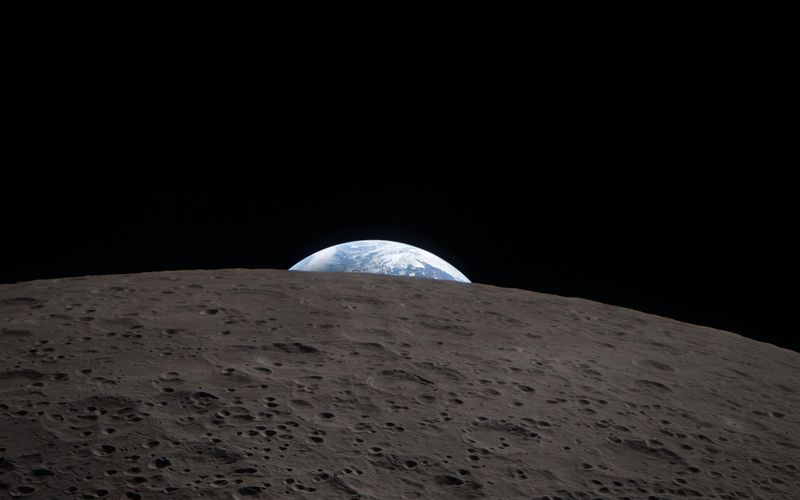
Dust was a problem long before Mars. During NASA’s Apollo missions, lunar dust scratched visors, degraded the outer layers of spacesuits and damaged their seals, and some crew members reported symptoms similar to hay fever.

Mars dust is different. Wind-driven collisions round off the grains, so they are less abrasive than lunar dust. They are also richer in sulfur, chlorine and iron, and contain more silica than lunar dust. “Dust has been a surface-exploration challenge since the Apollo program,” said Lindsay Hays, acting director of NASA’s Planetary Science Division.
What engineers can do with it
The study found that some materials hold less dust than others, which could guide choices of fabrics and coatings for spacesuits and habitats. NASA points to designs like suitports, which let an astronaut climb into a suit attached to the outside of a habitat, and dual-chamber airlocks, both of which could cut how much dust gets inside.
NASA is already testing fixes on the Moon. In March 2025, its Electrodynamic Dust Shield, which uses electric fields, cleared lunar regolith from glass and thermal radiator surfaces after landing aboard Firefly Aerospace’s Blue Ghost Mission 1.
Bottom line: On Mars, the big dust shakes off. The smallest grains, the ones that worry engineers most, cling on for years. Perseverance has now measured them directly, long before anyone has to breathe near them.
Watch the reel on the NO GROUND Facebook page.
No Ground. Stay curious.