 No Ground
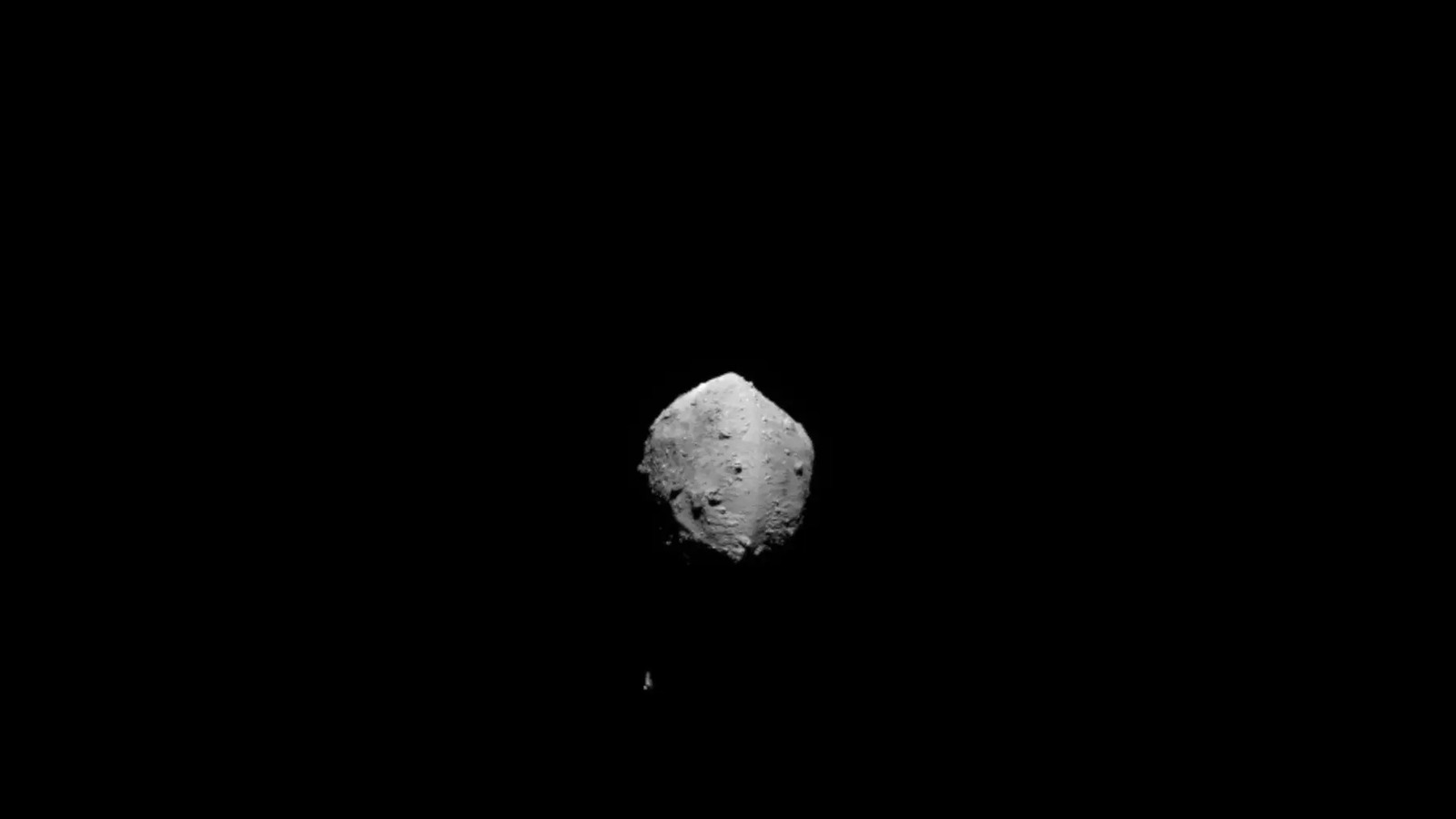
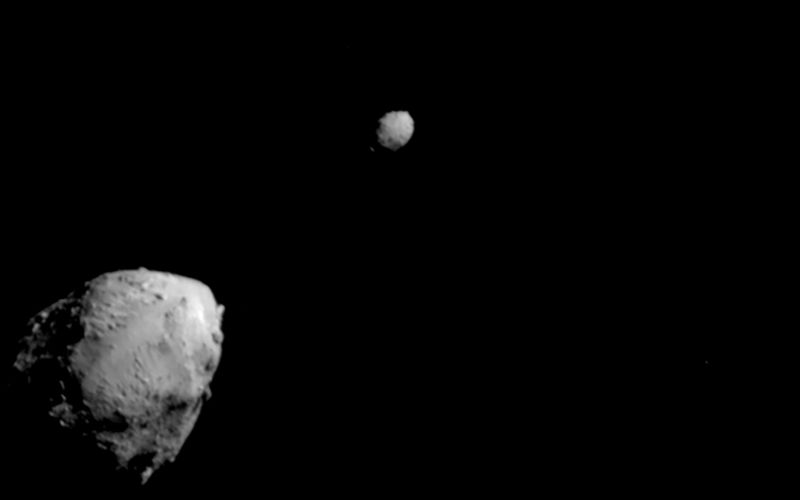
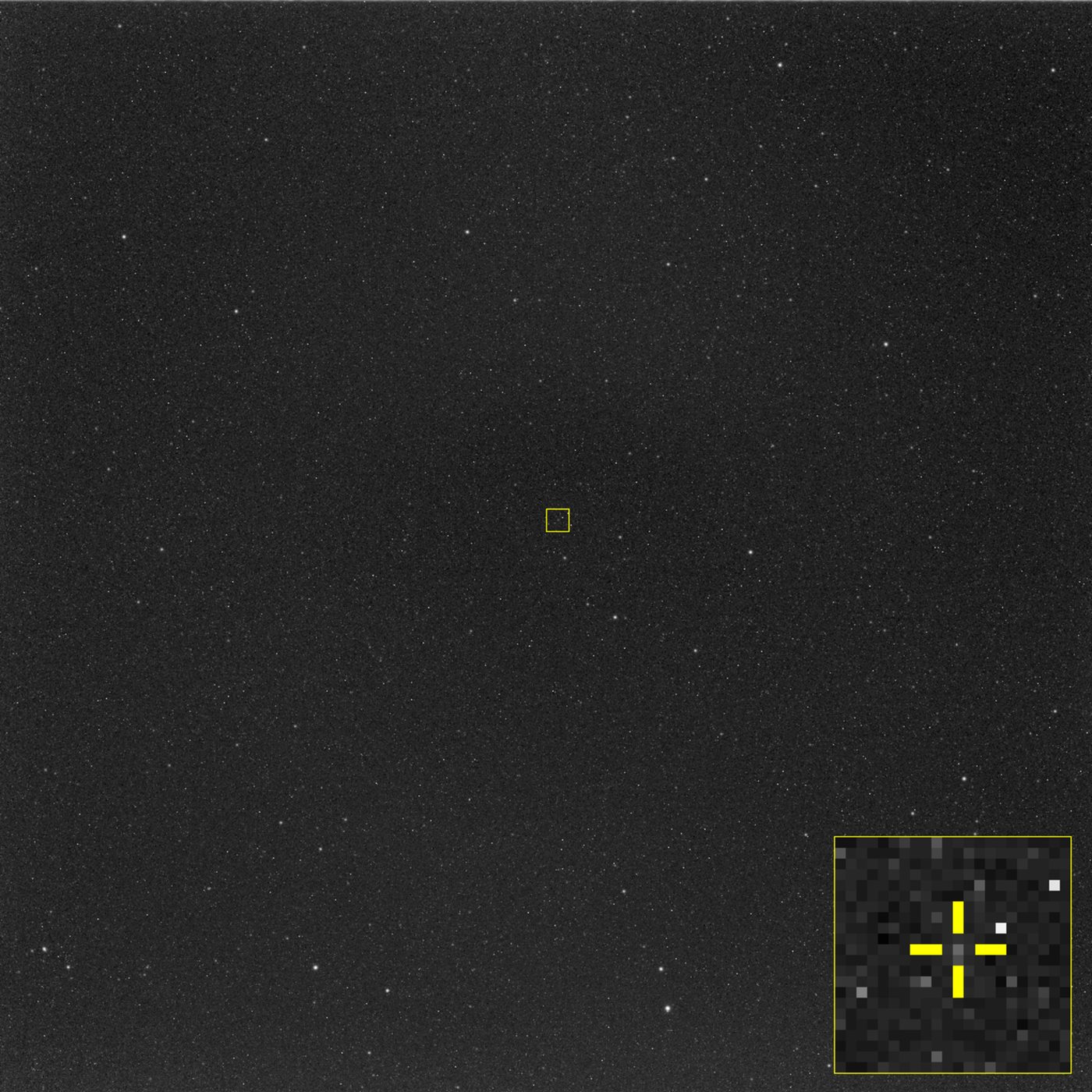
ESA’s Hera spacecraft has taken its first close-up picture of the Didymos double asteroid. ESA released it on Thursday, Nov. 5.
The image was taken by Hera’s black-and-white Asteroid Framing Camera from about 60 kilometers (37 miles) away. It shows the 780-meter-wide Didymos clearly. Its small moon, the 151-meter Dimorphos, is there too, but almost all of it is hidden in shadow.
A side nobody had seen
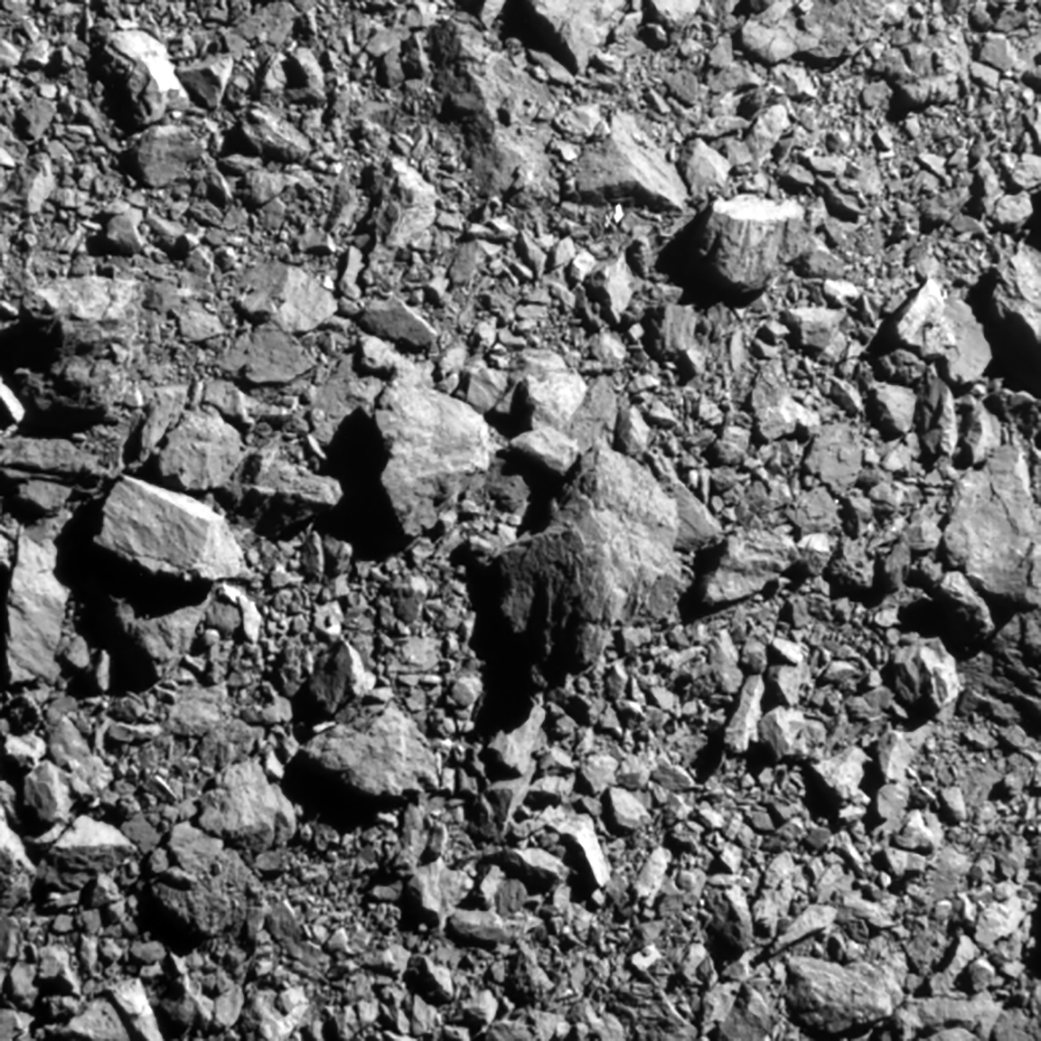
In 2022, NASA’s DART spacecraft photographed Didymos just before it crashed into Dimorphos. Hera is now looking at the other side.
“The first thing we said was wow!” said Hera Principal Investigator Patrick Michel of CNRS / Observatoire de la Côte d’Azur. “This is the other side of Didymos from the one that DART’s camera showed us shortly before impact, so this feels like looking at a whole new world.”
Michel said this side has the same ridge around the equator that DART saw, but otherwise looks very different, with many boulders and craters and what look like patterns of grooves or ridges.
Did DART’s crash spray Didymos?
The two asteroids are only about 1 kilometer apart. ESA mission scientist Michael Kueppers said a lot of material blasted off Dimorphos by the impact may have landed on Didymos, and some of the features in the new image could come from that. “We have exciting work ahead of us to sort it out,” he said.
Open the live Sky MapDidymos is far too faint to see, but the Sky Map shows the Moon, the planets and the Space Station over you tonight.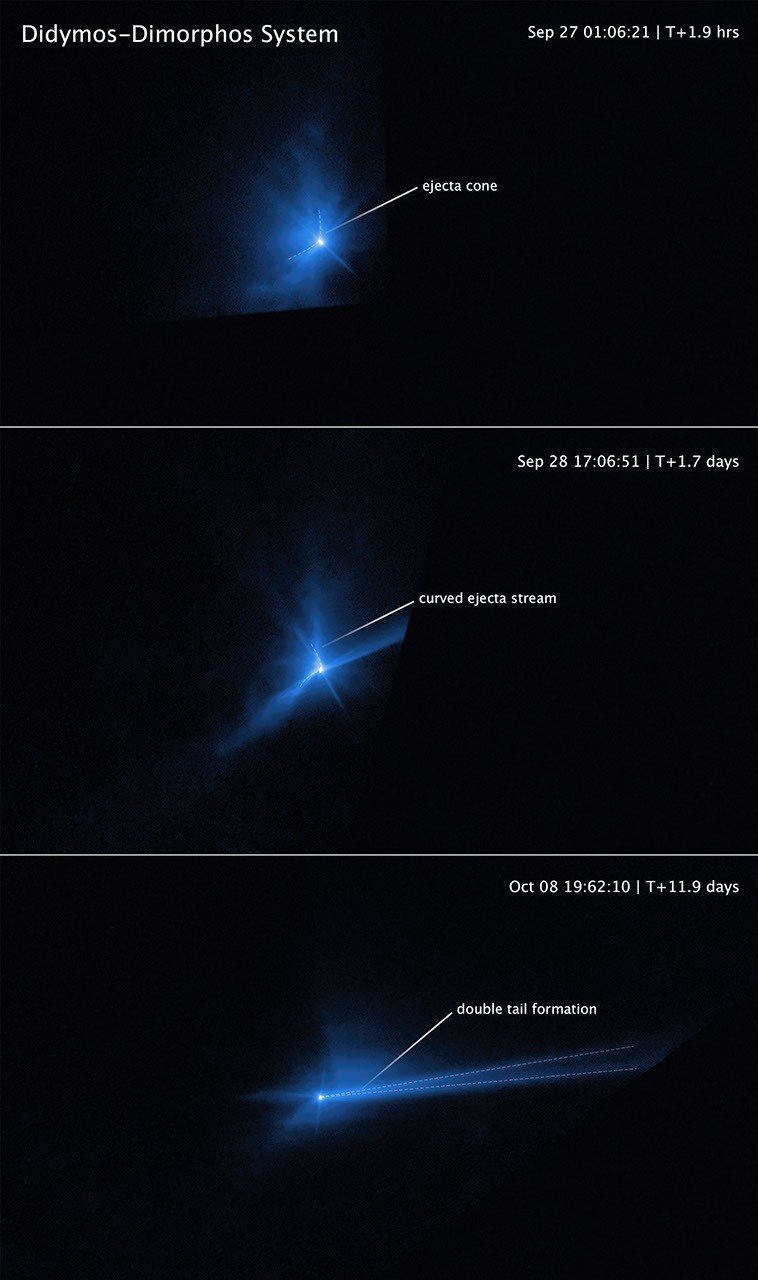
Why Hera is there
On Sept. 26, 2022, the 580-kilogram DART spacecraft hit Dimorphos at about 6.1 kilometers per second. It shortened the moonlet’s orbit around Didymos by 33 minutes, give or take a minute — much more than predicted. Dimorphos became the first object in the Solar System whose orbit humans have measurably changed.
Hera’s job is the “crash site investigation.” What it learns will help turn hitting an asteroid from a one-time experiment into a technique we understand and could repeat if an asteroid ever threatened Earth. The pair are currently about 196.8 million kilometers from Earth.
What comes next
ESA says detailed images of both asteroids will be revealed on Nov. 25, 2026, at an event in Berlin. They should show for the first time what DART did to Dimorphos: whether it left a crater, reshaped the asteroid, or both. Later, Hera and its two small CubeSats, Milani and Juventas, will measure Dimorphos’ mass, surface and inside structure.
Read our earlier story: Hera Closed In on Two Asteroids. It Can’t Park.
Bottom line: Hera is now close enough to see details, and its first look at Didymos already shows a surface nobody had seen. The real reveal, Dimorphos after the impact, comes Nov. 25.
No Ground. Stay curious.