 No Ground
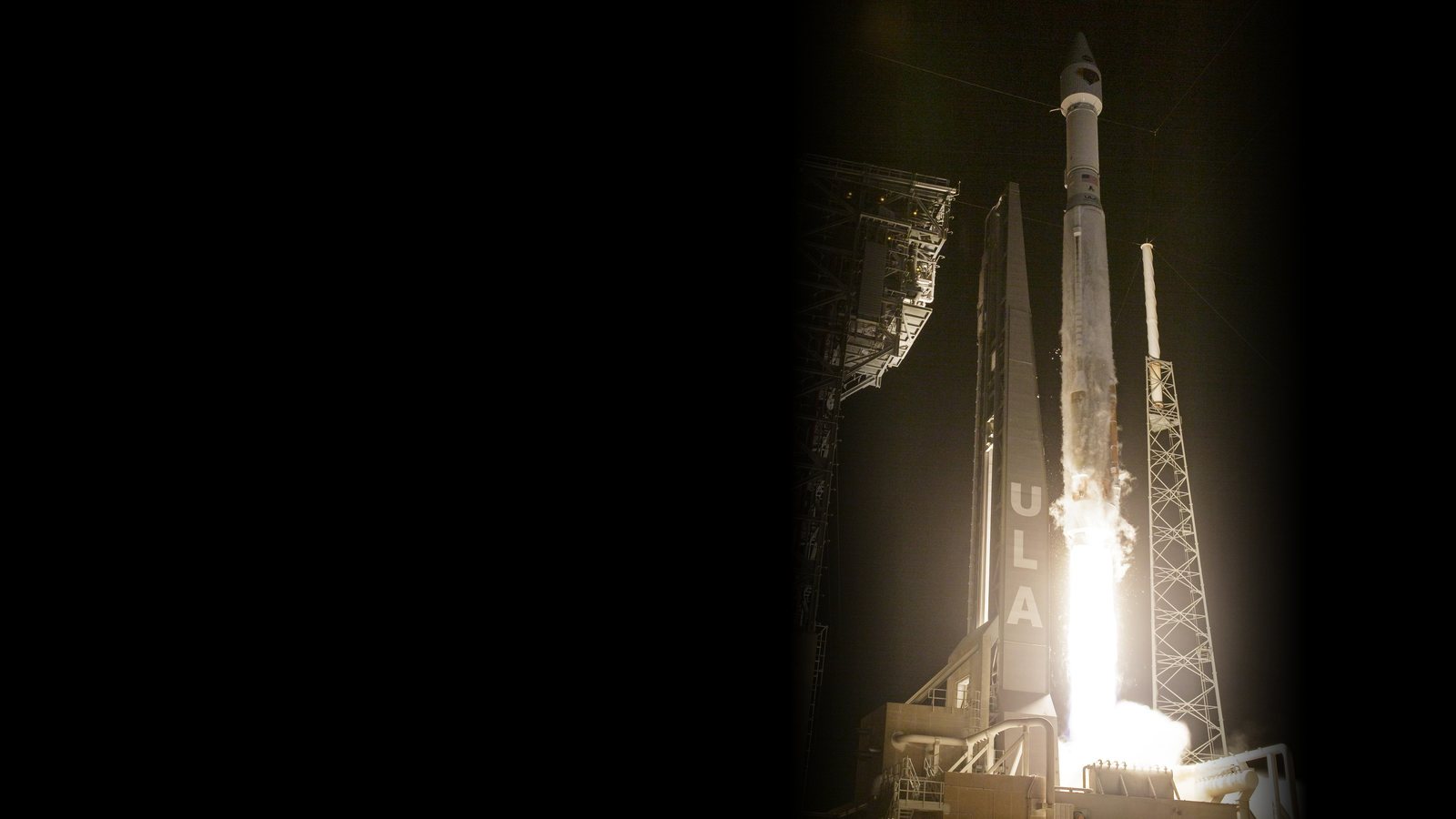
Five years ago, a NASA spacecraft left Earth for a part of the solar system no probe has ever had a reason to visit. This week, NASA says, it got there. Lucy, which launched on Oct. 16, 2021, is now the first spacecraft to enter a region of primitive bodies known as the Jupiter Trojan asteroids, after traveling more than 2.2 billion miles.
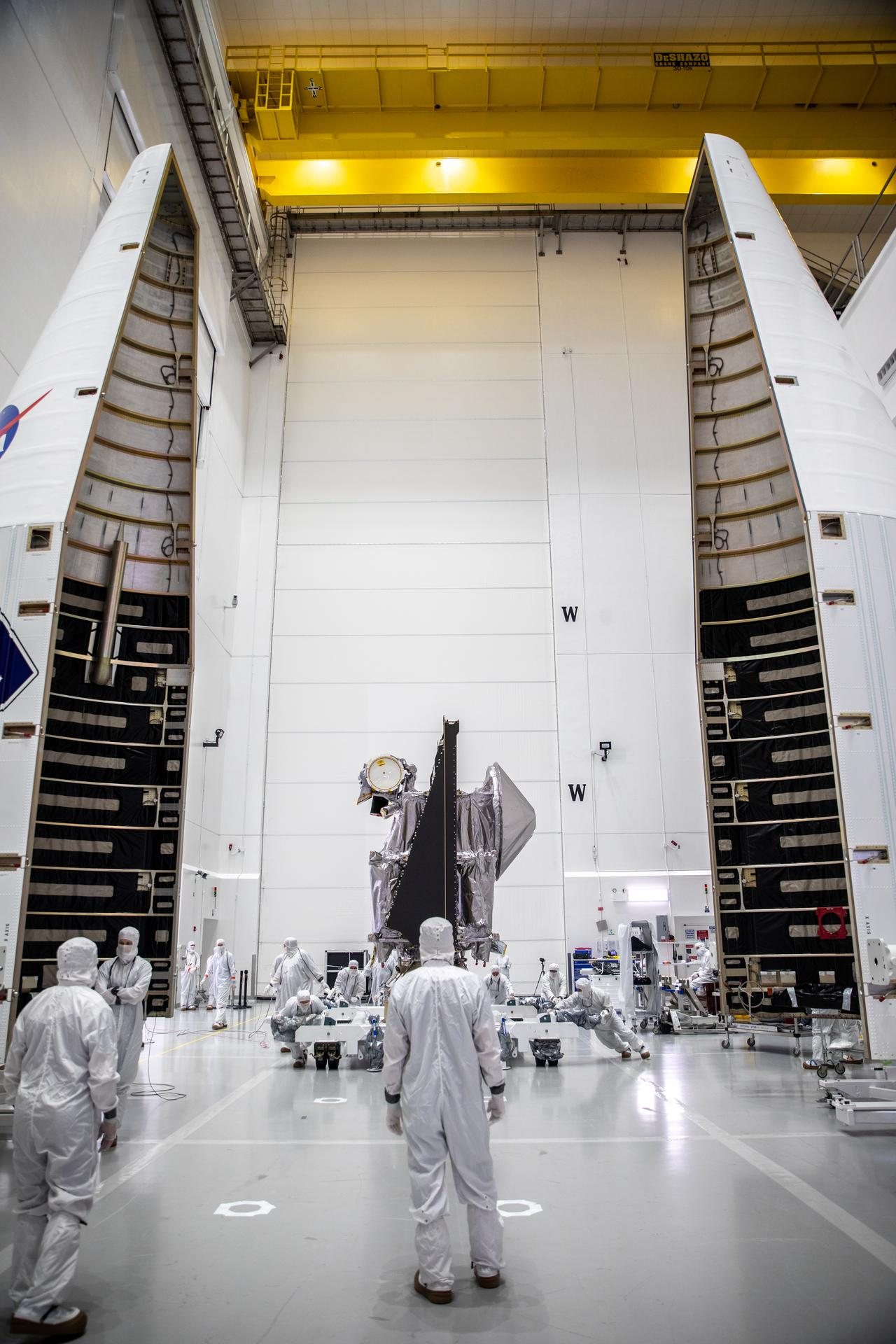
One thing to be clear about: Lucy has not reached an asteroid. It has reached their neighborhood. Its first close encounter, with the Trojan asteroid Eurybates, is on Aug. 11, 2027.
A border that is not there
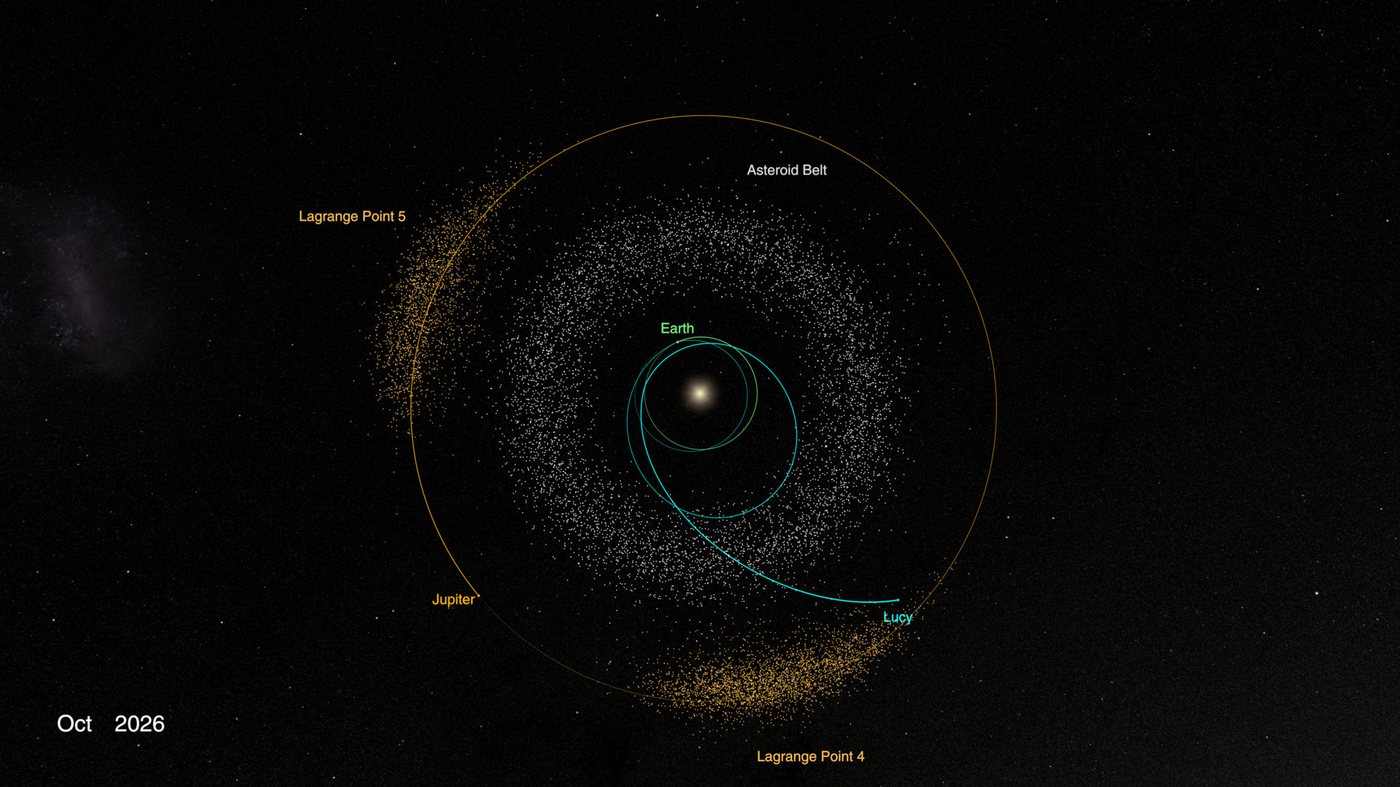
There are no well-defined boundaries in space, NASA’s Lucy team notes. Mission engineers know Lucy is approaching Jupiter’s Lagrange point 4, or L4, by tracking its location through the spacecraft’s radio signals and images of the surrounding stars.
Two islands of stability
L4 is one of two large, unexplored “islands of stability,” NASA says, where thousands of asteroids share Jupiter’s orbit around the Sun, guided by the combined gravitational pull of the Sun and the giant planet. The L4 point is surrounded by the group of asteroids that travel ahead of Jupiter in its orbit. A second group, around Lagrange point 5, trails behind the planet. Lucy will visit asteroids in both.
These Trojans are as far from Jupiter as the planet is from the Sun, about 484 million miles. Yet they are spread so thin that they are separated from each other by more than 6 million miles on average. To Lucy, they will look like pinpricks of light moving against a field of stars until the spacecraft bears down on its chosen targets.
Why no one has gone
Several spacecraft have visited Jupiter, NASA says, and some have used its gravity to travel even farther, in a maneuver called a gravity assist. None have had the opportunity to visit the Trojans, given how far they are from the planet. Only Lucy, a spacecraft built to explore this population, has had a reason to travel to the regions they occupy.
Scientists expect that studying Trojans up close will help them refine theories of how the solar system’s planets formed 4.5 billion years ago and how they ended up in their current configuration.
Find Jupiter in your sky tonightLucy’s Trojan asteroids share Jupiter’s orbit. The live map shows where it is now.Built for a dim, cold place
Lucy is now more than five times farther from the Sun than Earth is. NASA says it has adapted to the gradually cooling temperature and dimming light, that its design is optimized for this region, and that the spacecraft and instruments continue to operate as expected. With less than a year until the first asteroid encounter, scientists are busy finalizing the encounter plans. That includes preparing for the few hours Lucy will spend studying Eurybates up close.
What comes next
After Eurybates, Lucy will visit Polymele in September 2027, Leucus in April 2028 and Orus in November 2028. It will then return to Earth in 2030 for a third and final gravity assist that sends it toward Jupiter’s trailing group of Trojans. There it will explore the binary pair Patroclus and Menoetius in March 2033.
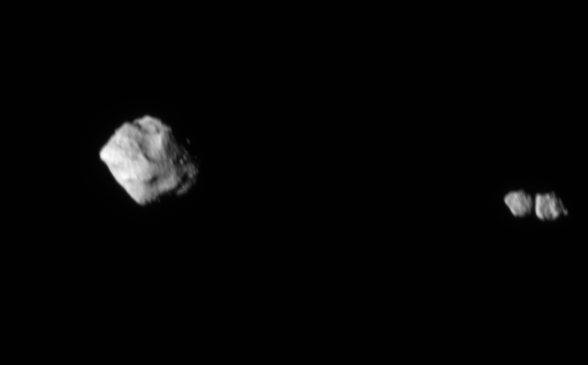
Lucy has already flown past two main-belt asteroids, according to NASA’s mission page. On Nov. 1, 2023, it flew past a small asteroid, Dinkinesh, about half a mile (790 m) wide, and found that it has a moon, Selam. The moon turned out to be a contact binary, two smaller objects touching, which NASA says is the first contact binary seen orbiting another asteroid.
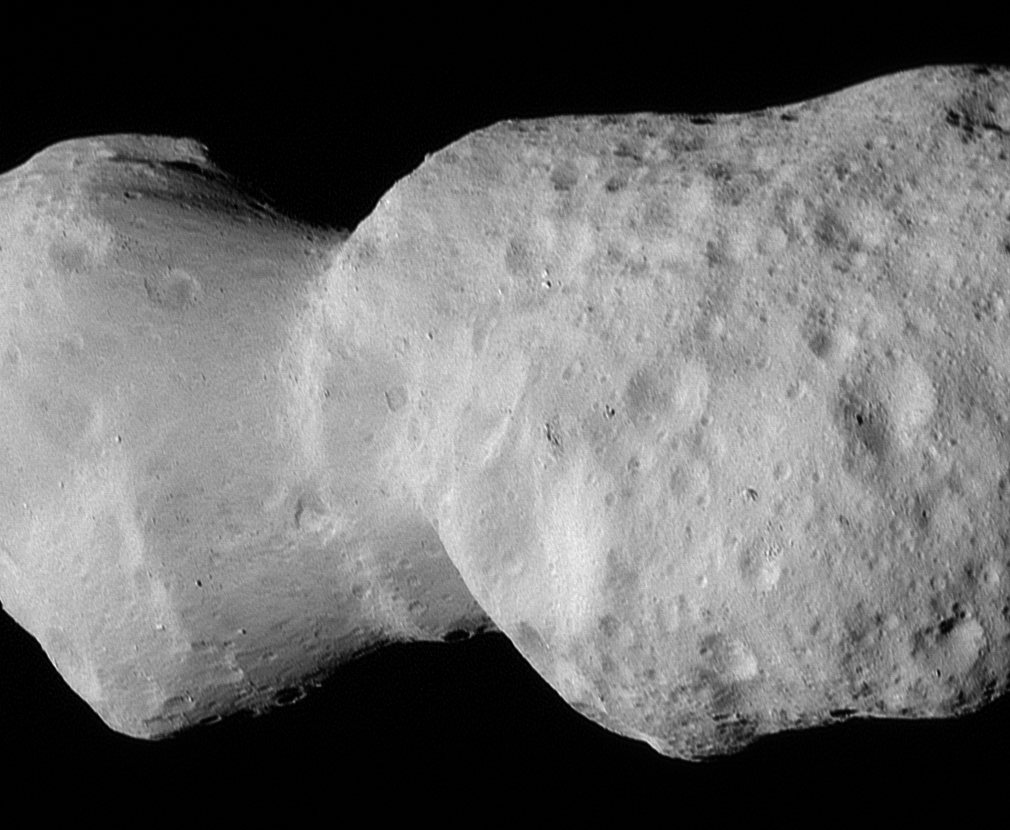
On April 20, 2025, Lucy passed within about 600 miles of a second main-belt asteroid, Donaldjohanson. NASA’s first look suggested it is about 5 miles (8 km) long and 2 miles (3.5 km) wide.
Bottom line: Lucy has not met an asteroid yet. It has reached the Trojan region, the first spacecraft ever to do so. The close-ups begin in August 2027.
No Ground. Stay curious.