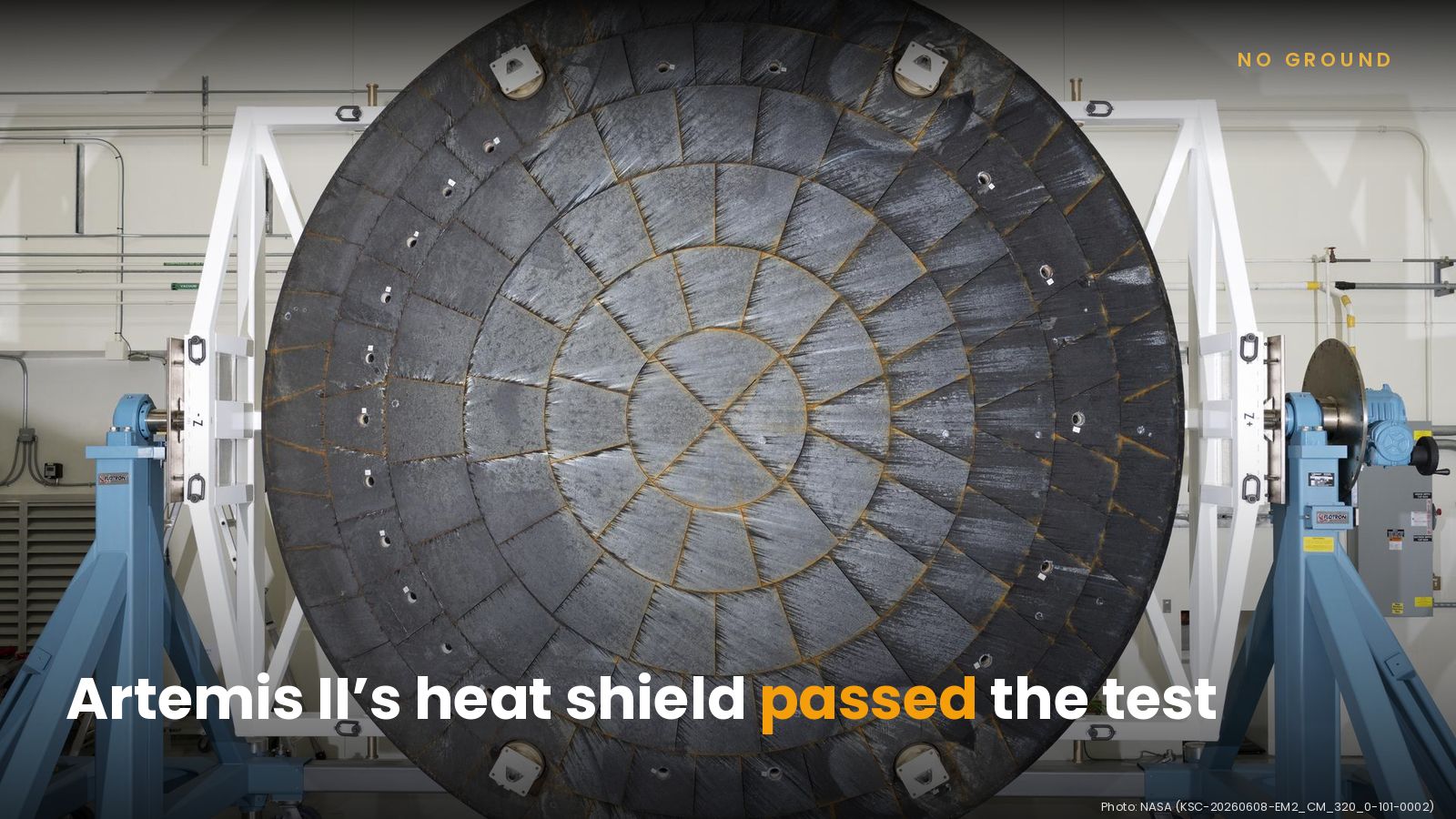
The biggest question hanging over Artemis II was whether the heat shield would hold up. NASA now has the answer: it did, and it came back in far better shape than the one from Artemis I.
In an Oct. 15 update, NASA said further engineering analysis “confirmed initial data showing the heat shield performed as expected.” The key number is that engineers found only nine spots of char loss on the Artemis II heat shield, compared with 103 on Artemis I.
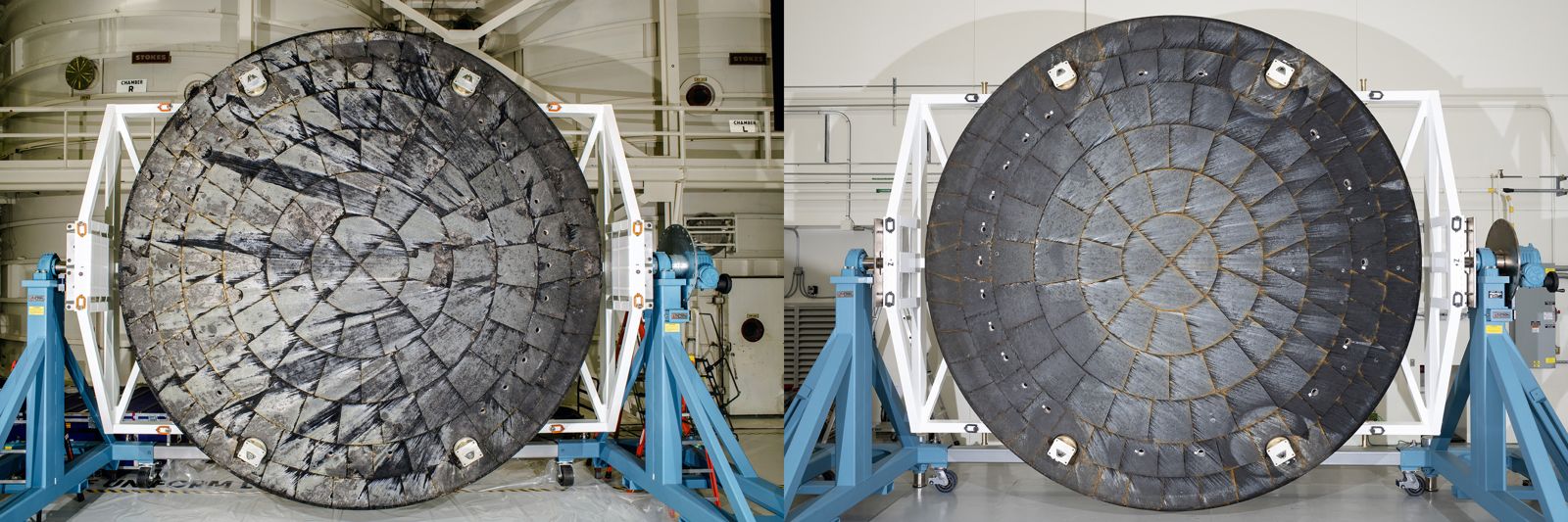
Artemis II heat shield results: 9 spots instead of 103
After the uncrewed Artemis I flight, its heat shield came back with more char loss than expected. That’s when bits of the charred outer layer break away. For Artemis II, the first time astronauts flew aboard Orion, NASA chose to change how Orion came home instead of flying a redesigned shield.
NASA says the agency “modified Orion’s reentry trajectory for Artemis II by shortening the maximum downrange distance” the capsule could fly between entering the atmosphere and splashing down in the Pacific. Analysis before the mission showed this would limit how long the heat shield spent in the temperature range where the Artemis I problem happened.
It worked. NASA says the shorter downrange “reduced the cracking and char loss experienced on the Artemis II heat shield relative to the Artemis I heat shield by a factor of ten, proving the effectiveness of the trajectory modification.”

How hot and fast was Orion’s reentry?
According to NASA, Orion reached a maximum velocity of 39 times the speed of sound and faced external temperatures exceeding 4,000 degrees Fahrenheit at its peak. Inside, the four astronauts had a cabin temperature in the mid-70s Fahrenheit.
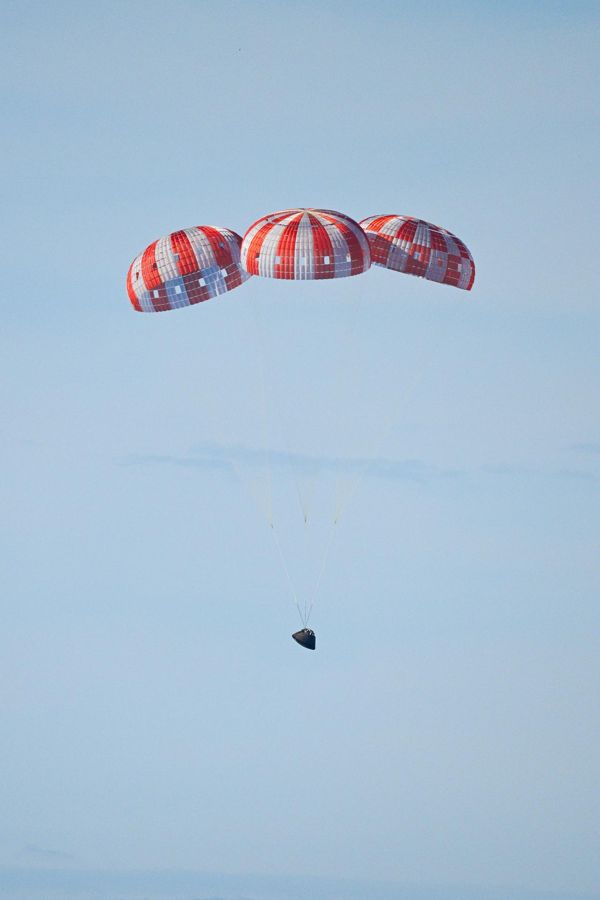
The return was precise, too. NASA says Orion entered the atmosphere “within only 192 feet of its targeted entry interface” and splashed down only 0.59 miles from the predicted landing site off the coast of San Diego on April 10, 2026.

What NASA engineers checked
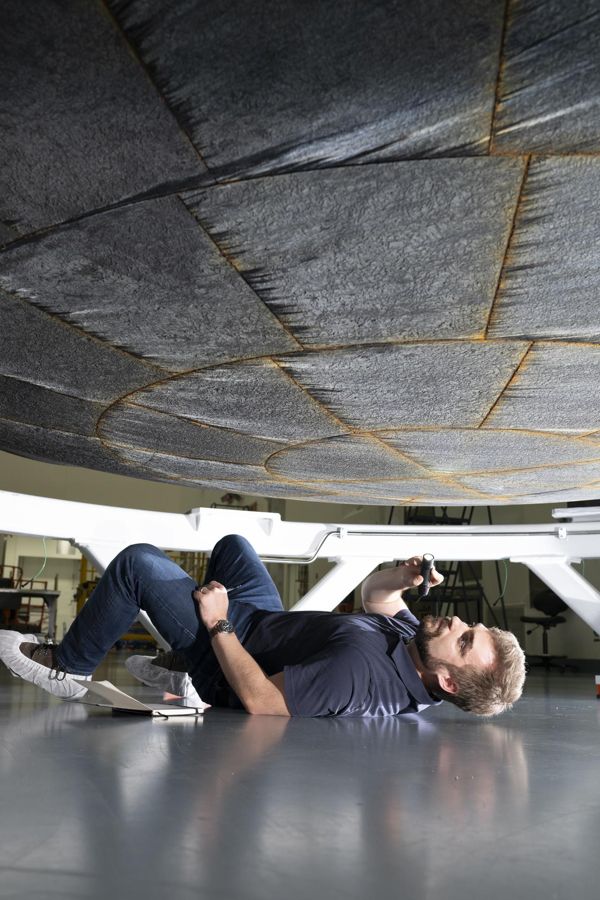
The heat shield is made of 186 unique blocks of an ablative material called Avcoat. After the capsule returned to Kennedy, experts examined it. Then it went to NASA’s Marshall Space Flight Center in Alabama, where sample extraction and internal X-ray scans began in August.
- Overall: a post-flight review found Orion’s aerodynamic and aerothermal performance, including the heat shield and backshell, “in line with engineering predictions.”
- Seams and bolts: NASA says the design behaved consistently from Artemis I to Artemis II, including the seams between Avcoat blocks and the Avcoat around the separation bolts.
- Backshell: the capsule’s sloped sides are covered by 1,300 ceramic tiles. They performed as expected, with “no signs of overheating observed” around windows, vents, thrusters and the side hatch.
- Still underway: engineers are comparing post-flight laser scans with pre-flight measurements to see how much material wore away, and sample testing continues at Marshall.
What it means for Artemis III
Artemis III won’t just rely on a new trajectory. NASA says that after the Artemis I investigation, “upgrades were made to the heat shield design for Artemis III to achieve uniformity and consistent permeability of the Avcoat blocks.” Technicians attached that heat shield to the Artemis III crew module at Kennedy in early July. The crew and service modules were joined at the end of July, and the spacecraft has since been powered up for the first time.
NASA says Artemis III will fly next year in low Earth orbit with NASA astronauts Randy Bresnik, Frank Rubio and Andre Douglas and ESA astronaut Luca Parmitano. They’ll rendezvous with human lander test articles from Blue Origin and SpaceX to demonstrate systems needed for lunar landings, beginning with Artemis IV in 2028.
The shield that protected the first crew around the Moon in more than 50 years is still being taken apart for lessons. So far the lessons are good ones.
No Ground. Stay curious.